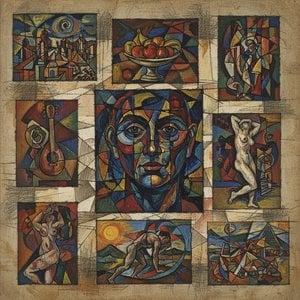
Paul Ahyi: The Sculptor of a Nation’s Identity
Born in Abomey, Togo, in 1930, Paul Ahyi was more than just an artist; he was a polymath deeply intertwined with the cultural and political fabric of his nation. His life spanned nearly eight decades, witnessing pivotal moments in Togolese history and shaping its visual landscape through monumental sculptures, intricate reliefs, and a profound understanding of African symbolism. From humble beginnings as a student in Dakar to international recognition as a “UNESCO Artist for Peace,” Ahyi’s legacy extends far beyond the borders of Togo, representing a powerful voice for artistic expression rooted in tradition yet embracing modernity.
Early Life and Artistic Foundations
Ahyi's early years were shaped by the complexities of colonial Togolese society. Growing up during French rule instilled within him a keen awareness of cultural identity and the yearning for independence. This formative period ignited a desire to express his heritage through art, leading him to study at the École des Beaux-Arts in Paris. This Western education provided a crucial foundation, allowing him to synthesize traditional African artistic motifs with European techniques – a hallmark of his distinctive style. He wasn’t simply replicating ancient forms; he was reimagining them for a new era, blending the spiritual and the contemporary.
The Flag of Togo: A National Symbol
Perhaps Ahyi's most enduring contribution to Togolese identity is his design of the nation’s flag in 1960. Commissioned during the lead-up to independence from France, this seemingly simple design carries profound symbolic weight. The five horizontal stripes – green and yellow – are directly inspired by the Pan-African colors, representing unity and solidarity among African nations striving for liberation. However, Ahyi imbued these familiar hues with a uniquely Togolese meaning: the green signifies the nation’s fertile land and abundant resources, while the yellow embodies its wealth and the industrious spirit of its people. Crucially, the red square in the canton holds a white star – a potent emblem of peace, purity, and the guiding light of independence itself. This wasn't just a flag; it was a declaration of intent, a visual embodiment of Togo’s aspirations for a brighter future.
Monumental Sculpture and Architectural Contributions
Beyond the national flag, Ahyi’s artistic output is characterized by its scale and ambition. He created an astonishing array of outdoor sculptures and reliefs that grace public spaces throughout Togo and beyond – in the Vatican, Senegal, Benin, Côte d'Ivoire, Nigeria, and South Korea. His monumental work on the Independence Monument in Lomé stands as a testament to his vision, capturing the spirit of liberation and national pride. He didn’t confine himself solely to sculpture; Ahyi also designed intricate architectural details, incorporating his artistic sensibilities into building facades and interior spaces. He frequently employed diverse mediums – wood, ceramics, jewelry, tapestries – demonstrating an expansive creative range.
Legacy and Recognition
Paul Ahyi’s impact extends far beyond the physical artworks he created. He was a dedicated educator, sharing his knowledge and passion for art with generations of Togolese artists. His work has been recognized internationally, culminating in his designation as a “UNESCO Artist for Peace” in 2009 – an honor bestowed upon individuals who use their artistic talents to promote peace and cultural understanding. Ahyi’s legacy is one of profound creativity, unwavering commitment to his nation's identity, and the enduring power of art to shape history and inspire hope. His sculptures continue to stand as powerful reminders of Togo’s journey towards independence and its vibrant cultural heritage.
Q&A
Paul Ahyi 작가의 작품 관련 통계 정보는 어디에서 확인할 수 있나요?
이 사이트에서 Paul Ahyi의 작품에 관한 통계를 확인할 수 있는 방문 통계 페이지를 만나보세요.
Paul Ahyi 작가의 작품을 감상할 수 있는 3D 갤러리는 어디인가요?
가상 방문이 가능합니다: Paul Ahyi의 3D 갤러리 페이지에서 3D 갤러리를 통해 작가의 작품들을 만나보실 수 있습니다.
Paul Ahyi의 예술 세계는 시간이 흐름에 따라 어떻게 진화했나요?
Paul Ahyi의 작품 세계를 시간순으로 정리한 기록은 아티스트 연대기 페이지에서 확인하실 수 있으며, 이곳에서는 각 시기별로 분류된 챕터를 따라 작품들을 제작 순서대로 만나보실 수 있습니다.