A Legacy of Resilience and Cultural Stewardship
Otto Heinrich Frank (1889–1980) remains a figure of profound historical weight, a man whose life was defined by both the quiet dignity of personal endurance and an enduring commitment to the preservation of European culture. While history most poignantly remembers him as the father of Anne Frank—the voice that would become a global symbol of hope amidst the darkness of the Holocaust—Frank’s own narrative is one of entrepreneurial success, intellectual depth, and a sophisticated engagement with the arts. Born in Frankfurt am Main on May 12, 1889, to the merchant Michael Frank and Alice Betty Frank-Stern, Otto was raised in an environment that valued education, responsibility, and the burgeoning artistic sensibilities of the German middle class.
His early years were steeped in the traditions of Frankfurt’s prominent families, fostering a character marked by diligence and a keen eye for detail. This foundation proved vital as he navigated the turbulent shifts of the 20th century. Beyond his familial roles, Frank was a man of significant professional achievement. After studying economics at Heidelberg University, he transitioned from the world of banking into the realm of industrial innovation. His entrepreneurial spirit led to the establishment of Fenestra GmbH, a firm specializing in steel constructions, and later, the founding of Kleiman & Frank GmbH. These ventures were not merely business pursuits but reflections of a mind capable of navigating complex structural and economic landscapes.
The Intersection of History and Artistry
To contemplate the life of Otto Frank is to witness the intersection of personal tragedy and the broader movement of historical preservation. His connection to the arts was not merely passive; he was an ardent supporter of European culture, a passion that found expression through his involvement with the Museum Kunstsalon Franke Schenk. Through this lens, one sees a man who understood the importance of maintaining a connection to beauty and heritage even when the world around him was fracturing. His life’s work, much like the historical artifacts associated with his name—such as the poignant telegram sent from Basel in May 1945—serves as a bridge between the unimaginable horrors of war and the fragile dawn of peace.
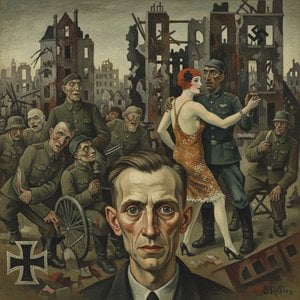
The aesthetic of Frank's legacy is often found in the textures of history itself: the weathered, sepia tones of aged documents and the rhythmic, utilitarian typography of wartime communications. There is a profound, raw realism in the way his story unfolds, much like a piece of documentary art where the artistry resides in the authentic decay of time and the resilience of the human spirit. His ability to find stability amidst the chaos of the mid-20th century mirrors the structural integrity of the industrial works he helped create.
A Lasting Historical Significance
The historical significance of Otto Heinrich Frank extends far beyond his personal biography. He stands as a witness to an era of unprecedented upheaval, embodying the struggle for survival and the subsequent duty to remember. Following the liberation of the concentration camps and the tragic loss of his daughters, Anne and Margot, Otto became the custodian of a legacy that would change the world. By publishing Anne’s diary in 1947, he fulfilled her deepest wish, transforming a private record of life in hiding into a universal testament to human rights and the indomitable will to endure.
His life remains a complex tapestry of several key elements:
- The Entrepreneurial Spirit: His success in the steel and industrial sectors demonstrated a capacity for innovation and economic leadership.
- Cultural Patronage: His dedication to art through the Museum Kunstsalon Franke Schenk helped sustain the continuity of European artistic heritage.
- Humanitarian Legacy: As the sole survivor of his immediate family from the Secret Annex, he became the essential link in preserving the truth of the Holocaust for future generations.
Ultimately, Otto Frank’s life was a masterclass in navigating the extremes of the human experience—from the prosperity of a merchant class in Frankfurt to the harrowing depths of wartime displacement, and finally to the profound responsibility of global remembrance. He remains an essential figure for anyone seeking to understand the resilience required to carry the weight of history.
Q&A
Otto Heinrich Frank의 활동 시기는 어떻게 구분되어 있나요?
Otto Heinrich Frank의 연대기는 작가의 활동 시기별로 분류된 작품들을 연대순으로 보여주는 스크롤 방식의 타임라인입니다.
Otto Heinrich Frank은(는) 어느 시대의 작품을 남겼나요?
Otto Heinrich Frank은(는) Modern 시대에 활동했습니다. 이 시기는 역사적 맥락 속에서 작가의 예술적 위치를 보여줍니다.
미술 사조별로 분류된 Otto Heinrich Frank의 작품은 어디에서 볼 수 있나요?
Otto Heinrich Frank 작가의 작품을 예술 사조별로 모아둔 모든 미술 사조 페이지에서 해당 작가가 활동했던 사조를 확인하실 수 있습니다.