


1



10월 2026 업데이트 · 인기 점수 기준 순위 (각 작품의 검색, 방문 및 주문 수) · 30점의 Nanni Di Bartolo 작품 (당사 카탈로그 기준)
요약하자면
대중에게 가장 잘 알려진 Nanni Di Bartolo의 작품은 Brenzoni Monument (1426)이며, Verona에 위치한 St. Fermo Maggiore에서 감상하실 수 있습니다. 그 뒤를 이어 Judgment of Salomon (1424)와 Sant'antonio abate, circa, da oratorio del crocifisso, borgo a mozzano, lucca (1450)가 나옵니다. Nanni Di Bartolo의 작품 30점 중 가장 잘 알려진 18점을 소개합니다. 각 작품에는 제작 연도, 소장 미술관, 그리고 작품의 특징에 대한 간략한 설명이 포함되어 있습니다.


이 작품들에서 가장 자주 등장하는 네 가지 주제와 각 주제를 대표하는 대표작입니다.
이 페이지에 있는 작품을 가장 많이 소장하고 있는 2개의 미술관
| 소장 미술관 | 도시 | Nanni Di Bartolo의 작품 | 이 목록의 작품들 |
|---|---|---|---|
 St. Fermo Maggiore |
Verona | 1 | Brenzoni Monument |
 도제 궁전 |
베네치아 | 1 | Judgment of Salomon |
이 페이지에 있는 모든 Nanni Di Bartolo의 작품은 1450년에 제작되었습니다. 가장 유명한 작품부터 차례대로 소개합니다.
연도를 선택하여 작품을 확인해 보세요.
1450의 더 많은 작품
리스트의 정점은 St. Fermo Maggiore, Verona의 Brenzoni Monument (1426)입니다. 그 뒤를 이어 Judgment of Salomon (1424), Sant'antonio abate, circa, da oratorio del crocifisso, borgo a mozzano, lucca (1450)가 차지했습니다.
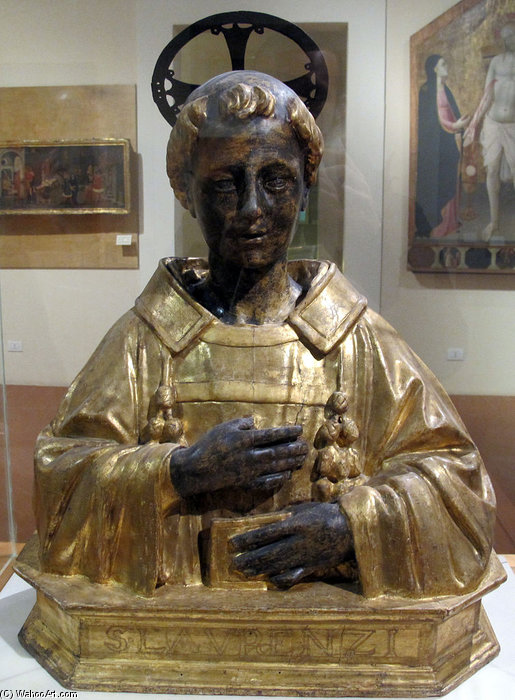
Brenzoni Monument, Judgment of Salomon, Sant'antonio abate, circa, da oratorio del crocifisso, borgo a mozzano, lucca, Sant'antonio abate, circa, da oratorio del crocifisso, borgo a mozzano, lucca, Sant'antonio abate, circa, da oratorio del crocifisso, borgo a mozzano, lucca, Plate With Hercules, Nessus And Deianira, Untitled, Madonna Col Bambino, Firenze, Madonna Col Bambino 및 San Lorenzo. 위 목록에서 각 작품의 제작 연도와 소장 미술관을 확인하실 수 있습니다.
카탈로그에 Nanni Di Bartolo의 작품이 30점 있습니다.
대부분의 작품은 St. Fermo Maggiore (Verona) 및 도제 궁전 (베네치아)에서 만나보실 수 있습니다. 자세한 목록은 상단의 박물관 목록을 확인해 주세요.
1450 기간은 그 어느 때보다도 많은 작품이 포함되어 있습니다. 이 페이지의 총 18점 중 3점이 해당 시기의 작품이며, 그중 Sant'antonio abate, circa, da oratorio del crocifisso, borgo a mozzano, lucca점이 포함되어 있습니다.
이 페이지의 총 18점 중 Religious figure (3) 및 Virgin mary (3)점
이 페이지의 작품들에서 볼 수 있듯이 Early renaissance 및 Renaissance입니다.
네, 이 페이지에 있는 모든 작품은 원하시는 사이즈의 수작업 유화 복제화 또는 프린트로 구매하실 수 있습니다. 작품 상세 페이지에서 바로 주문해 보세요.
In the vibrant, competitive atmosphere of the early 15th-century Italian Renaissance, few figures possess a legacy as intriguing yet enigmatic as Nanni di Bartolo. Known to art historians by the evocative moniker "il Rosso"—a tribute to his distinctive auberm hair—this Florentine sculptor navigated the shifting tides of artistic innovation with remarkable grace. While his precise birthdate remains shrouded in the mists of history, scholarly consensus places his emergence around 1419. He was a man of profound connections, born as the son of a Friar Bartolo, and his early years were shaped by the rigorous traditions of sculpture that were then transforming the landscape of Tuscany.
The artistry of Nanni di Bartolo cannot be understood without acknowledging the shadow of the great Donatello. As a younger contemporary of the maestro, Nanni’s early career was deeply intertwined with the revolutionary currents flowing through Florence. He honed his skills under the tutelage of Giovanni di Pietro Sculorso, a sculptor who had himself been shaped by Donatello's pioneering spirit. This lineage is palpable in Nanni’s work, particularly in his collaborative endeavors for the Duomo Campanile. Working alongside Donatello on these monumental figures of prophets and saints, Nanni embraced a new language of anatomical precision and expressive dynamism, helping to bridge the gap between the lingering elegance of the International Gothic style and the burgeoning humanism of the Renaissance.
Despite his deep roots in the Florentine tradition, Nanni’s career was marked by a significant geographical and stylistic evolution. Historical records suggest that around 1424, perhaps driven by the pressures of debt or a desire to seek new horizons beyond the intense competition of Florence, he departed the city. This period of wandering led him into the Venetian territories and northern Italy, where his role became that of a cultural emissary. In these regions, Nanni performed a delicate balancing act: he spread the sophisticated Florentine style while simultaneously adapting his technique to satisfy the local preference for the graceful, decorative elements of the Gothic tradition.
This synthesis of styles allowed him to leave a lasting imprint on the sculptural landscape of Northern Italy. His output during these years was characterized by a mastery of diverse materials, most notably terracotta and plaster. These mediums allowed for an intimacy and detail that stone often precluded, enabling him to create emotive reliefs and busts of the Virgin Mary and various saints. His ability to breathe life into clay—capturing the soft folds of drapery and the subtle nuances of facial expression—ensured that his work resonated with both the spiritual devotion and the aesthetic sensibilities of a wide audience.
The historical significance of Nanni di Bartolo lies in his role as a vital link in the chain of Renaissance development. While he may not have reached the singular, world-altering heights of Donatello, his contributions were essential to the dissemination of Florentine innovation across the Italian peninsula. His work serves as a testament to the era's transition, embodying the tension between the old and the new.
Reflecting on his body of work, several key elements define his artistic identity:
Though his life ended in 1451, leaving behind a fragmented biographical record, the echoes of "il Rosso" remain etched in the very fabric of Italian art history. Through his sculptures, we glimpse a world in transition—a period where the divine was being reimagined through the lens of human experience and classical revival.


