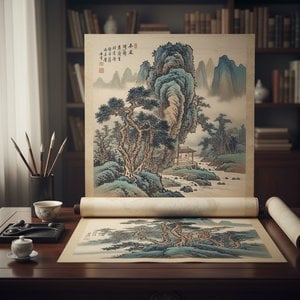
Liang Qichao: The Voice of Modernization in Turbulent Times
Liang Qichao (1873-1929) stands as one of the most influential figures shaping early 20th century China. Born into a Confucian family in Shandong Province, his intellectual journey began with a profound engagement with Kang Youwei’s revolutionary reinterpretations of Confucian classics—a movement aimed at reconciling tradition and progress. This formative influence would propel him to become a cornerstone of China's reform efforts, advocating for constitutional governance and cultural renewal amidst the escalating pressures of Western imperialism.- Early Life & Education: Liang’s upbringing instilled in him a deep respect for Confucian ethics while simultaneously fostering an inquisitive spirit. He excelled academically at Tsinghua University, mastering both Chinese classics and Western sciences—a rare combination that would prove invaluable to his later endeavors.
- The Hundred Days' Reform (1911): Liang Qichao’s involvement in the Hundred Days’ Reform marked a pivotal moment. Alongside Yuan Shikai and Kang Youwei, he spearheaded an audacious attempt to overhaul China’s political system, establishing a constitutional monarchy and curbing imperial authority. Despite its brief success, the reform ultimately crumbled due to Shikai's betrayal—a setback that nevertheless solidified Liang’s commitment to progressive ideals.
- Journalism & Intellectual Leadership: Recognizing the importance of disseminating revolutionary thought, Liang Qichao established “Xinmin Zhishi” (“New Min Zhi”), a newspaper dedicated to promoting constitutionalism and fostering intellectual debate. Through his prolific writings and tireless advocacy, he galvanized public opinion and inspired generations of reformers.
A Master Calligrapher: Artistic Expression Amidst Political Activism
Beyond his political pursuits, Liang Qichao possessed exceptional talent as a calligrapher. He practiced Kaishu (楷書), the standard script revered for its clarity and precision—a style reflecting his unwavering belief in rational thought and disciplined execution. His artwork, notably “Du Fu Poem in Kaishu,” exemplifies this aesthetic sensibility, blending artistic beauty with symbolic resonance. The poem itself speaks to themes of resilience and remembrance—mirroring Liang’s own steadfast dedication to preserving Chinese cultural heritage while embracing the transformative potential of modernization.Legacy & Historical Significance
Liang Qichao's unwavering conviction in constitutional governance and his tireless efforts to revitalize China’s intellectual landscape cemented his place as a titan among reformists. Though he failed to achieve his grand vision of a stable constitutional monarchy, his influence extended far beyond the immediate political arena. He championed educational reforms aimed at cultivating critical thinking and fostering civic engagement—leaving an indelible mark on Chinese society. Furthermore, Liang Qichao’s writings continue to inspire scholars and artists alike, ensuring that his voice resonates across time as a champion of progress and cultural integrity.- Further Exploration: For deeper insights into Liang Qichao's life and work, consult resources such as Wikipedia (
Q&A
Liang Qichao의 작품들은 어떤 분위기를 담고 있나요?
Liang Qichao의 무드 룸에서는 작가의 작품들을 분위기별로 만나보실 수 있습니다.
Liang Qichao의 작품을 색상별로 정렬해서 볼 수 있나요?
Liang Qichao의 작품은 작가의 컬러 인덱스 페이지에서 색상별로 감상하실 수 있습니다.
Liang Qichao의 작품 중 몇 점을 둘러보실 수 있나요?
전체 작품 보기 페이지에서 Liang Qichao의 작품 작품 8점점을 만나보실 수 있습니다.