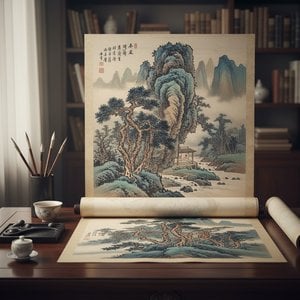
Li Zai (李在): A Master of Ming Landscape Painting
Li Zai, whose exact birth year remains shrouded in obscurity, stands as a pivotal figure within the artistic landscape of the Ming Dynasty (1368–1644). Born in Putian, Fujian Province, his legacy resides primarily in his breathtaking landscapes and meticulously rendered human figure paintings—works that exemplify the enduring traditions of Chinese art. While biographical details are scarce, scholars recognize Li Zai’s stylistic prowess as deeply rooted in the artistic currents circulating during his time, particularly those championed by luminaries like Guo Xi, Ma Yuan, and Xia Gui.
Stylistic Influences and Artistic Principles
Li Zai's distinctive approach to painting—characterized by ‘yizheng,’ meaning adherence to established principles—was undeniably shaped by these influential contemporaries. Guo Xi, Ma Yuan, and Xia Gui were masters of capturing the sublime beauty of nature through a technique known as Guan Shi Hua (觀石畫), focusing on monumental rock formations and conveying profound spiritual contemplation. This stylistic lineage is palpable in Li Zai’s canvases, where subtle brushstrokes meticulously depict mountainous vistas and serene human subjects—a testament to his dedication to preserving classical artistic ideals. The meticulous detail evident in his compositions underscores the importance of capturing not merely visual appearance but also the essence of the subject matter.
Notable Works and Artistic Contributions
Despite the paucity of surviving documentation regarding Li Zai’s specific oeuvre, his impact on Ming art is undeniable. His paintings—primarily landscapes—are held within prestigious institutions such as The Palace Museum in Beijing, offering invaluable insight into the artistic sensibilities of the era. These works exemplify Guan Shi Hua's core tenets: a restrained palette, balanced composition, and an unwavering commitment to conveying atmospheric depth. Particularly noteworthy is “Landscape after Dong Yuan,” completed in 1655—a masterful synthesis of Yuan Dynasty aesthetics and Xia Gui’s contemplative vision. This painting exemplifies Li Zai’s ability to distill the grandeur of nature into a harmonious visual experience.
Legacy and Availability
Li Zai's artistic legacy continues to inspire admiration among connoisseurs and scholars alike. Although many of his paintings have succumbed to time and circumstance—lost or damaged—the surviving specimens serve as enduring emblems of Ming Dynasty artistic excellence. Reproductions of Li Zai’s masterpieces are available on ArtsDot.com, allowing enthusiasts worldwide to appreciate the beauty and sophistication of this remarkable artist's vision. Explore similar works by Guo Xi and Xia Gui on ArtsDot.com for a deeper understanding of the broader context within which Li Zai flourished.
- Explore Oxfordshire & Buckinghamshire Light Infantry Museum: Discover D-Day glider stories, regimental artifacts & military art at Bicester’s fascinating museum – a must-see for history buffs!
Q&A
Li Zai의 모든 작품은 어디에서 볼 수 있나요?
이 사이트에 등록된 Li Zai의 모든 작품은 작가의 전체 작품 보기 페이지에서 만나보실 수 있습니다.
키워드로 Li Zai의 작품을 찾아볼 수 있나요?
Li Zai의 작품은 아티스트의 키워드별 탐색 페이지에서 키워드별로 찾아보실 수 있습니다. 각 키워드를 통해 관련 작품들을 모아 감상하실 수 있습니다.
Li Zai의 전 작품에 걸친 색채 활용을 살펴볼 수 있을까요?
Li Zai 작가 작품의 컬러 프로필은 작가의 팔레트 지놈 페이지에서 확인하실 수 있습니다.