Jane Wilson: A Life in Landscape and Expression
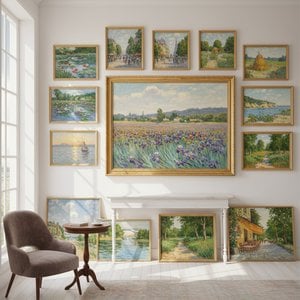
Jane Wilson (1924–2015) was an American painter celebrated for her evocative landscapes and expressive still lifes. Her work bridges abstraction and representation, reflecting a deep connection to both the natural world and the artistic currents of post-war America.
Early Life and Education
Born on April 29, 1924, in Seymour, Indiana, Jane Wilson’s formative years were shaped by her upbringing on a farm during the Great Depression. This early exposure to rural life instilled in her a lifelong appreciation for the American landscape. She was the elder of two daughters born to Wayne Wilson, a civil engineer, and Ethel Mary Haugland. Wilson pursued higher education at the University of Iowa, earning both a B.A. (1945) and an M.A. (1947). Following her studies, she taught at the university from 1947 to 1949.
Move to New York and Artistic Circle
In 1949, Wilson relocated to New York City with her husband, John Jonas Gruen, a fellow student. This move marked a pivotal moment in her artistic development. She quickly became immersed in the vibrant art scene of post-war New York, forging connections with prominent figures such as Willem de Kooning, Jackson Pollock, Lee Krasner, and Fairfield Porter. These relationships profoundly influenced her artistic trajectory.
Artistic Development and Style
Wilson’s early work demonstrated a growing interest in abstraction. Her first solo exhibition was held in 1952 at the Stable Gallery in New York City, establishing her presence within the art world. Throughout the 1960s, she increasingly focused on still life paintings, exploring form and color with a distinctive expressive touch. In the early 1980s, Wilson returned to landscape painting, revisiting themes that had resonated with her since childhood.
Themes and Influences
Wilson’s work is characterized by its emotional intensity and atmospheric quality. Her landscapes are not merely depictions of places but rather explorations of feeling and memory. The influence of Abstract Expressionism is evident in her gestural brushwork and bold use of color, while her commitment to representing the natural world sets her apart. Her paintings often evoke a sense of solitude and contemplation.
Life in Water Mill
In 1970, Wilson and her husband purchased a house in Water Mill, New York, which became their summer retreat. This location provided further inspiration for her landscape paintings, allowing her to directly observe the changing seasons and the subtle nuances of light and atmosphere.
Major Achievements and Historical Significance
- First solo exhibition at the Stable Gallery (1952)
- Integration into a significant circle of Abstract Expressionist artists.
- Development of a unique style blending abstraction and landscape representation.
Jane Wilson’s contribution to American art lies in her ability to synthesize diverse influences – from Abstract Expressionism to the traditions of landscape painting – into a cohesive and deeply personal vision. Her work offers a compelling reflection on the relationship between humanity and nature, and her legacy continues to inspire artists today.
Death
Jane Wilson passed away on January 13, 2015, in New York City, leaving behind a rich body of work that stands as a testament to her artistic vision and dedication.
Q&A
Jane Wilson 작가 작품의 컬러 프로필은 어디에서 확인할 수 있나요?
이 사이트에 등록된 작품 전반에 나타나는 Jane Wilson의 색채 활용은 작가의 팔레트 지놈 페이지에서 자세히 살펴보실 수 있습니다.
Jane Wilson의 작품을 색상별로 모아둔 곳은 어디인가요?
Jane Wilson의 컬러 인덱스에서는 작가의 작품들을 색상별로 모아 보실 수 있습니다.
Jane Wilson의 활동 시기는 어떻게 구분되어 있나요?
Jane Wilson의 연대기는 작가의 활동 시기별로 분류된 작품들을 연대순으로 보여주는 스크롤 방식의 타임라인입니다.
Jane Wilson의 모든 작품은 어디에서 볼 수 있나요?
이 사이트에 등록된 Jane Wilson의 모든 작품은 작가의 전체 작품 보기 페이지에서 만나보실 수 있습니다.