Franco Gentilini: Echoes of Antiquity and Venetian Spirit
Franco Gentilini (1909-1981) stands as a significant figure in Italian modernist art, particularly within the Roman School movement—a collective dedicated to reviving classical artistic principles while embracing contemporary sensibilities. Born in Rome, he embarked on an artistic journey marked by collaboration with fellow ceramists and engagement with influential artists like Giorgio Morandi, shaping his distinctive visual language.- Early Life & Education: Gentilini’s formative years were spent honing his craft as a ceramicist in Faenza, Italy—a region renowned for its rich tradition of artisanal pottery. This early exposure to material and form undoubtedly instilled an appreciation for meticulous detail and textural exploration that would permeate his later paintings.
- Collaboration & Influence: His partnership with Giovanni Romagnoli and Giorgio Morandi proved pivotal in establishing him within the Roman School’s core group. These artists shared a fascination with simplified forms, muted palettes, and a deliberate rejection of expressive gestures—influences that profoundly impacted Gentilini's artistic vision.
Style & Technique: The Archaic Revisited
Gentilini’s oeuvre is characterized by a striking stylistic approach—one that deliberately draws inspiration from pre-Renaissance Italian art. He eschewed flamboyant color palettes and dramatic compositions, favoring instead muted tones and carefully considered spatial arrangements reminiscent of ancient frescoes. This deliberate return to classical aesthetics wasn't merely an homage; it represented a conscious effort to distill artistic essence into its purest form.- Textured Canvases: Perhaps Gentilini’s most distinctive technique involved incorporating sand and pigment onto his canvases—a method that resulted in surfaces imbued with palpable texture. This innovative approach mirrored the materiality of Roman wall paintings, elevating his work beyond mere representation to a realm of sensory experience.
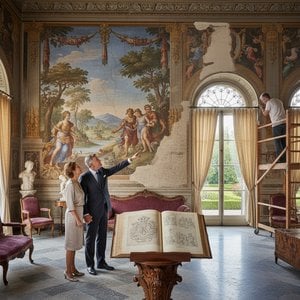
- Frescoes & Decorative Art: Beyond painting, Gentilini excelled as a fresco artist, contributing to monumental murals that showcased his mastery of color and form on a grand scale. His involvement in the 5th Esposizione Internazionale delle Arti Decorative in Milan and the 2nd Quadriennale Nazionale d’Arte in Rome underscored his versatility and solidified his position within Italy's artistic landscape.
Recognition & Legacy
Following World War II, Gentilini experienced considerable acclaim among private collectors—a testament to the enduring appeal of his understated aesthetic. His participation in numerous exhibitions ensured that his work remained visible and accessible to audiences across Italy and beyond. The city’s governing body purchased one of his paintings during the 2nd Quadriennale Nazionale d’Arte, recognizing its artistic merit and cementing Gentilini's place as a cornerstone of Roman modernist art. Gentilini’s legacy resides not only in his individual artworks but also in his contribution to the revival of classical ideals within the context of twentieth-century art. He remains an artist whose quiet contemplation—expressed through textured canvases and evocative depictions—continues to resonate with viewers today, embodying a timeless pursuit of beauty and artistic integrity.질의응답
Franco Gentilini 작가의 출신 국가는 어디인가요?
Franco Gentilini은(는) Italy에서 태어났습니다.
특정 팔레트의 Franco Gentilini 작품은 어떻게 찾을 수 있나요?
특정 색상 팔레트의 Franco Gentilini 작품을 찾으시려면, 작가의 컬러 팔레트별 페이지를 이용해 보세요.
Franco Gentilini의 작품 중 몇 점을 둘러보실 수 있나요?
모든 작품 보기 페이지에서 Franco Gentilini의 작품 작품 34점점을 만나보실 수 있습니다.