Aurél Bernáth: Life and Legacy
Early Life and Education
Aurél Bernáth (born Makó, Hungary in 1895 – died 1982) was a prominent Hungarian painter and art theorist. He received his foundational artistic training at Nagybánya, studying under the guidance of István Réti and János Thorma. This early exposure to the Nagybánya school of plein-air painting would significantly shape his approach to landscape and color.
Wartime Experiences and Early Influences
Bernáth’s life was marked by the upheaval of the First World War, in which he served as a soldier. Following the war, in 1921, he relocated to Vienna, Austria. It was during this period that his artistic style began to be heavily influenced by the burgeoning German Expressionist movement.
Berlin and the Sturm Gallery
A pivotal moment in Bernáth’s career came with an invitation from Herwarth Walden to exhibit his work at the renowned Sturm Gallery in Berlin between 1922 and 1924. This exposure placed him amongst some of the most avant-garde artists of the time, solidifying his commitment to Expressionist principles.
Return to Hungary and the Gresham Circle
In 1926, Bernáth returned to Hungary and became a leading figure in the Képzőművészek új társasága (New Society of Artists), commonly known as KUT. He was particularly associated with the Gresham Circle during the 1930s, a group of artists who challenged traditional artistic norms and explored new forms of expression.
Teaching Career and Art Theory
Bernáth dedicated much of his life to education, teaching at the Hungarian Academy of Fine Arts from 1945 to 1974. He also contributed significantly to art discourse as an editor for the journal Hungarian Art from 1948 to 1949. After 1947, his writings on art theory gained considerable popularity and influence within Hungarian artistic circles.
Artistic Style and Themes
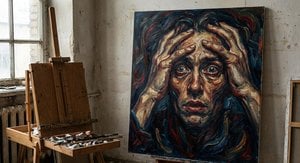
- Expressionist Landscapes: Bernáth is celebrated for his evocative landscapes, often characterized by bold colors, textured brushstrokes, and a sense of emotional intensity.
- Portraits: He also created compelling portraits that captured the psychological depth of his subjects.
- Social Commentary: Many of his works subtly addressed social themes and the realities of life in Hungary during the 20th century.
Legacy and Historical Significance
Aurél Bernáth’s work represents a crucial link between Hungarian art and the broader European Expressionist movement. His contributions as both an artist and a theorist helped to shape the development of modern art in Hungary. He is referenced in several key art encyclopedias, including the Benezit Dictionary of Artists and the Vollmer Encyclopedia.
질의응답
Aurél Bernáth의 작품을 연도순으로 어디에서 볼 수 있나요?
Aurél Bernáth의 작품을 연도별로 정리하여 보여주는 작품 연대기 페이지입니다.
Aurél Bernáth의 작품을 색상 스펙트럼별로 살펴볼 수 있나요?
Aurél Bernáth의 작품은 작가의 색상별 인덱스 페이지에서 색상별로 살펴보실 수 있습니다.
Aurél Bernáth의 작품 중 조회수가 가장 높은 것은 무엇인가요?
Aurél Bernáth의 통계 페이지에서는 본 웹사이트에 등록된 작가의 작품들을 바탕으로 산출된 통계 정보를 제공합니다.