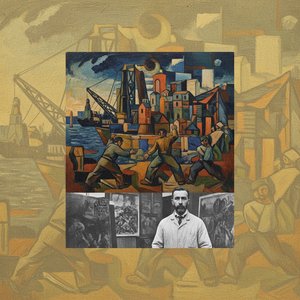
The Silent Legacy of Aurél Balló
In the vast tapestry of art history, certain names resonate with a quiet, enduring strength, anchoring the viewer to the profound shifts of their era. Aurél Balló stands as a figure of significant historical presence, born in 1871, during a period of immense cultural transformation. While his name may not always command the immediate spotlight of the most avant-garde revolutionaries, his life and existence are inextricably linked to the artistic pulse of his time. To study Balló is to engage with the very essence of late 19th and early 20th-century sensibilities, where tradition began to grapple with the encroaching shadows of modernity.
The era in which Balló lived was one defined by a delicate balance between classical mastery and the burgeoning desire for new modes of expression. As an artist emerging from this period, his work is often viewed through the lens of the historical landscape that shaped him. The late 1800s were characterized by a rigorous adherence to academic standards, yet they also harbored the seeds of the radical movements that would soon redefine the visual language of Europe. Balló’s place within this timeline suggests a deep connection to the foundational techniques that provided the bedrock for all subsequent artistic explorations.
Artistic Context and Historical Resonance
Though much of the specific biographical detail regarding his daily life remains shrouded in the mists of time, the historical significance of Balló’s era cannot be overstated. The turn of the century brought with it a wave of social and political upheaval that forced artists to reconsider their role in society. During this period, the boundaries between realism and the emerging symbolist movements began to blur, creating a fertile ground for creators who sought to capture not just the visible world, but the psychological depths beneath it.
In examining the broader context of his work, one finds a reflection of the era's preoccupation with texture, light, and the emotional weight of the subject matter. The artistic community of the late 19th century was a vibrant, often turbulent ecosystem where influences traveled rapidly across borders. For an artist like Balló, being part of this historical continuum meant navigating a world where the old masters still loomed large, yet the whispers of Expressionism and Impressionism were becoming impossible to ignore.
A Lasting Impression
The passing of Aurél Balló in 1940 marked the end of an era, coinciding with one of the most tumultuous periods in human history. His death occurred as the world was being reshaped by global conflict, a time when the very foundations of European culture were under siege. This historical bookend serves to emphasize his role as a bridge between the classical traditions of the 19th century and the fragmented, complex reality of the mid-20th century.
Today, the study of Balló offers more than just an appreciation of aesthetic form; it provides a window into a vanished world. His legacy is found in the way he represents the continuity of artistic spirit through periods of profound change. For collectors and historians alike, his presence in the annals of art serves as a reminder of the enduring power of the artist to witness, record, and embody the soul of their age.
Q&A
미술 사조별로 분류된 Aurél Balló의 작품은 어디에서 볼 수 있나요?
모든 미술 사조 페이지에서는 Aurél Balló의 작품을 예술 사조별로 모아 볼 수 있습니다.
Aurél Balló의 작품 전체 목록을 볼 수 있는 곳이 있나요?
이 사이트에 등록된 Aurél Balló의 모든 작품은 작가의 전체 작품 보기 페이지에서 만나보실 수 있습니다.
Aurél Balló의 작품 중 몇 점을 둘러보실 수 있나요?
전체 작품 보기 페이지에서 Aurél Balló의 작품 작품 19점점을 만나보실 수 있습니다.
Aurél Balló은(는) 어느 시대의 작품을 남겼나요?
Aurél Balló은(는) Modern 시대에 활동했습니다. 이 시기는 역사적 맥락 속에서 작가의 예술적 위치를 보여줍니다.