Arthur Taussig: A Life Woven from Music, Physics, and the Jungian Psyche
Arthur Taussig (born March 31, 1941), is an artist whose career defies easy categorization. He’s a physicist who traded lab coats for guitars, a biochemist who found kinship with American primitive music, a collage artist exploring archetypal imagery, and a prolific author delving into the complexities of film analysis and Jungian psychology. More than simply a collection of diverse passions, Taussig's work represents a deeply personal synthesis—a lifelong pursuit of understanding the interconnectedness of seemingly disparate realms. His journey is one marked by intellectual rigor, artistic experimentation, and a persistent fascination with the hidden currents beneath the surface of reality.
Born in Los Angeles, Taussig’s early life was steeped in both scientific inquiry and musical exploration. He excelled academically, earning a Bachelor of Science degree in physics from the University of California, Berkeley, where he also pursued studies in anthropology and music history. This foundation—a blend of analytical thinking and artistic sensibility—would prove crucial to his later work. His initial foray into music began with the banjo and 12-string guitar, influenced by figures like Elizabeth Cotten and Wolfgang Amadeus Mozart – a testament to his eclectic tastes and desire to merge technical skill with emotional expression. This early passion for instrumental music laid the groundwork for his later pioneering work in American primitive guitar.
The Genesis of American Primitive Guitar
Taussig is widely recognized as a key figure in the revival and development of American primitive guitar, a style characterized by its raw, unpolished sound and improvisational nature. Rejecting the polished virtuosity of classical guitar, Taussig sought to capture the spirit of blues and folk music—the directness of voice, the immediacy of emotion. His 1965 recording, “Fate is Only Once,” released on Takoma Records, stands as a seminal work in this genre, showcasing his unique approach to fingerstyle technique and his willingness to embrace imperfections. The album’s spontaneous feel, recorded in a single take, reflects Taussig's commitment to capturing the essence of the moment rather than striving for technical perfection.
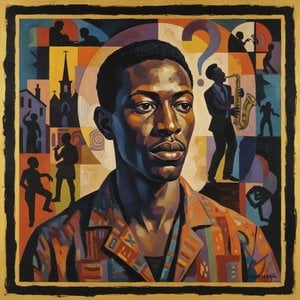
This dedication to authenticity extended beyond music. Taussig began experimenting with collage art, drawing inspiration from Jungian archetypes and exploring themes of mythology, symbolism, and the collective unconscious. His collages are not merely decorative; they’re layered investigations into the human psyche, utilizing imagery and techniques reminiscent of both primitive art and modern abstraction. He meticulously constructed these works, often incorporating found objects and fragments of text to create evocative narratives that resonate with universal themes.
Exploring Jungian Archetypes and Visual Art
A profound influence on Taussig’s artistic vision is the work of Carl Jung. He deeply immersed himself in Jungian psychology, particularly the concept of archetypes—universal patterns of behavior and imagery residing within the collective unconscious. This interest manifested in his visual art through a deliberate exploration of these archetypal symbols – often rendered in striking, dreamlike compositions. His collages frequently depict figures and motifs drawn from mythology, folklore, and religious traditions, suggesting a dialogue between conscious and unconscious realms.
Beyond collage, Taussig’s artistic practice extends to film analysis, where he applies Jungian principles to interpret the underlying narratives and symbolic structures of classic films. He has authored books exploring this intersection, offering insightful perspectives on how cinematic techniques can illuminate deeper psychological themes. This multifaceted approach—combining scientific rigor with artistic intuition—defines his unique creative methodology.
Exhibitions and Legacy
Taussig’s work has been exhibited nationally at major museums across the United States, including the Art Institute of Chicago, Denver Museum of Art, and the Metropolitan Museum of Art in New York City. His distinctive style—characterized by its raw energy, symbolic depth, and exploration of psychological themes—has garnered critical acclaim and a dedicated following. His contributions to American primitive guitar have inspired generations of musicians, while his collages continue to offer compelling insights into the human condition.
In recent years, Taussig has continued to produce new work, demonstrating an enduring commitment to artistic exploration. His 2016 album, “Too Late to Die Young,” and subsequent releases showcase his ongoing evolution as a musician and artist—a testament to a life dedicated to the pursuit of creative expression in all its diverse forms. Arthur Taussig’s legacy is not simply one of individual achievement but rather a celebration of interdisciplinary thinking and the transformative power of artistic vision.
질의응답
특정 매체로 분류된 Arthur Taussig의 모든 작품을 어떻게 찾을 수 있나요?
모든 매체 페이지에서는 Arthur Taussig의 작품을 기법별로 모아볼 수 있습니다.
Arthur Taussig 작가의 작품을 연도별로 어떻게 확인할 수 있나요?
Arthur Taussig의 작품은 작가의 작품 연대기 페이지에서 연도별로 확인하실 수 있습니다.
Arthur Taussig 작가의 작품을 감상할 수 있는 가상 박물관에 방문할 수 있나요?
Arthur Taussig의 작품은 작가의 3D 뮤지엄 페이지에 마련된 3D 갤러리에서 감상하실 수 있습니다.