Early Life and Artistic Training
Artashes Abrahamyan was born on August 15, 1921, in Gyumri, Armenia. His formative years in Gyumri provided the foundational context for a career defined by a specific focus on modernist landscape painting. He moved from his birthplace to the capital to pursue formal training, eventually graduating from the Yerevan Art Academy in 1952. This period of study established the technical rigor that would characterize his later professional output.
His entry into the professional art community was rapid and marked by institutional recognition. By 1956, Abrahamyan had become a member of the Union of Artists. This membership signaled his integration into the established artistic structures of the time. His technical proficiency and commitment to his medium led to significant official honors, including being named an Honoured Artist in 1980. These milestones reflect a career built on steady, institutional validation rather than fleeting trends.
Artistic Style and Career Highlights
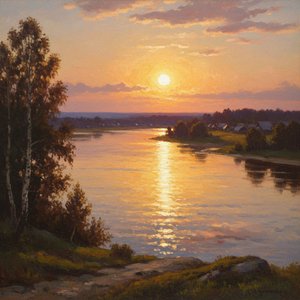
Abrahamyan focused his practice on modernist landscape painting. His approach prioritized the structural and atmospheric qualities of the natural world over mere topographical accuracy. This specialization allowed him to move beyond simple representation, establishing a distinct visual language within the Armenian landscape tradition. His work gained significant recognition early in his career, notably when he exhibited at the All Union Art Exhibition in Moscow in 1954. This exposure placed his specific interpretation of landscape within a broader Soviet context, proving his technical competence on a large scale.
His professional trajectory was marked by steady institutional recognition. He became a Member of the Union of Artists in 1956 and was eventually named an Honoured Artist in 1980. These designations were not merely ceremonial; they reflected a consistent presence in the Armenian art scene. His paintings were exhibited widely throughout Armenia, contributing to a localized but influential body of work. Even in his later years, his relevance remained intact, evidenced by the major award he received at the 'Armenia Art' exhibition in 1998.
- It will snow (about 1956)
- House with poplars. Old Malishka (about 1971)
- Saghmosavank (about 1984)
Where to See the Works Today
The primary repository for Artashes Abrahamyan's output is the National Gallery of Armenia. Located in Yerevan, this institution holds the most significant concentration of his paintings. Visitors looking for his specific contributions to Armenian landscape painting will find them within the permanent collection of this gallery. His presence in the national collection ensures that his visual language remains part of the country's formal art history.
The works held in Yerevan represent the most direct way to encounter his specific approach to modernist landscape. These pieces are not scattered across minor private collections but are anchored in the National Gallery of Armenia. This centralized location makes the capital the essential site for anyone studying his technical execution and his place within the mid-century Armenian art scene.
Q&A
Artashes Abrahamyan의 작품을 사조별로 둘러볼 수 있나요?
모든 미술 사조 페이지에서는 Artashes Abrahamyan의 작품을 예술 사조별로 모아 볼 수 있습니다.
Artashes Abrahamyan의 다른 이름이나 별칭에는 무엇이 있나요?
Artashes Abrahamyan은(는) Abrahamyan, Artashes, Artasches Abrahamjan, Арташес Абрамян라는 이름으로도 활동하고 있습니다.
Artashes Abrahamyan의 작품들은 어떤 분위기를 담고 있나요?
Artashes Abrahamyan의 무드 룸에서는 작가의 작품들을 분위기별로 만나보실 수 있습니다.
Artashes Abrahamyan의 전 작품에 걸친 색채 활용을 살펴볼 수 있을까요?
Artashes Abrahamyan 작가 작품의 컬러 프로필은 작가의 팔레트 지놈 페이지에서 확인하실 수 있습니다.