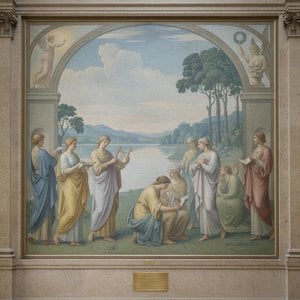
The Sculptural Legacy of André-Joseph Allar
In the vibrant artistic landscape of late nineteenth and early twentieth century France, few figures embodied the grandeur of the Beaux Arts movement as profoundly as André-Joseph Allar. Born in the coastal city of Toulon in 1845, Allar emerged from a lineage of profound creative talent, eventually carving his name into the annals of history through both monumental sculpture and ambitious architectural design. His journey was one of disciplined mastery, shaped by the rigorous tutelage of esteemed masters such as Antoine Laurent Dantan and Pierre Jules Cavelier. This foundational training instilled in him a deep reverence for classical antiquity, allowing him to bridge the gap between the ancient Greek ideal and the expressive dynamism required by the modern era.
Allar’s artistic soul was deeply rooted in the heroic and the mythological. He possessed a rare ability to breathe life into stone, transforming cold marble and bronze into narratives of immense emotional weight. His work often centered on themes of courage, compassion, and the divine, most notably through his interpretations of the legendary Hercules. In masterpieces such as Hercules finding his dead son, housed in the Toulon Museum, Allar moved beyond mere anatomical precision to capture a profound sense of human tragedy and heroic endurance. Through his hands, the muscular strength of the mythological hero was tempered by a palpable, heartbreaking vulnerability, reflecting a humanist sensitivity that resonated with the sensibilities of his time.
Architectural Vision and Global Reach
While many recognize Allar primarily as a sculptor of figures, his creative intellect extended far beyond the pedestal. He possessed an architect’s eye for scale and integration, understanding how sculptural elements could elevate a structure from a functional building to a monumental work of art. This dual mastery was perhaps most evident in his collaborations with Laurent Marqueste, where he contributed to projects of international significance, such as the Palacio Legislativo Federal in Mexico City. His ability to weave narrative sculpture into the very fabric of civic architecture demonstrated a sophisticated grasp of how art and space interact to shape the identity of a nation.
His influence was not confined to France alone; Allar’s artistic footprint stretched across Europe and beyond. In Rome, his contribution to the Palazzo della Giustizia—specifically his statue of Law—stands as a testament to his commitment to civic excellence and the enduring power of classical symbolism. His career was marked by prestigious accolades that solidified his standing in the academic world, including:
- The Prix de Rome: A monumental achievement won in 1869, which served as a gateway to the highest echelons of European art.
- Académie des Beaux-Arts: His election as a member in 1905, marking his official recognition by the pinnacle of the French artistic establishment.
- Légion d'Honneur: An honor reflecting his significant cultural contributions and status as an officer of distinction within French society.
Ultimately, the life of André-Joseph Allar was a continuous dialogue between the strength of stone and the fluidity of emotion. Whether crafting intimate works like Child from Abruzzo or contributing to the soaring facades of grand legislative halls, he remained a sculptor of heroic vision, leaving behind a legacy that continues to inspire awe through its architectural grace and profound human depth.
Q&A
André Joseph Allar 작가의 작품을 연도별로 어떻게 확인할 수 있나요?
André Joseph Allar의 작품 연표를 확인해 보세요: 작품 연대기 페이지에서 작품들을 제작 날짜순으로 보실 수 있습니다.
André Joseph Allar의 모든 작품은 어디에서 볼 수 있나요?
이 사이트에 등록된 André Joseph Allar의 모든 작품은 작가의 전체 작품 보기 페이지에서 만나보실 수 있습니다.
André Joseph Allar의 출생지와 출생 연도는 어떻게 되나요?
André Joseph Allar은(는) 1845년 Toulon에서 태어났습니다.
André Joseph Allar의 작품을 팔레트별로 모아둔 곳은 어디인가요?
특정 색상 팔레트의 André Joseph Allar 작품을 찾으시려면, 작가의 컬러 팔레트별로 보기 페이지를 이용해 보세요.