


 실제 크기로 보기
 보내기
보내기 공유하기
공유하기
 상세 보기
상세 보기 가이드 보기

 이미지 다운로드
 유사 작품 더 보기
 X-레이
X-레이 슬라이드 쇼 보기
 통계 정보
통계 정보엘리야
 캔버스에 아크릴 물감
- 월아트
- zionist decorative art
 1916
1916 90.0 x 91.0 cm
 이스라엘 박물관
 상세 보기
상세 보기
이 페이지에 표시된 작품은 저작권법의 보호를 받으며, 이에 따라 동일한 복제품을 제작하거나 판매하는 것은 법으로 금지되어 있습니다. 이러한 권리 보호는 다음과 같은 국제 협약에 따라 시행됩니다. 베른 협약 또한 다음에서 명시하는 법률을 포함한 국내법에 의해 보호됩니다. 미국 저작권법 제17조.
이 방식은 저작권 보호를 받는 예술 작품을 복제하거나 그대로 재현하는 것이 아니기에 저작권 규정을 완벽히 준수합니다. 대신, 이는 창의적인 재해석의 과정을 거칩니다. 즉, 원작에서 영감을 받되 원작과 동일하지 않은 새로운 회화 작품을 의미합니다.
지클레 / 아트 프린트
빠른 제작과 다양한 마감 옵션을 선택할 수 있는 박물관 수준의 지클레이 및 캔버스 프린트. ( 수작업 채색 복제본 주문하기 디지털 이미지 판매 채널로 전환)




P118B ₩10

P118H ₩10

P118W ₩10

P438Z ₩10

P508JH ₩12

P508YH ₩12

P805H ₩10

P805Z ₩10

P919BZ ₩10

P919G ₩10

P919XJ ₩10

P959ZH ₩10

P968JZ ₩12

W106C ₩8

W218G ₩10

W218JH ₩8

W218Y ₩10

W307PJ ₩10

W316G ₩10

W316PJ ₩8

W316Y ₩10

W398PJ ₩8

W4111J ₩10

W500HY ₩15

W500JH ₩15

W692G ₩12

W849H ₩8

W940BG ₩15

W953PJ ₩8




작품의 원본 비율을 그대로 유지하는 프리셋 사이즈 중에서 선택해 보세요.

액자나 벽면 크기에 맞춰 필요한 가로와 세로 길이를 입력해 주세요. 프린트는 원본 이미지보다 크게 제작할 수 없으며 오직 자르는 것만 가능하므로, 비율이 다른 사이즈를 선택할 경우 이미지의 일부가 잘려 나갈 수 있습니다. 인쇄 작업에 들어가기 전, 최종 확인을 위해 디지털 목업을 보내드립니다. 이 페이지에 표시된 이미지는 실제 잘리는 영역을 나타내지 않으며, 오직 목업을 통해서만 정확한 확인이 가능합니다.


 유리 옵션은 110cm 미만 크기에서만 선택 가능합니다.

엘리야
지클레 / 아트 프린트
복제본 규격
-


총 결제 금액
₩ 84616
엘리야 조각상: 베잘엘 학교의 상징적인 예술 작품
엘리야 조각상은 이스라엘 베잘엘 학교가 1906년에 설립한 곳에서 제작된 가장 화려하고 장식적인 예술 작품 중 하나입니다. 베잘엘 학교는 초기 시오니스트 이념과 성경 주제를 활용하여 유대 국가 정신을 고취하고자 했습니다. 이 조각상은 유대 역사의 종교적 전통과 민족적 전통이 연결되어 있으며, 특히 유대인의 순례와 신앙심을 상징하는 세례 의식을 위한 특별한 의미를 지닙니다. 베잘엘 학교는 이스라엘 국가 정체성을 확립하기 위해 노력했으며, 그 결과로 탄생한 예술 언어는 오늘날까지도 깊은 감동과 영감을 선사하고 있습니다.- 제목: 엘리야 조각상 (Elijah)
- 작가: 볼프 라비츠키 (Wolf Rawicki)
- 생년월일: 1890년
- 사망년월일: 1970년
- 출생도시: 카운스 (Kaunas), 러시아
- 작품 설명: 엘리야 조각상은 베잘엘 학교의 예술 언어를 대표하는 작품입니다. 이 조각상은 세례 의식을 위한 특별한 의미를 지니고 있으며, 초기 시오니스트 이념과 성경 주제를 활용하여 유대 국가 정신을 고취하고자 했습니다. 베잘엘 학교는 이스라엘 국가 정체성을 확립하기 위해 노력했으며 그 결과로 탄생한 예술 언어는 오늘날까지도 깊은 감동과 영감을 선사하고 있습니다. 조각상은 세례 의식을 상징하며 유대인의 신앙심과 국가 정체성을 표현합니다.
- 구성: 사진은 조각상의 구조와 장식 요소를 포괄적으로 보여주는 약간의 각도에서 촬영되었습니다. 조각상은 프레임 중앙에 위치하여 즉시 시선을 사로잡습니다. 상단 왼쪽 코너에는 병이 배치되어 있으며 이는 조각상 제작 과정의 맥락을 더합니다.
- 색상 팔레트: 주요 색상은 나무 자체에서 비롯된 따뜻한 황갈색 계열입니다. 금 또는 브라스 장식 요소는 인레이 디테일에 사용되었습니다. 또한 푸른색과 녹색은 조각상의 장식 요소를 강조합니다.
- 선 사용: 조각상 뒤쪽과 측면의 새겨진 패턴은 강하고 명확한 선으로 특징지어집니다. 이러한 선들은 깊이와 복잡성을 표현하며 조각상의 질감을 더욱 풍부하게 합니다. 곡선은 좌석 디자인과 특정 장식 모티브에 나타납니다.
- 모양: 전체 모양은 왕좌 같은 형태를 갖춘 조각상으로, 사각형 패널과 기하학적 패턴이 통합되어 있습니다. 원형 모양은 일부 장식 요소 내부에 사용되었습니다.
질의응답
"엘리야" 작품의 권장 인쇄 방식은 무엇인가요 - 크기와 방향은 어떻게 되나요?
대형 크기, 세로형 방향: 이는 Wolf Rawicki (Ravitzki)의 "엘리야" 작품에 권장되는 인쇄 설정입니다.
"엘리야"의 제작 기법은 무엇인가요?
Wolf Rawicki (Ravitzki)은(는) "엘리야" 작품에 캔버스에 아크릴 물감 기법을 사용했습니다. 이 기법은 원작의 재료적 특성을 잘 보여줍니다.
"엘리야"은 어떤 색채와 어떤 감정을 담아내고 있나요?
Wolf Rawicki (Ravitzki)의 "엘리야"의 뉴트럴 톤 색조는 평온한 분위기와 조화를 이룹니다. 색채는 작품이 감정을 전달하는 중요한 방식 중 하나입니다.
관련 작품들


작가 소개
The Pioneering Vision of Ze’ev Raban: From Rawicki to the Soul of Israeli Art
Ze’ev Raban, born Wolf Rawicki in Kaunas, Russia, in 1890, stands as a monumental figure in the genesis of Israeli art. His journey wasn't merely that of an artist finding his voice; it was the forging of a new aesthetic identity for a nation yearning to express itself. Rawicki’s early life, steeped in the cultural currents of Eastern Europe, laid the foundation for a career dedicated to synthesizing tradition and modernity, culminating in works that became iconic symbols of a burgeoning national consciousness. He wasn't simply *a* painter; he was an architect of visual culture, deeply involved in shaping the artistic landscape of the nascent State of Israel.
Early Formation & The Bezalel School
Rawicki’s formal training took him across Europe – Munich, Paris, and Brussels – exposing him to the prevailing styles of the early 20th century. He absorbed the lessons of Jugendstil, Symbolism, and Art Nouveau, but these influences were never adopted wholesale. A crucial turning point came with his arrival at Bezalel Academy in Jerusalem in 1906. Bezalel, founded by Boris Schatz, was more than an art school; it was a crucible for creating a distinctly “Hebrew style.” This wasn’t about replicating historical forms but rather excavating the spirit of Jewish culture and translating it into contemporary artistic expression. Raban quickly became a central figure in this endeavor, embracing the challenge of defining what that aesthetic might look like.
A Synthesis of Tradition & Modernity
Raban's work is characterized by a remarkable ability to blend diverse influences. He sought inspiration not only from European art movements but also from traditional Jewish crafts, Islamic motifs, and the archaeological discoveries unfolding in Palestine. This fusion manifested in his decorative arts – silver Hanukkah lamps, ceremonial objects, furniture—where intricate carvings and stylized forms evoked ancient patterns while remaining firmly rooted in a modern sensibility. He believed that true Hebrew art wasn’t about imitation but about *interpretation* – distilling the essence of Jewish heritage into new artistic languages. His designs weren't merely beautiful; they were imbued with symbolic meaning, reflecting a deep connection to history and faith.
Major Achievements & The Capitoline Wolf
While Raban excelled in numerous mediums, his impact extended beyond individual artworks. He was instrumental in establishing the aesthetic principles of early Israeli design, influencing everything from typography to public monuments. Perhaps his most enduring legacy is the “Capitoline Wolf,” a silver menorah created for the Hebrew University on Mount Scopus in 1926. This piece, inspired by the Roman wolf that suckled Romulus and Remus, became a powerful symbol of Jewish resilience and national aspiration. It wasn’t simply a religious object; it was a statement about reclaiming heritage and forging a new future. The menorah's design, incorporating stylized Hebrew letters and motifs, resonated deeply with the Zionist movement and solidified Raban’s position as a leading artistic voice.
Historical Significance & Lasting Influence
Ze’ev Raban died in 1970, leaving behind a body of work that continues to inspire. He wasn't just an artist; he was a cultural pioneer who helped define the visual identity of Israel. His commitment to synthesizing tradition and modernity, his dedication to creating a distinctly Hebrew aesthetic, and his ability to imbue objects with profound symbolic meaning cemented his place as one of the most important figures in Israeli art history. His influence can be seen in the work of subsequent generations of artists and designers, who continue to grapple with the challenges of balancing cultural heritage with contemporary expression. Raban’s legacy is a testament to the power of art to shape national identity and inspire a sense of belonging.

Wolf Rawicki (Ravitzki)
1890 - 1970 , Russia
작가 정보 요약
- Full Name: Ze'ev Raban
- Nationality: Israeli
- Date Of Birth: 1890
- Date Of Death: 1970
- Place Of Birth: Kaunas, Russia
- Notable Artworks:
- Elijah
- Standing Hanukkah Lamp
- Capitoline Wolf
- Artistic Movement Or Style: Bezalel School Style
관련 기사

The Ashcan School: Realism, Urban Life & the Democratization of American Art
Explore the revolutionary Ashcan School! Discover how artists like Henri & Sloan challenged tradition with gritty realism, capturing urban life in early 20th-century America. Learn about their impact on American art history.
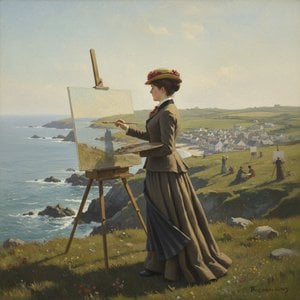
Elizabeth Adela Forbes: A Pioneering Impressionist of the Newlyn School
Explore the life & art of Elizabeth Adela Forbes, a pioneering Impressionist of the Newlyn School. Discover her captivating paintings, unique style, and lasting legacy with ArtsDot.

The Hague School: Realism, Atmosphere & the Dawn of Dutch Impressionism
Explore the Hague School's pivotal role in Dutch art history. Discover realism, atmospheric landscapes & its influence on Impressionism. Learn about key artists like Mauve & Maris with ArtsDot.

The Sublime Landscape: Exploring the Hudson River School Movement
Explore the captivating world of the Hudson River School! Discover the history, artists, and defining characteristics of this iconic American art movement. Learn about Romanticism's influence & find inspiration for your collection.

하슬러 강 화파 걸작 10선: 허드슨 강을 담은 미국의 낭만 (와후아트)
미국 낭만주의의 정수, 허드슨 강 화파 걸작 10선을 만나보세요. 토마스 콜부터 프레더릭 처치까지, 자연과 예술이 조화로운 풍경화를 통해 시간을 초월하는 아름다움을 경험하세요. 와후아트에서 고품질 미술 복제와 인테리어 영감을 얻으세요! 지금 바로 온라인 컬렉션을 둘러보세요.
