


 미리보기
미리보기
 공유하기
공유하기 공유하기
공유하기
 상세 정보
상세 정보

 다운로드
다운로드
 유사 작품
유사 작품 X-레이
X-레이 슬라이드 쇼
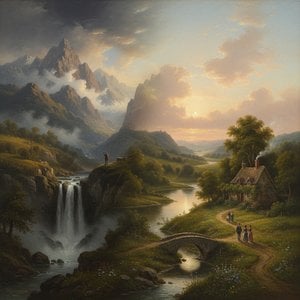
Cottages By A River

 더 보기
더 보기
지클레 / 아트 프린트
빠른 제작과 다양한 마감 옵션을 제공하는 박물관 품질의 지클레이 또는 캔버스 프린트. ( 수제 페인팅으로 전환하기 이미지로 전환)




































작품의 원본 비율을 유지하는 미리 설정된 크기 중에서 선택하세요.

특정 프레임이나 공간에 맞춰 직접 치수를 입력하실 수 있습니다. 선택하신 사이즈가 원본 이미지의 비율과 일치하지 않을 경우, 작품을 크롭(자르기)하거나 이미지를 대칭 또는 단색 채우기로 확장하여 제작합니다. 제작 시작 전, 최종 확인을 위해 디지털 목업이 전송됩니다.
화면상의 미리보기는 실제 크롭이나 확장 상태를 반영하지 않으므로, 최종 구도는 오직 목업을 통해서만 정확하게 확인하실 수 있습니다.
맞춤 사이즈 제작도 가능하지만, 원본 비율을 유지하기 위해서는 사전 정의된 목록에서 치수를 선택하시는 것을 권장합니다.


 유리 옵션은 110cm 미만 크기에서만 선택 가능합니다.

Cottages By A River
지클레 / 아트 프린트
복제본 크기
-


최종 결제 금액
$ 62
유사한 작품들


작가 약력
The Romantic Visionary of Classical Landscape
William Linton, born in the maritime atmosphere of Liverpool in 1791, emerged as a pivotal figure in British landscape painting during the Victorian era—a period defined by a profound fascination with both scientific observation and idealized beauty. His artistic journey began not with the grand gestures of a master, but through the humble and disciplined practice of copying the works of legends like Claude Lorrain and Richard Wilson. These early encounters were transformative, instilling in Linton a deep-seated appreciation for the interplay of natural light and the sweeping grandeur of panoramic compositions. This foundational period shaped his distinctive style, allowing him to weave classical sensibilities into the fabric of 19th-century Romanticism.
Linton’s connection to the natural world was deeply rooted in his formative years spent amidst the picturesque landscapes of Lancaster and Cartmel. His education at Windermere School fostered a lifelong intimacy with the serene, mist-covered vistas of the Yorkshire Dales and the Lake District. While he initially pursued a career in the merchant’s trade—a vocation he found spiritually unfulfilling—his innate talent for visual representation eventually compelled him to dedicate himself fully to the pursuit of art. This transition from commerce to creativity marked the beginning of a prolific career that would see him become a mainstay of the London art scene.
A Journey Through Light and Atmosphere
As his reputation grew, Linton became a regular presence at the Royal Academy and the British Institution, exhibiting his works from 1817 onwards. His subject matter often drew from the rugged beauty of Scotland and Northern England, where he captured scenes imbued with an atmospheric grandeur that reflected the prevailing Romantic sensibility. However, it was his travels through Italy between 1828 and 1829 that perhaps most significantly expanded his artistic vocabulary. During these extensive sketching expeditions, Linton absorbed the sun-drenched textures and classical ruins of the Mediterranean, producing a substantial collection of drawings that would later serve as the blueprint for his monumental oil paintings.
His ability to blend historical reverence with naturalistic detail allowed him to create landscapes that felt both grounded in reality and elevated by fantasy. Whether depicting the dramatic coastal fortresses of Positano or the serene, pastoral charm of an Italianate Landscape populated by peasants and livestock, Linton utilized a masterful command of light to evoke emotion. His works often feature:
- Classical Grandeur: A focus on architectural elements and ruins that suggest the weight of history.
- Atmospheric Depth: The use of soft, hazy horizons and dramatic shadows to create a sense of infinite space.
- Textural Richness: Detailed rendering of geological formations, water, and foliage to ground his idealized scenes in tactile reality.
Legacy and Artistic Leadership
Beyond his individual canvases, Linton was a vital architect of the British art community. His commitment to fostering innovation and collaboration led him to play a crucial role in the establishment of the Society of British Artists in 1823-1824. His leadership qualities were formally recognized when he served as the society's president in 1837, a testament to the respect he commanded among his peers. Through this role, he helped create a platform for emerging artists to navigate the complexities of the Victorian art market.
The historical significance of William Linton lies in his ability to bridge the gap between the classical traditions of the past and the burgeoning Romanticism of his era. He did not merely record landscapes; he reimagined them, infusing the rugged terrain of the English Lakes and the sun-soaked coasts of Italy with a sense of poetic timelessness. Today, his legacy survives in collections such as the Tate, where his works continue to invite viewers into a world of architectural fantasy and sublime natural beauty, reminding us of a time when the canvas was a window into the eternal.

William Linton
1791 - 1876 , United Kingdom
주요 정보
- Artistic Movement Or Style: Classical Landscape
- Artists Or Movements Influenced By This Artist: ['Turner']
- Artists Who Influenced This Artist:
- Claude Lorrain
- Richard Wilson
- Claude-Joseph Vernet
- Date Of Birth: Liverpool, United Kingdom (1791)
- Date Of Death: 1876
- Full Name: William Linton
- Nationality: British
- Notable Artworks:
- The Albanian Mountains With Corfu In The Distance
- Horses In A Pasture At Dawn
- Figures By A Cottage; And A Cottage In A Landscape
- Place Of Birth: Liverpool
관련 기사 더 보기

John Varley I: Intimate Observation & the British Romantic Landscape
Explore the serene landscapes of John Varley I, a key figure in British Romanticism. Discover his unique watercolour style, collaboration with William Blake & lasting artistic legacy. Learn about collecting Varley's work.

Evoking Emotion & Transcendence: Romantic Landscape Painting (18th-19th Century)
Explore the emotional depth of Romantic landscape painting (18th-19th century). Discover key artists like Friedrich & Cole, and the concepts of the sublime. Expert insights for art lovers & collectors.
The Sublime and the Picturesque: Exploring Emotion & Nature in Romantic Landscape Painting
Explore the emotional power of Romantic landscape painting! Discover the sublime & picturesque aesthetics, key artists like Friedrich & Cole, and lasting influence on art history. Find your perfect piece at ArtsDot.

Oil on Panel Masters: 10 Paintings That Revolutionized Art |
Journey through 10 legendary 'Oil on Panel' masterpieces by Van Eyck, Bosch & Bruegel. Explore the stories behind these iconic Renaissance & Baroque paintings and find museum-quality art reproductions to elevate your home decor. Discover all masterpieces on !

Anthony Vandyke Copley Fielding: Rediscovering a Master of Romantic Landscape
Discover the captivating landscapes of Anthony Vandyke Copley Fielding, a master of Romantic watercolour painting. Explore his life, technique, and legacy with ArtsDot – your source for museum-quality art reproductions & expert appraisal.

