


 미리보기
미리보기
 프린트 구매
 공유하기
공유하기 공유하기
공유하기
 상세 정보
상세 정보

 다운로드
다운로드
 유사 작품
유사 작품 X-레이
X-레이 슬라이드 쇼
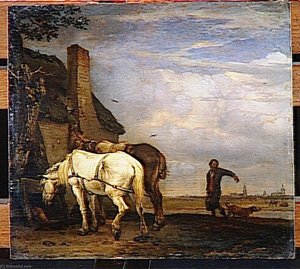
Classical landscape
 더 보기
더 보기




































작품의 원본 비율을 유지하는 미리 설정된 크기 중에서 선택하세요.

특정 프레임이나 공간에 맞도록 직접 크기를 입력할 수 있습니다. 선택하신 크기가 원본 이미지의 비율과 일치하지 않는 경우, 작품을 자르거나 추가적인 손으로 그린 요소를 사용하여 그림을 확장합니다. 제작 시작 전 승인을 위해 디지털 목업을 보내드립니다.
화면 미리 보기는 실제 자르기 또는 확장을 반영하지 않습니다. 최종 구성은 목업을 통해서만 정확하게 확인하실 수 있습니다.
맞춤 크기 제작도 가능하지만, 원본 비율을 유지하기 위해 사전 정의된 목록에서 크기를 선택하시는 것을 권장합니다.
주문 후 ArtsDot.com 팀에서 상세 안내를 위해 고객님께 이메일을 보내드리며, 미리보기 시안을 제공해 드립니다.


 유리 옵션은 110cm 미만 크기에서만 선택 가능합니다.

Classical landscape
재현 기법
복제본 크기
-


최종 결제 금액
$ 263
유사한 작품들



작가 약력
The Pastoral Vision of Willem Romeijn
In the golden light of the seventeenth-century Netherlands, a period defined by unparalleled prosperity and an enduring fascination with the natural world, the works of Willem Romeijn emerged as a serene testament to the beauty of rural life. Born around 1624 in the vibrant artistic hub of Haarlem, Romeijn was more than just a chronicler of landscapes; he was a poet of the pastoral, capable of transforming a simple meadow into a stage for quiet, profound contemplation. His artistry, deeply rooted in the Dutch Golden Age, captures a sense of timelessness, where the rhythmic grazing of livestock and the soft play of light across a valley evoke an emotional resonance that transcends the mere documentation of scenery.
The foundation of Romeijn’s mastery can be traced back to his formative years in Haarlem, where he entered the studio of the renowned Nicolaes Berchem around 1642. Under Berchem’s tutelage, Romeijn absorbed the stylistic nuances of the atmospheric landscape tradition, learning to manipulate light and shadow to breathe life into animal studies and sprawling vistas. This early training instilled in him a meticulous attention to detail—a hallmark that would later allow him to render the textures of wool, the weight of cattle, and the delicate foliage of the Dutch countryside with breathtaking realism.
A Journey Through Light and Tradition
The trajectory of Romeijn’s career was profoundly altered by his transformative voyage to Italy between 1650 and 1651. Immersing himself in the artistic atmosphere of Rome, he engaged with the enduring humanist traditions and the dramatic chiaroscuro popularized by masters like Caravaggio. This exposure to the Mediterranean light introduced a new dimension to his work, fostering a heightened sensitivity to luminosity that would define his later compositions. Upon his return to Haarlem, his style began to reflect an Italianate influence, blending the rugged charm of Northern landscapes with the luminous, idealized qualities of the Roman school.
Back in his native Haarlem, Romeijn became a pillar of the local artistic community. His commitment to his craft was formalized through his membership in the Haarlem Guild of Saint Luke from 1646 onwards. His ascent within the guild was notable; he served in prestigious capacities such as vinder and oud-vinder, working alongside contemporaries like Frans de Hulst and Jacob de Wet. These roles were not merely administrative but signified his standing among the elite painters of his era, a period when Haarlem was a crucible of innovation and artistic experimentation.
Legacy of the Pastoral Master
The enduring significance of Willem Romeijn lies in his ability to capture the soul of the landscape. While his works have occasionally been conflated with those of other masters such as Berchem or Adriaen van der Kabel, a closer examination reveals a distinct voice characterized by an understated emotional depth and a tranquil, almost meditative quality. His recurring themes—grazing cattle, wandering sheep, and the quiet presence of peasants—serve as a window into a world of stability and peace.
Throughout his long career, which saw his last dated works as late as 1694, Romeijn remained dedicated to the pursuit of atmospheric truth. His paintings do not merely depict animals in a field; they invite the viewer to inhabit a moment of stillness. Today, his legacy continues to inspire, standing as a vital link in the chain of Dutch landscape painting and reminding us of the profound beauty found in the simplest corners of the natural world.

willem romeijn
1624 - 1693 , Netherlands
주요 정보
- Artistic Movement Or Style: Roman School
- Artists Who Influenced This Artist: ['Nicolaes Berchem']
- Date Of Birth: ca. 1624
- Full Name: Willem Romeijn
- Nationality: Dutch
- Notable Artworks:
- Landscape with Animals
- Landscape with Cattle and a Peasant Woman
- Landscape with Cattle and a Cowherd
- Place Of Birth: Haarlem, Netherlands

