


 미리보기
미리보기
 공유하기
공유하기 공유하기
공유하기
 상세 정보
상세 정보

 다운로드
다운로드
 유사 작품
유사 작품 X-레이
X-레이 슬라이드 쇼
Pigs at a Trough
 Acrylic On Canvas
- WallArt
- Satirical Caricature
 1790
1790 9.0 x 15.0 cm
 예일 영국 미술관
 더 보기
더 보기
지클레 / 아트 프린트
빠른 제작과 다양한 마감 옵션을 제공하는 박물관 품질의 지클레이 또는 캔버스 프린트. ( 수제 페인팅으로 전환하기 이미지로 전환)




P118B $10

P118H $10

P118W $10

P438Z $10

P508JH $12

P508YH $12

P805H $10

P805Z $10

P919BZ $10

P919G $10

P919XJ $10

P959ZH $10

P968JZ $12

W106C $8

W218G $10

W218JH $8

W218Y $10

W307PJ $10

W316G $10

W316PJ $8

W316Y $10

W398PJ $8

W4111J $10

W500HY $15

W500JH $15

W692G $12

W849H $8

W940BG $15

W953PJ $8




작품의 원본 비율을 유지하는 미리 설정된 크기 중에서 선택하세요.

특정 프레임이나 공간에 맞춰 직접 치수를 입력하실 수 있습니다. 선택하신 사이즈가 원본 이미지의 비율과 일치하지 않을 경우, 작품을 크롭(자르기)하거나 이미지를 대칭 또는 단색 채우기로 확장하여 제작합니다. 제작 시작 전, 최종 확인을 위해 디지털 목업이 전송됩니다.
화면상의 미리보기는 실제 크롭이나 확장 상태를 반영하지 않으므로, 최종 구도는 오직 목업을 통해서만 정확하게 확인하실 수 있습니다.
맞춤 사이즈 제작도 가능하지만, 원본 비율을 유지하기 위해서는 사전 정의된 목록에서 치수를 선택하시는 것을 권장합니다.


 유리 옵션은 110cm 미만 크기에서만 선택 가능합니다.

Pigs at a Trough
지클레 / 아트 프린트
복제본 크기
-


최종 결제 금액
$ 62
작품 상세 설명
A Rustic Revelry: Thomas Rowlandson’s “Pigs at a Trough”
Thomas Rowlandson's "Pigs at a Trough," painted circa 1790, isn’t merely a depiction of farmyard animals; it’s a vibrant snapshot of Georgian England brimming with social commentary and delightfully mischievous humor. This small yet powerfully evocative work, now housed within the Yale Center for British Art, offers a glimpse into a world where satire and observation intertwined seamlessly, revealing both the pleasures and absurdities of everyday life.
Rowlandson, a master caricaturist renowned for his biting political illustrations and intimate portrayals of human folly, employed a remarkably direct technique here. The scene unfolds with an almost palpable immediacy – we’re not observing from a distance but rather immersed within the muddy chaos of the trough. His pen and ink lines are bold and confident, capturing the physicality of the pigs with remarkable accuracy; their plump bodies, bristly coats, and greedy postures practically leap off the cream-laid paper. The brown wash adds depth and texture, emphasizing the damp earth and the glistening sheen of the water. Notice how Rowlandson skillfully uses light and shadow to define each animal, creating a sense of three-dimensionality that belies the painting’s diminutive size.
A Scene Steeped in Social Observation
“Pigs at a Trough” is more than just a charming pastoral scene; it's a subtle critique of societal values. Rowlandson was known for his sharp wit and willingness to expose hypocrisy, and this painting is no exception. The image subtly alludes to the extravagance and excess prevalent in Georgian society – a stark contrast to the simple, almost primal act of foraging for food. The abundance of pigs suggests a commentary on resourcefulness and perhaps even a gentle mockery of those who indulged in unnecessary displays of wealth. It’s a reminder that beneath the veneer of refinement, there often lay a deeper current of practicality and, occasionally, a touch of desperation.
Echoes of Folklore and Myth
The image resonates with elements of folklore and myth, particularly the enduring legend of “pig-faced women.” While not explicitly depicted here, the scene evokes the story of a noblewoman cursed to appear as a pig after rejecting a beggar. This tale, popular in England and Ireland during the 18th century, speaks to anxieties about social status, beauty standards, and the consequences of arrogance. Rowlandson’s painting subtly taps into this cultural memory, suggesting a connection between earthly abundance and potential misfortune – a reminder that even the most seemingly prosperous life can be fraught with unexpected challenges.
A Timeless Appeal
“Pigs at a Trough” endures as a testament to Rowlandson’s artistic genius and his keen understanding of human nature. Its playful composition, vibrant colors, and subtle social commentary combine to create an image that is both entertaining and thought-provoking. It's a painting that invites us to pause, observe, and perhaps even question the values we hold dear. Reproductions of this delightful work continue to captivate audiences today, offering a window into a bygone era and reminding us of the enduring power of humor and satire.
유사한 작품들


작가 약력
A Life Etched in Satire: The World of Thomas Rowlandson
Born amidst the bustling streets of Old Jewry, London, on July 13th, 1756 (baptized July 23rd, 1757), Thomas Rowlandson emerged as a defining voice – and pen – of Georgian England. His life, initially shadowed by his father’s financial struggles that necessitated a move to Richmond, North Yorkshire in 1759, would ultimately blossom into an artistic career marked by unparalleled wit and incisive social commentary. Rowlandson wasn't merely documenting his era; he was holding a mirror to its follies, exaggerating its vanities, and immortalizing its characters with a uniquely satirical eye. From humble beginnings, nurtured by an uncle’s support that allowed him access to education at Dr. Barwis’ school in Soho Square, Rowlandson embarked on a path that would see him become one of the most celebrated – and controversial – caricaturists of his time. Even as a schoolboy, his innate talent manifested itself in playful sketches adorning the margins of his books, foreshadowing a career dedicated to visual storytelling with a mischievous edge.
Early Life and Artistic Training
Thomas Rowlandson’s father was a weaver who worked in the textile trade, shaping his formative years. He studied at the Royal Academy in 1772, where he honed his skills for six years, including a period of study in Paris under Jean-Baptiste Pigalle. This exposure to continental techniques proved invaluable, laying the foundation for his distinctive style – a blend of delicate draughtsmanship and bold exaggeration. Rowlandson’s early works were characterized by a remarkable facility for line and a keen understanding of human expression, qualities that would become hallmarks of his mature style.
The Rise of Caricature and Collaboration
Rowlandson quickly recognized the potential of caricature as a means of supplementing his income, and this soon became his major interest. He began to dissect the social landscape with ruthless accuracy, targeting politicians, aristocrats, and everyday citizens alike. The financial pressures following his aunt’s death further propelled him towards caricature as a method of livelihood, yet this shift wasn't merely pragmatic; it was an artistic awakening. His collaboration with publisher Rudolph Ackermann yielded some of his most enduring works, including *The Schoolmaster’s Tour* (1809), a series of plates accompanied by verses from Dr. William Combe, and the iconic *Tour of Dr. Syntax in Search of the Picturesque* (1812). These works weren't simply visual accompaniments to text; they were integral to the storytelling, enhancing the humor and social commentary through dynamic compositions and expressive characterizations.
Notable Works and Artistic Style
Rowlandson’s artistic style—a blend of delicate draughtsmanship and bold exaggeration—became synonymous with his era. His ability to capture both the grandeur of landscapes and the absurdity of human behavior cemented his reputation as a leading artist of the Georgian period. Pieces like *Hengar House the Seat of Matthew Mitchell Esq., Cornwall* (1812) and *Glorious Defeat of the Dutch Navy* (1797) stand as testaments to his artistic skill and historical significance. Rowlandson’s influence can be seen in subsequent generations of cartoonists and illustrators who embraced satire as a means of social commentary.
Legacy and Influence
Thomas Rowlandson left behind an extensive body of art – over 381 artworks are cataloged at ArtsDot.com alone – that provides a vivid and often unflattering portrait of Georgian society. His caricatures weren’t merely about ridicule; they were astute observations on the political climate, social customs, and human foibles of his time. He fearlessly lampooned figures like the Duchess of Devonshire, William Pitt the Younger, and Napoleon Bonaparte, exposing their vulnerabilities and challenging established power structures. Rowlandson's enduring appeal lies in its timeless relevance – the human tendencies towards vanity, hypocrisy, and absurdity that he so brilliantly captured remain remarkably consistent across centuries.

토마스 로울프슨
1756 - 1827 , 영국
주요 정보
- Artistic Movement Or Style: 풍자 미술
- Artists Who Influenced This Artist:
- 페터 폴 루베르스
- 토마스 게인즈버러
- Date Of Birth: 1756년 7월 13일
- Date Of Death: 1827년 4월 21일
- Full Name: Thomas Rowlandson
- Nationality: 영국인
- Notable Artworks:
- 학교 교사 투어
- 닥터 신테스 시리즈
- 눈물짓는 모습
- Place Of Birth: 런던 영국
관련 기사 더 보기

Giclée Prints: Archival Quality & Aesthetic Nuances for the Discerning Collector
Explore the world of giclée prints with ArtsDot. Learn about archival quality, aesthetic nuances & investment potential. Expert guidance for discerning art collectors seeking museum-quality reproductions and lasting value.

Thomas Rowlandson: Satire, Society & the Art of Caricature in Georgian England
Explore the witty world of Thomas Rowlandson, master Georgian caricaturist! Discover his satirical prints & insightful social commentary on 18th-century England. Learn about his life, techniques, and enduring influence.

The Enduring Legacy of Fine Art Prints: Technique, History & Aesthetic Impact
Explore the rich history & techniques of fine art prints. Discover investment potential, assess authenticity, and learn how to preserve your collection with expert guidance. Trusted insights for discerning collectors.

Echoes of Time: Exploring the Enduring Appeal & Historical Context of Vintage Art Prints
Explore the captivating world of vintage art prints! Discover their history, collecting tips & enduring appeal. Expert insights on chromolithography and building a legacy collection with ArtsDot.
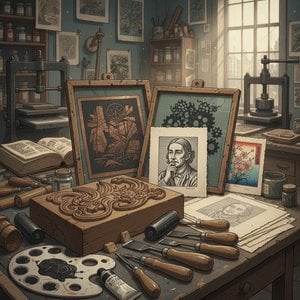
The Enduring Legacy of Printmaking: Techniques, Themes & Artistic Innovation Across Centuries
Explore the rich history of printmaking with ArtsDot. Discover techniques from intaglio to lithography, learn about collecting valuable prints & find museum-quality reproductions. Expert insights for art enthusiasts and collectors.

