

 미리보기
미리보기
 공유하기
공유하기 공유하기
공유하기
 상세 정보
상세 정보 가이드 보기

 다운로드
다운로드
 유사 작품 더 보기
 X-레이
X-레이 슬라이드 쇼 보기
 질의응답
질의응답 통계 정보
통계 정보The Departure


 더 보기
더 보기
지클레 / 아트 프린트
빠른 제작과 다양한 마감 옵션을 제공하는 박물관 수준의 지클레이 및 캔버스 프린트. ( 수작업 채색 복제본 주문하기 디지털 이미지로 전환)




P118B ₩10

P118H ₩10

P118W ₩10

P438Z ₩10

P508JH ₩12

P508YH ₩12

P805H ₩10

P805Z ₩10

P919BZ ₩10

P919G ₩10

P919XJ ₩10

P959ZH ₩10

P968JZ ₩12

W106C ₩8

W218G ₩10

W218JH ₩8

W218Y ₩10

W307PJ ₩10

W316G ₩10

W316PJ ₩8

W316Y ₩10

W398PJ ₩8

W4111J ₩10

W500HY ₩15

W500JH ₩15

W692G ₩12

W849H ₩8

W940BG ₩15

W953PJ ₩8




작품의 원본 비율을 그대로 유지하는 프리셋 사이즈 중에서 선택해 보세요.

액자나 벽면 크기에 맞춰 필요한 가로와 세로 길이를 입력해 주세요. 프린트는 원본 이미지보다 크게 제작할 수 없으며 오직 자르는 것만 가능하므로, 비율이 다른 사이즈를 선택할 경우 이미지의 일부가 잘려 나갈 수 있습니다. 인쇄 작업에 들어가기 전, 최종 확인을 위해 디지털 목업을 보내드립니다. 이 페이지에 표시된 이미지는 실제 잘리는 영역을 나타내지 않으며, 오직 목업을 통해서만 정확한 확인이 가능합니다.


 유리 옵션은 110cm 미만 크기에서만 선택 가능합니다.

The Departure
지클레 / 아트 프린트
복제본 크기
-


최종 결제 금액
₩ 84341
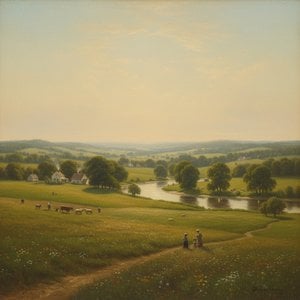
The Departure: A Romantic Vision of American Wilderness
- Subject Matter: Thomas Cole’s “The Departure” is more than just a landscape; it's an embodiment of the burgeoning American spirit. The scene unfolds with a majestic castle perched atop a distant hill, immediately drawing the viewer into a narrative of exploration and aspiration. A winding pathway leads through a verdant meadow, populated by figures on horseback – symbols of progress and the westward expansion that defined early America. The inclusion of a horse near the bottom left corner adds a layer of realism and reinforces the theme of human interaction with nature.
- Style & Technique: Painted in 1838, this oil-on-canvas masterpiece firmly establishes Cole as a key figure within the Hudson River School. This movement championed the beauty of the American landscape, prioritizing observation and emotional response over purely academic concerns. Cole’s technique is characterized by meticulous brushwork, creating a palpable sense of texture – from the rough bark of trees to the smooth flow of water. The use of light is particularly masterful, employing soft, diffused tones that evoke either dawn or dusk, contributing significantly to the painting's tranquil and awe-inspiring atmosphere.
Historical Context & The Hudson River School
“The Departure” emerged during a pivotal moment in American history – the early 19th century. Thomas Cole was a pioneer of American landscape painting, deeply influenced by Romanticism’s emphasis on emotion and the sublime. He belonged to the Hudson River School, a group of artists dedicated to capturing the grandeur of the American wilderness. This movement represented a deliberate break from European artistic traditions, which often focused on historical or mythological subjects. Instead, Cole and his contemporaries sought to depict the unique beauty of the American landscape – a vast, untamed territory ripe with potential – reflecting the nation’s own burgeoning identity.
Symbolism & Emotional Impact
- The Castle: The castle itself is a potent symbol, representing power, majesty, and perhaps even the aspirations of a young nation. Its elevated position suggests a desire to transcend earthly concerns and reach for something greater.
- The Landscape: Beyond its aesthetic beauty, the painting evokes feelings of peace, harmony, and awe in the face of nature’s immensity. The vastness of the landscape invites contemplation and reinforces the Romantic ideal of connecting with the natural world on a deeply emotional level.
Color & Composition
The color palette is predominantly warm – greens, browns, and blues – creating a sense of depth and realism. The subtle shifts in tone, from the pale pinks and purples of the sky to the deeper blues in the distance, contribute to the painting’s atmospheric quality. Cole's masterful use of perspective— layering scenery from foreground vegetation to distant mountains—further enhances the illusion of three-dimensionality. The pyramidal composition, with the castle as its apex, directs the viewer’s eye and reinforces the sense of grandeur.
질의응답
토마스 콜의 "The Departure"은 밝은 느낌의 작품인가요, 아니면 어두운 느낌의 작품인가요?
시각적 밝기 측면에서 볼 때, 토마스 콜의 "The Departure"은(는) shadow 수준입니다.
"The Departure" 이미지를 다운로드할 수 있나요?
토마스 콜의 "The Departure"은(는) 고해상도 디지털 이미지 다운로드로 이용 가능하며, 작품의 디지털 이미지 다운로드 페이지에서 다운로드할 수 있습니다.
"The Departure"은 어떤 기법으로 제작되었나요?
토마스 콜의 "The Departure"의 재료는 Oil On Canvas입니다. 복제화는 이 기법 특유의 질감을 그대로 구현하는 것을 목표로 합니다.
유사한 작품들


작가 정보
A Pioneer of American Landscape Painting
Thomas Cole, a name synonymous with the birth of distinctly American art, stands as a pivotal figure in 19th-century painting. Born on February 1, 1801, in Bolton-le-Moors, Lancashire, England, his early life offered little indication of the profound impact he would have on the artistic landscape. Emigrating to the United States in 1818 with his family and settling in Ohio, Cole’s journey was one of self-discovery and artistic awakening. Initially working as an itinerant portrait painter—a common trade at the time—he soon found himself captivated by the untamed beauty of the American wilderness. This shift wasn't merely a change in subject matter; it represented a fundamental divergence from European artistic traditions, which often prioritized historical or mythological narratives. Cole’s landscapes weren’t simply depictions of scenery; they were imbued with a spiritual and allegorical depth that resonated deeply with a nation forging its own identity. His move to Catskill, New York, in 1825 proved transformative, providing him with both inspiration and a permanent base from which to explore the surrounding Hudson River Valley—a region destined to become inextricably linked with his artistic legacy.The Hudson River School and Romantic Ideals
Cole is rightfully regarded as the founder of the Hudson River School, an art movement characterized by its romantic portrayal of the American landscape. However, labeling him solely a “landscape painter” feels inadequate. His work transcended mere representation; it was profoundly philosophical, often delving into themes of humanity’s relationship with nature, the passage of time, and the rise and fall of civilizations. Influenced by European Romanticism—particularly the works of Claude Lorrain and J.M.W. Turner—Cole adapted these sensibilities to an American context. Where European Romantics frequently depicted dramatic, sublime landscapes as reflections of inner turmoil, Cole’s paintings often conveyed a sense of optimism and divine presence within the natural world. He perceived in the vastness of the American wilderness a symbol of national potential and spiritual renewal. The Oxbow (1836), arguably his most iconic work, exemplifies this perfectly—a sweeping vista that juxtaposes the wild, untamed river valley with cultivated farmland, representing both promise and challenge during westward expansion. Cole’s meticulous observation from nature, combined with a deeply personal and symbolic approach to landscape painting, established a distinctly American artistic tradition.Allegory and The Course of Empire
Beyond his realistic depictions of scenery, Cole possessed an ambition that extended far beyond mere representation. He frequently employed allegory to convey complex moral and philosophical ideas—a technique powerfully demonstrated in his monumental series The Course of Empire, completed between 1833 and 1836. Comprising five canvases—“Savage State,” “Pastoral State,” “Arcadian State,” “Consummation,” and “Destruction”—the series chronicles the cyclical history of humankind from its primordial origins to inevitable decline. The paintings aren’t merely historical narratives; they serve as cautionary tales about the perils of unchecked ambition and the fragility of human achievement. Cole's masterful use of chiaroscuro—the dramatic interplay of light and shadow—intensifies the emotional impact of each scene, mirroring the turbulent forces shaping civilization’s trajectory. The Course of Empire resonated deeply with contemporary audiences, reflecting anxieties about industrialization and westward expansion—issues that profoundly shaped America’s cultural landscape.Early Life and Artistic Training
Cole's formative years were marked by a quiet sensitivity and an unwavering fascination with the natural world. Born into a modest English family, he received his initial artistic training from an itinerant portrait painter named Stein—a common practice at the time—acquiring foundational skills in drawing and painting portraits before transitioning to landscapes. This early exposure instilled in him a lifelong commitment to meticulous observation and a profound appreciation for detail—qualities that would characterize his subsequent work. His family’s decision to immigrate to Steubenville, Ohio, in 1818 provided Cole with an opportunity to experience the burgeoning American frontier firsthand, fueling his artistic imagination and shaping his vision of America's future.Notable Paintings and Artistic Legacy
Cole’s oeuvre encompasses a remarkable range of landscapes—from serene depictions of Vermont hillsides to dramatic vistas of Mount Etna—each infused with a distinctive blend of realism and symbolic representation. Among his most celebrated paintings are *The Oxbow*, *Mount Marcy*, *Albany,* and *The Course of Empire*, which stand as testaments to his artistic genius and enduring influence. His meticulous attention to detail—captured through painstaking pencil sketches and executed with masterful brushwork—elevates his landscapes beyond mere visual pleasure, inviting viewers to contemplate profound questions about humanity’s relationship with nature and the passage of time. Cole's legacy extends far beyond his paintings; he championed a vision for American art that prioritized originality, spirituality, and an unwavering connection to the natural world—a perspective that continues to inspire artists and scholars today. His influence can be seen in the works of Frederic Edwin Church and Asher B. Durand, who would become prominent figures of the second generation of Hudson River School painters—solidifying Cole’s position as a cornerstone of American art history.
토마스 콜
1801 - 1848 , 영국
작가 정보 요약
- Artistic Movement Or Style: 하드슨 강 학파
- Artists Who Influenced This Artist:
- 아셰르 베 드랑
- 프레데릭 에드윈 교회
- Date Of Birth: 2월 1일, 영국 볼턴
- Date Of Death: 2월 11일, 미국 캐츠킬
- Full Name: Thomas Cole
- Nationality: 미국인
- Notable Artworks:
- 옥스보우
- 코스의 임페리움 파괴
- Place Of Birth: 볼턴 레 모어스, 영국
관련 콘텐츠

Robert Spencer: Luminism, Narrative & the American Landscape Tradition
Explore the captivating world of Luminism & the Hudson River School with our expert analysis. Discover the history, artists, and enduring beauty of 19th-century American landscape painting. Find museum-quality reproductions at ArtsDot.
Thomas Worthington Whittredge: Capturing the American Pastoral Ideal with Luminist Light
Explore the luminous landscapes of Thomas Worthington Whittredge, a key figure in the Hudson River School and master of Luminism. Discover his captivating paintings & legacy with ArtsDot.

하슬러 강 화파 걸작 10선: 허드슨 강을 담은 미국의 낭만 (와후아트)
미국 낭만주의의 정수, 허드슨 강 화파 걸작 10선을 만나보세요. 토마스 콜부터 프레더릭 처치까지, 자연과 예술이 조화로운 풍경화를 통해 시간을 초월하는 아름다움을 경험하세요. 와후아트에서 고품질 미술 복제와 인테리어 영감을 얻으세요! 지금 바로 온라인 컬렉션을 둘러보세요.

The Sublime Landscape: Exploring the Hudson River School Movement
Explore the captivating world of the Hudson River School! Discover the history, artists, and defining characteristics of this iconic American art movement. Learn about Romanticism's influence & find inspiration for your collection.

Asher Brown Durand: Luminism, Landscape & the American Ideal – A Comprehensive Exploration
Explore the life & art of Asher Brown Durand, a founding member of the Hudson River School. Discover his masterful landscapes, Luminist techniques, and lasting impact on American painting. Learn about key works like 'Kindred Spirits' & collecting Durand today.


