


 실제 크기로 보기
 보내기
보내기 공유하기
공유하기
 상세 보기
상세 보기 가이드 보기

 이미지 다운로드
 유사 작품 더 보기
 X-레이
X-레이 슬라이드 쇼 보기
 통계 정보
통계 정보Study, a man's face

 상세 보기
상세 보기
핸드메이드 유화 복제화
작가가 직접 캔버스에 손으로 그린 유화 작품으로, 원하는 크기와 액자로 맞춤 제작해 드립니다. ( 프린트 판매로 전환 디지털 이미지 판매 채널로 전환)




































작품의 원본 비율을 그대로 유지하는 프리셋 사이즈 중에서 선택해 보세요.

액자나 벽면 크기에 맞춰 필요한 가로와 세로 길이를 입력해 주세요. 본 작품은 수작업으로 제작되므로, 요청하신 비율에 따라 작가가 그림의 가장자리를 조금 더 넓게 그리거나 일부를 조정하여 작업할 수 있습니다. 작업 시작 전, 최종 확인을 위해 디지털 목업 이미지를 보내드립니다. 이 페이지에 표시된 이미지는 실제 결과물과 다를 수 있으며, 오직 목업 이미지만이 정확한 결과물을 보여줍니다.
주문 완료 후 ArtsDot.com 팀에서 상세 안내를 위해 고객님께 이메일을 보내드리며, 미리보기 시안을 함께 제공해 드립니다.


 유리 옵션은 110cm 미만 크기에서만 선택 가능합니다.

Study, a man's face
재현 매체
복제본 규격
-


총 결제 금액
₩ 364699
A Glimpse into Character: Thomas Cole's "Study, a Man's Face"
This evocative pencil sketch by Thomas Cole offers an intimate study of an older gentleman, capturing a moment of quiet contemplation. More than just a portrait, it’s a window into the artist’s process and a testament to his keen observational skills. Executed with remarkable economy of line, this work provides a fascinating insight into the mind of one of America's most important landscape painters, revealing a sensitivity that extended beyond grand vistas to the subtle nuances of human expression. The subject, rendered in shades of gray and white against a cream-colored background, exudes an air of wisdom and experience, inviting viewers to ponder his life story.Style & Technique: A Preparatory Sketch
Cole’s “Study, a Man's Face” exemplifies the style of a preparatory sketch or study. It isn't intended as a finished artwork in itself but rather as an exploration of form and likeness before embarking on a larger composition. The technique is characterized by quick, gestural pencil strokes – hatching and cross-hatching are skillfully employed to create shading and suggest volume without resorting to elaborate blending. This direct approach lends the piece a sense of immediacy and authenticity; it feels like a captured moment, a fleeting observation brought to life with remarkable efficiency. The artist’s mastery lies in his ability to convey depth and character using only lines and subtle tonal variations. The materials used – simple pencil on paper – further emphasize the work's raw and unadorned nature.Historical Context & Cole's Artistic Journey
Created during a period of burgeoning American artistic identity, this study reflects Thomas Cole’s broader engagement with portraiture alongside his celebrated landscape paintings. Born in England and later immigrating to the United States, Cole became a pivotal figure in the Hudson River School movement, known for its romantic depictions of the American wilderness. While renowned for his grand allegorical landscapes like "The Course of Empire," this sketch reveals another facet of his artistic practice – a dedication to capturing individual character with precision and sensitivity. It provides valuable insight into how Cole approached portraiture, likely informing his larger works by establishing a foundation of detailed observation.Symbolism & Emotional Resonance
The aged appearance of the subject immediately suggests wisdom, experience, and perhaps even a touch of melancholy. The sketch-like style itself contributes to an emotional impact; it conveys a sense of immediacy and intimacy, as if we are privy to a private moment. The limited color palette reinforces this feeling of quiet contemplation, drawing attention to the interplay of light and shadow across the man’s face. While seemingly simple, the work evokes a profound sense of human dignity and invites viewers to connect with the subject on an emotional level, prompting reflection on the passage of time and the richness of lived experience.질의응답
"Study, a man's face" 작품을 파인 아트 프린트로 구매할 수 있나요?
"Study, a man's face" 작품은 코튼 캔버스 또는 아카이브용 캔버스지에 인쇄된 파인 아트 프린트로 만나보실 수 있습니다. 주문은 파인 아트 프린트 페이지에서 원하시는 사이즈를 선택하여 진행하실 수 있습니다.
토마스 콜의 "Study, a man's face"은(는) 퍼블릭 도메인에 속하나요? 그 이유는 무엇인가요?
"Study, a man's face"의 저작권 상태 - 퍼블릭 도메인 - 저작권 보호 기간이 만료되었습니다 - 는 작가의 1848년 사망에 따라 결정됩니다.
토마스 콜의 "Study, a man's face"의 주요 색상은 무엇인가요?
"Study, a man's face"에서 가장 돋보이는 색상은 Putty (#e9e6d6)입니다. 작품의 주된 색상은 인테리어와 작품을 조화롭게 매치할 때 유용합니다.
관련 작품들


작가 소개
A Pioneer of American Landscape Painting
Thomas Cole, a name synonymous with the birth of distinctly American art, stands as a pivotal figure in 19th-century painting. Born on February 1, 1801, in Bolton-le-Moors, Lancashire, England, his early life offered little indication of the profound impact he would have on the artistic landscape. Emigrating to the United States in 1818 with his family and settling in Ohio, Cole’s journey was one of self-discovery and artistic awakening. Initially working as an itinerant portrait painter—a common trade at the time—he soon found himself captivated by the untamed beauty of the American wilderness. This shift wasn't merely a change in subject matter; it represented a fundamental divergence from European artistic traditions, which often prioritized historical or mythological narratives. Cole’s landscapes weren’t simply depictions of scenery; they were imbued with a spiritual and allegorical depth that resonated deeply with a nation forging its own identity. His move to Catskill, New York, in 1825 proved transformative, providing him with both inspiration and a permanent base from which to explore the surrounding Hudson River Valley—a region destined to become inextricably linked with his artistic legacy.The Hudson River School and Romantic Ideals
Cole is rightfully regarded as the founder of the Hudson River School, an art movement characterized by its romantic portrayal of the American landscape. However, labeling him solely a “landscape painter” feels inadequate. His work transcended mere representation; it was profoundly philosophical, often delving into themes of humanity’s relationship with nature, the passage of time, and the rise and fall of civilizations. Influenced by European Romanticism—particularly the works of Claude Lorrain and J.M.W. Turner—Cole adapted these sensibilities to an American context. Where European Romantics frequently depicted dramatic, sublime landscapes as reflections of inner turmoil, Cole’s paintings often conveyed a sense of optimism and divine presence within the natural world. He perceived in the vastness of the American wilderness a symbol of national potential and spiritual renewal. The Oxbow (1836), arguably his most iconic work, exemplifies this perfectly—a sweeping vista that juxtaposes the wild, untamed river valley with cultivated farmland, representing both promise and challenge during westward expansion. Cole’s meticulous observation from nature, combined with a deeply personal and symbolic approach to landscape painting, established a distinctly American artistic tradition.Allegory and The Course of Empire
Beyond his realistic depictions of scenery, Cole possessed an ambition that extended far beyond mere representation. He frequently employed allegory to convey complex moral and philosophical ideas—a technique powerfully demonstrated in his monumental series The Course of Empire, completed between 1833 and 1836. Comprising five canvases—“Savage State,” “Pastoral State,” “Arcadian State,” “Consummation,” and “Destruction”—the series chronicles the cyclical history of humankind from its primordial origins to inevitable decline. The paintings aren’t merely historical narratives; they serve as cautionary tales about the perils of unchecked ambition and the fragility of human achievement. Cole's masterful use of chiaroscuro—the dramatic interplay of light and shadow—intensifies the emotional impact of each scene, mirroring the turbulent forces shaping civilization’s trajectory. The Course of Empire resonated deeply with contemporary audiences, reflecting anxieties about industrialization and westward expansion—issues that profoundly shaped America’s cultural landscape.Early Life and Artistic Training
Cole's formative years were marked by a quiet sensitivity and an unwavering fascination with the natural world. Born into a modest English family, he received his initial artistic training from an itinerant portrait painter named Stein—a common practice at the time—acquiring foundational skills in drawing and painting portraits before transitioning to landscapes. This early exposure instilled in him a lifelong commitment to meticulous observation and a profound appreciation for detail—qualities that would characterize his subsequent work. His family’s decision to immigrate to Steubenville, Ohio, in 1818 provided Cole with an opportunity to experience the burgeoning American frontier firsthand, fueling his artistic imagination and shaping his vision of America's future.Notable Paintings and Artistic Legacy
Cole’s oeuvre encompasses a remarkable range of landscapes—from serene depictions of Vermont hillsides to dramatic vistas of Mount Etna—each infused with a distinctive blend of realism and symbolic representation. Among his most celebrated paintings are *The Oxbow*, *Mount Marcy*, *Albany,* and *The Course of Empire*, which stand as testaments to his artistic genius and enduring influence. His meticulous attention to detail—captured through painstaking pencil sketches and executed with masterful brushwork—elevates his landscapes beyond mere visual pleasure, inviting viewers to contemplate profound questions about humanity’s relationship with nature and the passage of time. Cole's legacy extends far beyond his paintings; he championed a vision for American art that prioritized originality, spirituality, and an unwavering connection to the natural world—a perspective that continues to inspire artists and scholars today. His influence can be seen in the works of Frederic Edwin Church and Asher B. Durand, who would become prominent figures of the second generation of Hudson River School painters—solidifying Cole’s position as a cornerstone of American art history.
토마스 콜
1801 - 1848 , 영국
작가 정보 요약
- Artistic Movement Or Style: 하드슨 강 학파
- Artists Who Influenced This Artist:
- 아셰르 베 드랑
- 프레데릭 에드윈 교회
- Date Of Birth: 2월 1일, 영국 볼턴
- Date Of Death: 2월 11일, 미국 캐츠킬
- Full Name: Thomas Cole
- Nationality: 미국인
- Notable Artworks:
- 옥스보우
- 코스의 임페리움 파괴
- Place Of Birth: 볼턴 레 모어스, 영국
관련 기사

The Sublime Landscape: Exploring the Hudson River School Movement
Explore the captivating world of the Hudson River School! Discover the history, artists, and defining characteristics of this iconic American art movement. Learn about Romanticism's influence & find inspiration for your collection.
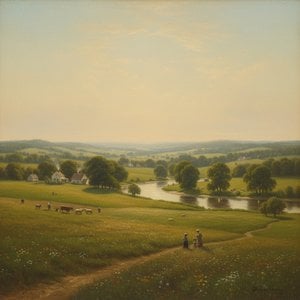
Thomas Worthington Whittredge: Capturing the American Pastoral Ideal with Luminist Light
Explore the luminous landscapes of Thomas Worthington Whittredge, a key figure in the Hudson River School and master of Luminism. Discover his captivating paintings & legacy with ArtsDot.

Robert Spencer: Luminism, Narrative & the American Landscape Tradition
Explore the captivating world of Luminism & the Hudson River School with our expert analysis. Discover the history, artists, and enduring beauty of 19th-century American landscape painting. Find museum-quality reproductions at ArtsDot.
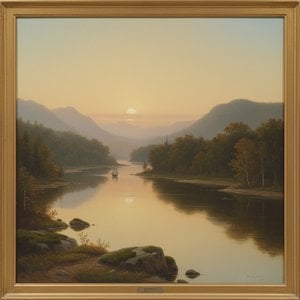
David Johnson: A Luminist Master of the Hudson River School & Beyond
Explore the captivating landscapes of David Johnson, a key figure in the Hudson River School & Luminism movement. Discover his artistic evolution, legacy, and how to collect his works with ArtsDot.

하슬러 강 화파 걸작 10선: 허드슨 강을 담은 미국의 낭만 (와후아트)
미국 낭만주의의 정수, 허드슨 강 화파 걸작 10선을 만나보세요. 토마스 콜부터 프레더릭 처치까지, 자연과 예술이 조화로운 풍경화를 통해 시간을 초월하는 아름다움을 경험하세요. 와후아트에서 고품질 미술 복제와 인테리어 영감을 얻으세요! 지금 바로 온라인 컬렉션을 둘러보세요.


