


 실제 크기로 보기
 보내기
보내기 공유하기
공유하기
 상세 보기
상세 보기 가이드 보기

 이미지 다운로드
 유사 작품 더 보기
 X-레이
X-레이 슬라이드 쇼 보기
 통계 정보
통계 정보Gerard Westerman

 상세 보기
상세 보기
지클레 / 아트 프린트
빠른 제작과 다양한 마감 옵션을 선택할 수 있는 박물관 수준의 지클레이 및 캔버스 프린트. ( 수작업 채색 복제본 주문하기 디지털 이미지 판매 채널로 전환)




P118B $10

P118H $10

P118W $10

P438Z $10

P508JH $12

P508YH $12

P805H $10

P805Z $10

P919BZ $10

P919G $10

P919XJ $10

P959ZH $10

P968JZ $12

W106C $8

W218G $10

W218JH $8

W218Y $10

W307PJ $10

W316G $10

W316PJ $8

W316Y $10

W398PJ $8

W4111J $10

W500HY $15

W500JH $15

W692G $12

W849H $8

W940BG $15

W953PJ $8




작품의 원본 비율을 그대로 유지하는 프리셋 사이즈 중에서 선택해 보세요.

특정 프레임이나 공간에 맞춰 직접 치수를 입력하실 수 있습니다. 선택하신 사이즈가 원본 이미지의 비율과 일치하지 않을 경우, 작품을 크롭(자르기)하거나 이미지를 대칭 또는 단색 채우기로 확장하여 제작합니다. 제작 시작 전, 최종 확인을 위해 디지털 목업이 전송됩니다.
화면상의 미리보기는 실제 크롭이나 확장 상태를 반영하지 않으므로, 최종 구도는 오직 목업을 통해서만 정확하게 확인하실 수 있습니다.
맞춤 사이즈 제작도 가능하지만, 원본 비율을 유지하기 위해서는 사전 정의된 목록에서 치수를 선택하시는 것을 권장합니다.


 유리 옵션은 110cm 미만 크기에서만 선택 가능합니다.

Gerard Westerman
지클레 / 아트 프린트
복제본 규격
-


총 결제 금액
$ 62
관련 작품들


작가 소개
The Master of Character: The Life and Legacy of Thérèse Schwartze
In the vibrant, shifting landscape of late 19th-century Dutch art, few figures commanded as much respect and social prestige as Thérèse Schwartze. Born in Amsterdam on December 20, 1851, she was a woman who navigated the male-dominated corridors of the art world with unparalleled grace and technical prowess. As the daughter of the painter Johan Georg Schwartze—a man whose own artistic journey spanned from Philadelphia to Düsseldorf—Thérèse was immersed in the language of light and shadow from her earliest years. This lineage provided more than just a biological connection to art; it offered a profound foundation of discipline and an international perspective that would later allow her to capture the very essence of Amsterdam’s most influential figures.
Her artistic evolution was a grand tour of Europe's most prestigious academies. After receiving her initial training under her father's watchful eye, she sought formal rigor at the Rijksakademie van Beemtende Kunsten in her native Amsterdam. However, her ambitions could not be contained by a single city. Seeking to refine her brushwork, she traveled to Munich, where she studied under masters such as Gabriel Max and Franz von Lenbach. It was here that she absorbed the nuances of Impressionism and the delicate art of plein air painting, techniques that would later infuse her formal portraiture with a sense of vitality and modern breath. The final, transformative chapter of her education took place in Paris in 1879, where she studied under Jean-Jacques Henner at the École Supérieure des Beaux-Arts, exposing her to the avant-garde spirit of the French capital.
A Brushstroke of Elegance and Social Splendor
Upon returning to Amsterdam, Schwartze did not merely join the art scene; she became one of its most defining architects. Her work became synonymous with the elegance of the Dutch elite, earning her the trust of royalty and the upper echelons of society. She was a prominent member of Arti et Amicitiae and associated with the "De Amsterdamse Joffers," a group of talented women artists who brought a fresh, intellectual energy to the era. Her ability to paint portraits that were far more than mere likenesses—capturing instead the psychological depth and quiet dignity of her subjects—made her the most sought-after portraitist of her time.
Her repertoire was as diverse as it was masterful, ranging from intimate studies to grand, formal commissions. Some of her most notable achievements include:
- Royal Commissions: Her skill in capturing majesty led to portraits of Queen Emma and Princess Wilhelmina, cementing her status as a painter of national importance.
- Intimate Character Studies: Beyond the grand halls of palaces, she excelled in capturing tender moments, such as her poignant 1902 portrait of Maria Catharina Josephine Jordan, where she used soft, diffused light to convey a sense of domestic serenity.
- Vibrant Social Portraits: Works like her Portrait of Lizzy Ansingh demonstrate her ability to blend meticulous detail with a modern, spirited sensibility.
Technically, Schwartze was a virtuoso of texture and light. She possessed a rare ability to render the heavy sheen of silk, the delicate transparency of lace, and the warmth of human skin with equal conviction. Her brushwork, while disciplined, retained a confident fluidity that prevented her portraits from feeling static or overly academic. In works such as Drie meisjes uit het Amsterdamse Burgerweeshuis, one can see her ability to move away from the elite to capture the simple, unvarnished beauty of everyday life, utilizing a composition that feels both spontaneous and perfectly balanced.
Historical Significance and Enduring Impression
The historical significance of Thérèse Schwartze lies in her role as a bridge between the traditional Dutch portraiture of the past and the burgeoning modernism of the early 20th century. While her subjects were often rooted in the old world of aristocracy and established wealth, her technique was infused with the light-filled innovations of her travels through Munich and Paris. She broke barriers for female artists, proving that a woman could not only master the technical rigors of the academy but also command the commercial and social respect required to sustain a legendary career.
Though she passed away in 1918, her presence remains felt in the halls of the Rijksmuseum and other great institutions. She left behind a legacy that celebrates the intersection of character and craft—a testament to an artist who saw not just the face of her era, but its very soul. Through her eyes, we continue to glimpse the vanished splendor of Amsterdam’s golden age, preserved forever in the luminous layers of her oil paintings.

thérèse schwartze
1851 - 1918 , Netherlands
작가 정보 요약
- Artistic Movement Or Style: Portraiture
- Artists Or Movements Influenced By This Artist: Gabriel Max, Franz von Lenbach
- Artists Who Influenced This Artist: Johann Georg Schwartze
- Date Of Birth: December 20, 1851
- Date Of Death: December 23, 1918
- Full Name: Thérèse Schwartze
- Nationality: Dutch
- Notable Artworks:
- Dr J L Dusseau
- Lizzy Ansingh
- Portrait of Piet J Joubert
- Place Of Birth: Amsterdam, Netherlands
관련 기사

Gerard ter Borch: Intimacy & Light in the Dutch Golden Age
Explore the captivating world of Gerard ter Borch, a master of Dutch Golden Age genre painting. Discover his intimate scenes, masterful light, and lasting influence on art history. Learn more at ArtsDot.

Reflections of an Era: Identity & Social Commentary in 19th-Century Portraiture
Explore the captivating world of 19th-century portraiture! Discover key artists, movements like Realism & Impressionism, and the powerful social commentary embedded within these iconic artworks. Expert insights at ArtsDot.

Golden Age Reflections: Dutch Baroque Painting & Cultural Innovation
Explore the Dutch Golden Age of painting! Discover key artists like Vermeer & ter Borch, their innovative techniques, and the rich cultural context behind these Baroque masterpieces. Learn about collecting & appreciating this iconic art period.

19th Century Masterpieces: 10 Paintings That Defined an Era | ArtsDot
Journey through 19th century art with ArtsDot! Explore 10 iconic paintings – from Monet & Renoir to Courbet – and discover the stories behind Romanticism, Realism & Impressionism. Find museum-quality reproductions for your home decor. Explore the full collection online!
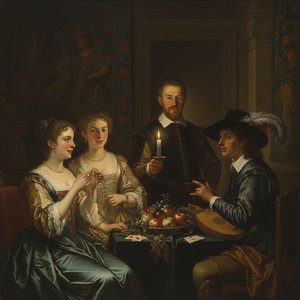
Gerard van Honthorst: Illuminating the Dutch Golden Age with Caravaggism & Courtly Grace
Explore the captivating world of Gerard van Honthorst, a Dutch Golden Age master renowned for his dramatic chiaroscuro & courtly portraits. Discover his life, art, and lasting influence on Baroque painting.