
- 홈

- 디지털 이미지 작품
- susan nudelman
- Ream Clean
 Preview
 프린트 구매하기
 공유하기
공유하기 공유하기
공유하기
 상세 정보
상세 정보

 다운로드
다운로드
 유사 작품
유사 작품 X-레이
X-레이 슬라이드 쇼
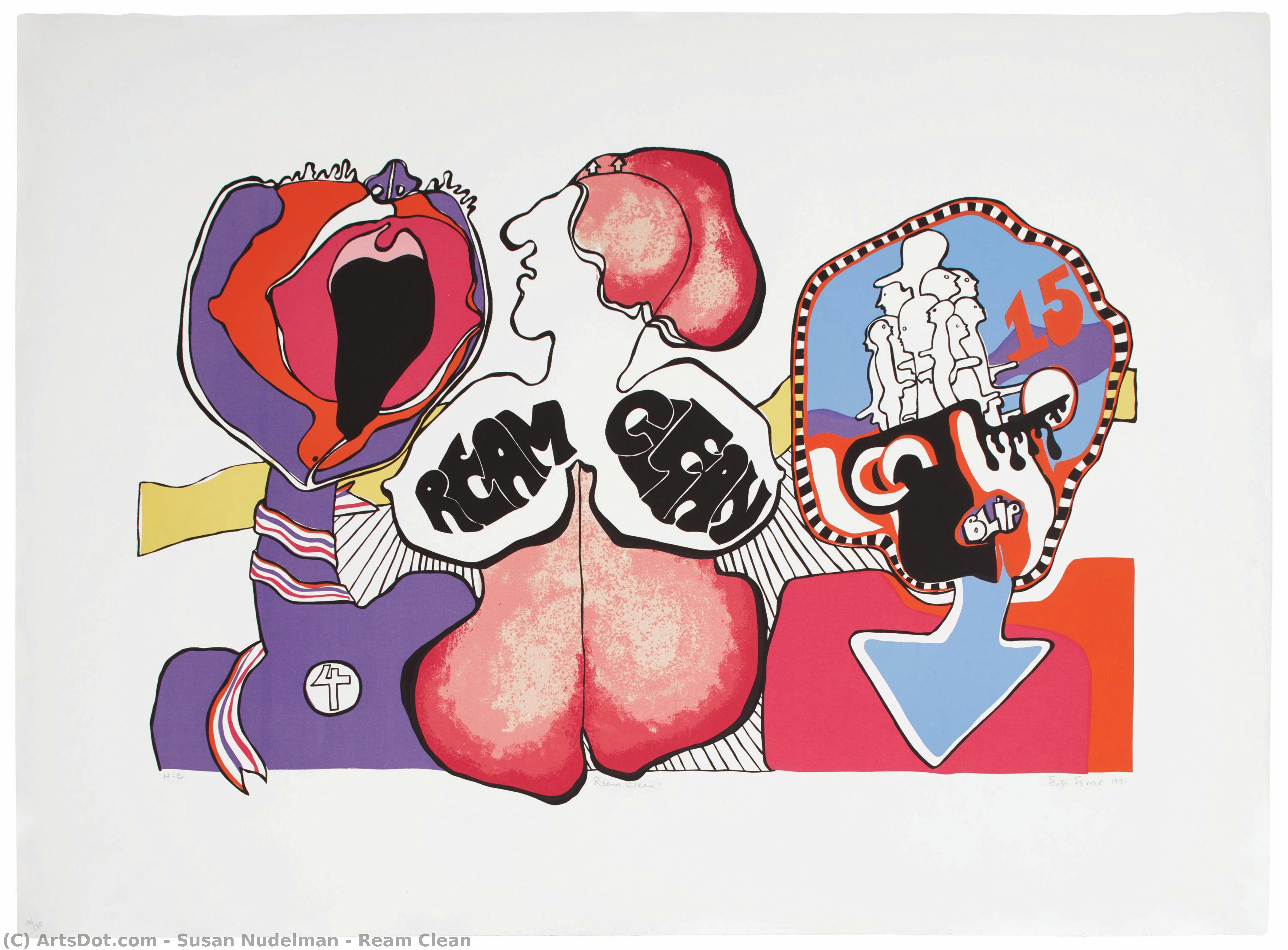
Ream Clean
 Painting
- Contemporary Realism
 1971
1971- Contemporary
 56.0 x 76.0 cm
 Museo de Arte Contemporáneo de Puerto Rico
 더 보기
더 보기
온라인 미리보기보다 훨씬 뛰어난 품질의 고해상도 디지털 이미지를 구매해 보세요.
각 파일은 사내 전문가가 고급 도구와 숙련된 수동 리터칭 기술을 사용하여 세심하게 준비합니다. 우리는 모든 이미지가 탁월한 선명도, 정확한 색상 재현력, 그리고 미세한 디테일까지 완벽하게 갖추도록 보장합니다.
최종 파일은 전문적인 편집 및 인쇄 환경에서 즉시 사용할 수 있도록 최적화되어 72시간 이내에 이메일로 발송됩니다. 이는 세계적인 디자인 스튜디오, 출판사 및 갤러리가 신뢰하는 것과 동일한 품질입니다.
모든 디지털 이미지 주문에 포함된 혜택
전문적인 디지털 이미지 전송 보장
ArtsDot.com를 선택하시면 단순히 이미지를 받는 것을 넘어, 정밀한 보정 과정을 거친 전문적인 디지털 예술 작품을 만나보실 수 있습니다. 모든 작품에는 만족 보장 서비스가 함께 제공되며, 주문 시 다음과 같은 사항들이 자동으로 포함됩니다:

빠른 이메일 전송
주문 후 72시간 이내에 고해상도 디지털 이미지 파일이 이메일로 발송되며, 즉시 사용하실 수 있습니다.

AI 기술로 향상된 디지털 파일
귀하의 작품은 고급 AI 도구와 수동 편집 과정을 거쳐 전문적으로 최적화되며, 이를 통해 디테일과 선명도, 색상의 정확도를 극대화합니다.

평생 무료 재전송 서비스
파일을 실수로 삭제하거나 분실하셨나요? 걱정 마세요. 언제든 무료로 다시 보내드립니다.

추가 수입 비용 없음 - 언제나
관세나 부가세, 배송비 부담 없이 작품을 즉시 감상하세요 - 디지털 다운로드는 언제나 면세 혜택이 적용됩니다.

정확한 색상 보장
전문적인 도구와 색상 관리 시스템을 통해 디지털 이미지가 원본의 색상을 최대한 정확하게 구현하도록 보장합니다.

60일 만족 보장제
구매하신 디지털 이미지에 만족하지 못하실 경우, 60일 이내에 수정 또는 100% 환불을 진행해 드립니다 - 어떠한 문의도 필요 없습니다.

100% 환불 보장
만족하지 못하셨나요? 디지털 파일을 수령하신 후 60일 이내라면 별도의 이유를 밝힐 필요 없이 전액 환불해 드립니다.

대량 주문 할인
이미지 3매 구매 시 10% 할인 - 5매 구매 시 15% 할인 - 10매 이상 구매 시 20% 할인. 크리에이티브 프로젝트, 갤러리, 에이전시에 매우 유용합니다.
수집품 상세 설명
A Tapestry of Human Connection: Exploring Susan Nudelman's Ream Clean
In the evocative landscape of twentieth-century figurative painting, few works capture the raw, uninhibited essence of human presence quite like Susan Nudelman’s 1971 masterpiece, Ream Clean. This captivating composition invites the viewer into a crowded, intimate space where the boundaries between individuals seem to blur and dissolve. At the heart of this visual narrative is a central female figure, rendered with a profound sense of vulnerability and strength, her exposed form serving as an anchor for the surrounding sea of humanity. Nudelman masterfully orchestrates a scene populated by at least six figures, each caught in a moment of repose or movement, creating a rhythmic dance of limbs and gazes that pulls the observer into their shared, silent dialogue.
The painting is far more than a mere study of the human form; it is a complex psychological landscape. Nudelman utilizes a unique blend of surrealist undertones and figurative realism to weave a story of coexistence. The inclusion of seemingly disparate elements—such as the two sports balls positioned strategically within the frame and the enigmatic presence of a clock on the right periphery—suggests a deeper, perhaps more symbolic, layer of meaning. These objects act as temporal and physical anchors, grounding the ethereal, almost dreamlike quality of the figures in a tangible reality. The clock, in particular, introduces a poignant meditation on the passage of time, contrasting the eternal nature of human connection with the fleeting moments of our physical existence.
Technically, Ream Clean is a triumph of composition and tonal balance. The artist employs a sophisticated approach to light and shadow, ensuring that despite the density of the figures, the eye finds rest and direction throughout the canvas. The interplay of flesh tones against the more muted or varied backgrounds creates a sense of depth that makes the scene feel immersive, as if one could step directly into this private gathering. For the discerning collector or interior designer, this piece offers an unparalleled opportunity to introduce a conversation starter into a curated space. Its ability to evoke both curiosity and contemplation makes it a versatile jewel for any high-end collection, providing a sophisticated focal point that resonates with themes of intimacy, time, and the beautiful complexity of the human condition.
유사한 작품들


작가 소개
Paul Klee: A Life Painted in Light and Shadow – 1940 and Beyond
The year 1940 casts a long shadow over the life and work of Paul Klee, marking not just a pivotal moment in his artistic journey but also a period of profound upheaval for Europe. Born in Bern, Switzerland, in 1879, Klee’s career unfolded against a backdrop of shifting political landscapes, burgeoning artistic movements, and the looming threat of war – a reality that deeply informed his art and ultimately shaped its distinctive character. While he had already established himself as a significant figure within the Expressionist and Cubist circles by the early 20th century, it was in the years leading up to his untimely death in Zug, Switzerland, in 1940 that Klee’s artistic language truly crystallized, revealing a complex interplay of personal introspection, intellectual rigor, and a deeply felt engagement with the world around him.
Klee's early influences were remarkably diverse. He initially studied at the Kunstlerausschule Bern, but quickly gravitated towards the more experimental approaches offered by Hans von Drach zur Graf in Munich. This exposure to the vibrant energy of the German art scene introduced him to the tenets of Expressionism, a movement characterized by its emotional intensity and subjective interpretation of reality. Simultaneously, he was captivated by the pioneering work of Wassily Kandinsky, whose theories on color and spirituality profoundly impacted Klee’s artistic philosophy. Kandinsky's emphasis on abstraction as a means of conveying inner experience resonated deeply with Klee’s own desire to explore the fundamental elements of art – line, shape, and color – in their purest forms. This early encounter laid the groundwork for his later development of a highly personal and idiosyncratic style, one that would defy easy categorization.
The years between 1915 and 1920 saw Klee’s artistic output expand dramatically, encompassing a wide range of media including drawings, watercolors, lithographs, and collages. His work during this period is characterized by a playful experimentation with form and color, often infused with elements of Surrealism – a movement he embraced without fully committing to its tenets. He explored themes of childhood, mythology, and the human condition through a series of evocative images that are both whimsical and deeply poignant. Notably, his “Twittering Machine” (1924), a complex mechanical device designed to generate random musical notes and visual patterns, exemplifies Klee’s fascination with systems, chance, and the intersection of art and technology. This period also witnessed the development of his distinctive "Kinderzeichnungen" (Child Drawings), a series of seemingly naive sketches that reveal a profound understanding of line, gesture, and composition – a testament to Klee's belief in the inherent artistic potential of children.
The outbreak of World War II dramatically altered the course of Klee’s life and work. Fearing for his safety and the destruction of his art collection, he relocated to Switzerland in 1940, where he continued to paint until his death from cancer. The war years were a period of intense anxiety and uncertainty for Klee, but also one of remarkable creative productivity. His paintings from this time are imbued with a sense of melancholy and resignation, reflecting the devastation and displacement that gripped Europe. Works like “Ship in the Dark” (1939-40) – a haunting image of a small boat navigating a turbulent sea under a starry sky – capture the feeling of isolation and vulnerability in a world consumed by conflict. The use of muted colors, fragmented forms, and ambiguous spatial relationships creates a powerful sense of unease and foreboding.
Despite his premature death at the age of 61, Paul Klee’s legacy endures as one of the most innovative and influential artists of the 20th century. His unique approach to abstraction, informed by his deep understanding of art history, music theory, and psychology, continues to inspire generations of artists. His work is characterized by its playful experimentation, emotional depth, and a profound sense of humanity. Klee’s exploration of color, line, and form transcends stylistic boundaries, establishing him as a pivotal figure in the development of modern art. His influence can be seen in the works of countless artists who have followed in his footsteps, solidifying his place as a true visionary – an artist who painted not just with pigment and brush, but with light and shadow, joy and sorrow, hope and despair.
Key Works & Artistic Developments (1940s)
- Ship in the Dark (1939-40): Perhaps Klee’s most iconic work of the 1940s, this painting embodies the anxieties and uncertainties of wartime Europe. The small boat adrift on a turbulent sea symbolizes humanity's vulnerability in the face of overwhelming forces.
- The Great Bear (1940): A complex and layered composition that reflects Klee’s interest in mythology, symbolism, and the interconnectedness of all things. The painting is filled with intricate details and ambiguous forms, inviting multiple interpretations.
- The Island of Doom (1940): This work showcases Klee's exploration of darkness and despair, reflecting the mood of Europe during World War II. The use of stark contrasts and unsettling imagery creates a powerful sense of foreboding.
- Continued development of his “Kinderzeichnungen” – these drawings remained a vital source of inspiration for Klee throughout his career, offering insights into his artistic process and his understanding of the human condition.
Klee’s Theoretical Writings & Artistic Philosophy
Beyond his paintings, Paul Klee was also a prolific writer and theorist. His *Schriften zur Form und Gestaltungslehre* (Writings on Form and Design Theory), published posthumously, offer invaluable insights into his artistic philosophy. He argued that art should be based on a deep understanding of the fundamental elements – line, shape, color – and that artists should strive to create works that are both aesthetically pleasing and intellectually stimulating. Klee’s emphasis on intuition, spontaneity, and the exploration of inner experience profoundly influenced the development of Abstract Expressionism in the post-war era.
Legacy & Historical Significance
Paul Klee's work transcends mere aesthetic appeal; it is a profound reflection of his time – a period marked by war, displacement, and existential uncertainty. His art serves as a poignant reminder of humanity’s capacity for both destruction and creativity. Klee’s legacy extends far beyond the confines of the art world, inspiring artists, designers, and thinkers across diverse fields. He remains a vital voice in the ongoing conversation about the nature of art, the role of the artist, and the relationship between art and life.

susan nudelman
1940 - 2006

