

- 75.0 x 106.0 cm


선택하신 옵션에 따른 작품 정보입니다: , .
수집품 상세 설명
Experience the subtle light of 17th-century Holland with Salomon van Ruysdael's masterful landscape; discover this tranquil Dutch Golden Age scene today.
 더 보기
더 보기
핸드메이드 유화 복제화
작가가 직접 캔버스에 손으로 그린 유화 작품으로, 원하는 크기와 액자로 맞춤 제작해 드립니다. ( 프린트 판매로 전환 디지털 이미지로 전환)
이 작품에 대해 더 알아보기
 미리보기
미리보기
 공유하기
공유하기 공유하기
공유하기
 상세 정보
상세 정보 가이드 보기

 다운로드
다운로드
 유사 작품 더 보기
 X-레이
X-레이 슬라이드 쇼 보기
 질의응답
질의응답 통계 정보
통계 정보단 네 단계로 완성되는 간편한 작품 주문 방법
천천히 진행하셔도 좋습니다. 답변은 언제든 변경할 수 있으며, 선택 사항에 따라 주문 카드 내의 가격이 실시간으로 반영됩니다.
1 4단계 중 1단계
원하시는 사이즈를 선택해 주세요.
이 사이즈들은 원작의 비율을 그대로 유지합니다. 그림 속 예시는 2미터 길이의 소파 위 벽면에 선택하신 작품을 배치했을 때의 모습입니다.
또는 직접 치수 입력하기
작품의 원본 비율을 그대로 유지하는 프리셋 사이즈 중에서 선택해 보세요.

액자나 벽면 크기에 맞춰 필요한 가로와 세로 길이를 입력해 주세요. 본 작품은 수작업으로 제작되므로, 요청하신 비율에 따라 작가가 그림의 가장자리를 조금 더 넓게 그리거나 일부를 조정하여 작업할 수 있습니다. 작업 시작 전, 최종 확인을 위해 디지털 목업 이미지를 보내드립니다. 이 페이지에 표시된 이미지는 실제 결과물과 다를 수 있으며, 오직 목업 이미지만이 정확한 결과물을 보여줍니다.
2 4단계 중 2단계
어떤 방식으로 준비해 드릴까요: 롤 형태로, 캔버스에 씌워서, 또는 액자에 넣어?
아래 가격은 첫 번째 단계에서 선택하신 크기를 기준으로 합니다.
캔버스 옆면 스타일 선택
프레임을 선택하세요

화이트 테두리 ₩1

블러사이드 ₩1

옆면 확장형 ₩1

P118B ₩10

P118H ₩10

P118W ₩10

P438Z ₩10

P508JH ₩12

P508YH ₩12

P805H ₩10

P805Z ₩10

P919BZ ₩10

P919G ₩10

P919XJ ₩10

P959ZH ₩10

P968JZ ₩12

W106C ₩8

W218G ₩10

W218JH ₩8

W218Y ₩10

W307PJ ₩10

W316G ₩10

W316PJ ₩8

W316Y ₩10

W398PJ ₩8

W4111J ₩10

W500HY ₩15

W500JH ₩15

W692G ₩12

W849H ₩8

W940BG ₩15

W953PJ ₩8

H24-GOLD ₩30

H24-SILVER ₩30

H36-GOLD ₩45

H36-SILVER ₩45
액자형
몰딩: . 액자 포함 전체 크기: .
3 4단계 중 3단계
그림에서 변경하고 싶은 부분이 있으신가요?
대부분의 사람들은 아니라고 답합니다. 모든 작품은 수작업으로 제작되기에, 저희 작가는 고객님의 요청에 맞춰 작품을 변경해 드릴 수도 있습니다.
주문 완료 후, ArtsDot.com 팀에서 상세 안내를 위해 고객님께 이메일을 보내드리며, 시안 미리보기를 제공해 드립니다.
4 4단계 중 4단계
몇 가지 마감 옵션
모두 선택 사항입니다. 이미 선택된 답변에 대해서는 추가 비용이 발생하지 않습니다.
작가는 누구인가요?
박물관에 있는 것과 같은 명판을 원하시나요?
동판 각인 상세 정보
This elegant plaque features the artist's name and the title of the artwork, finely engraved for a timeless presentation.
It is made from bronze with a refined, elegant finish. The text is precisely laser-engraved for a sharp and permanent result. Measuring 9x2 cm, the plaque is compact yet easy to read. It's built to be durable and scratch-resistant, offering a professional, museum-quality look. Mounting is simple thanks to the included adhesive backing.
투명 아크릴 명판 상세 정보
The plaque includes essential engraved details such as the artist's name, the title of the artwork, the date it was created, the type of media used-like oil on canvas or watercolor-a brief description of the piece, and a QR code that links to the complete artwork information.
It is crafted from clear acrylic, offering a sleek, modern appearance. The text is UV-engraved in black to ensure strong visual contrast. With a size of 10x15 cm, it ensures optimal readability. It comes equipped with two metal hooks for secure wall mounting. The plaque is designed to be weather-resistant, making it suitable for various environments, and it includes interactive features that work seamlessly with smartphone scanning.
블랙 아크릴 명판 상세 정보
This elegant plaque includes engraved information such as the artist's name, the title of the artwork, the date it was created, the type of media used (like oil on canvas or watercolor), a short description of the artwork, and a QR code for quick access to more information.
The plaque itself is made from refined black acrylic with a premium finish. The text is laser-engraved in white for high contrast and readability. Its size is 10x15 cm, designed to be easy to read. It comes with two metal hooks for professional mounting. The design is sleek and fits any interior style. It is also weather-resistant and durable, with built-in digital integration for mobile compatibility.
보호용 바니시를 선택하시겠습니까?
언제 받기를 원하시나요?
✓ 확인 및 주문하기
주문하신 그대로의 작품

Drawing the Eel
재현 기법
복제본 크기
-

엄선된 시니어 아티스트
더욱 세밀한 묘사와 정교함, 그리고 충분한 제작 시간
-

복제화 액자 구성
-
-
가로 또는 세로 중 어느 한 면이라도 105cm(약 41인치)를 초과하는 작품이나 복제화의 경우, 프레임은 분해된 키트 형태로 배송됩니다. 이는 안전한 배송을 보장하고 운송 중 발생할 수 있는 손상을 방지하기 위함입니다.
전문가 조립 권장 - 본 제품은 DIY용이 아닙니다.
해당 키트는 숙련된 전문 프레임 제작자가 목공용 풀(별도 구매), 캔버스 스트레칭 플라이어 및 풀이 마르는 동안 나무 틀의 수평을 유지할 클램프를 사용하여 캔버스를 팽팽하게 고정하고 조립해야 합니다. 잘못된 조립이나 불균형한 캔버스 장력은 작품에 영구적인 손상을 입힐 수 있으며, 이로 인한 손상은 보증 범위에 포함되지 않습니다.
 가로 또는 세로 중 어느 한 면이라도 105cm(약 41인치)를 초과하는 작품이나 복제화의 경우, 프레임은 분해된 키트 형태로 배송됩니다. 이는 안전한 배송을 보장하고 운송 중 발생할 수 있는 손상을 방지하기 위함입니다.
모든 원목 부재가 포함되어 있으며, 조립에 딱 맞게 정밀하게 재단되었습니다.
제공된 나사와 함께, 별도로 준비해야 하는 모서리 접합부용 목공용 풀을 사용하여 조립합니다. (목공용 풀은 포함되어 있지 않으므로 제작자께서 직접 준비해 주셔야 합니다.)
전문가용 도구가 필요하며 키트에 포함되어 있지 않습니다: 캔버스 스트레칭 플라이어(텐셔너)와 접착제가 마르는 동안 나무 틀의 수평을 유지하기 위한 클램프가 필요합니다.
주의사항:
모서리 접합부에는 목공용 풀이 필요하며, 풀이 완전히 마를 때까지 클램프로 바(bar)를 고정해야 합니다. 또한 조립된 프레임에 캔버스를 팽팽하게 당기려면 캔버스 스트레칭 플라이어가 필요합니다. 이 제품들 중 어느 것도 키트에 포함되어 있지 않습니다. 이 사이즈를 주문하시기 전에 숙련된 전문 액자 제작업체를 미리 섭외하시기 바랍니다.

작품 설명문
-
-

보호용 바니시
유광 바니시(색감을 선명하게 하며 빛과 습기로부터 보호함)
-

내 작품 맞춤 설정
변경 가능한 예시: 얼굴을 고객의 사진으로 교체, 반려동물 추가(예: 고양이를 강아지로 변경), 배경에 숨겨진 메시지 삽입, 배경 풍경 또는 요소 변경.
-

빠른 배송
전 세계 배송()은 기존 5주의 표준 기간 대신 3~4주 내에 완료됩니다. (4 11월). 품질에는 어떠한 타협도 하지 않습니다.
-
특급 배송
전 세계 배송(): 약 5주 소요 (11 11월).
포함됨
최종 결제 금액
₩ 352089
유리 옵션은 110cm 미만 크기에서만 선택 가능합니다.
모든 주문에 포함되는 혜택
- 전 세계 무료 특급 배송
- 프리미엄 린넨 캔버스
- 배송 전 과정 보험 적용
- 관세 및 수입세 환급 보장 서비스
- 원본과 동일한 색상 구현 보장
- 100일 이내 반품 정책 (결함 발생 시)
- 100% 환불 보장
- 다량 구매 할인 혜택


A Window Into Seventeenth Century Holland
In the heart of the Dutch Golden Age, amidst a period of unprecedented maritime prosperity and cultural flowering, Salomon van Ruysdael captured more than just scenery; he captured the very soul of a nation. His masterpiece, Drawing the Eel, completed around 1650, serves as an exquisite meditation on light, observation, and the subtle grandeur found within the rhythms of everyday life. While many of his contemporaries sought to overwhelm the viewer with dramatic, idealized vistas, Ruysdael championed a remarkably restrained and intimate approach. He possessed a singular ability to render the precise nuances of natural light—particularly that soft, diffused glow filtering through an overcast sky—a technique that transforms a simple village scene into a breathing, atmospheric experience.
The painting unfolds across a wide horizontal expanse, inviting the eye to wander through a tranquil landscape where a river meanders gracefully toward the horizon. The composition is anchored by a substantial house, likely the residence of a wealthy landowner, which stands prominently on the right, its architecture reflecting the stability and burgeoning wealth of the era. Surrounding this structure, trees laden with fruit create a rich tapestry of textures, their leaves catching the light in a way that demonstrates Ruysdael’s meticulous mastery of detail. This is not merely a landscape, but a carefully constructed stage where the elements of nature and human industry exist in a delicate, harmonious balance.
The Pulse of Village Life and Festive Tradition
Beyond its serene landscape, Drawing the Eel is a vibrant chronicle of social history. The canvas is alive with the movement of a community engaged in the seasonal festivities of a clear winter day. Scattered throughout the scene are figures that breathe life into the Dutch countryside: villagers tending to livestock, children playing near the riverbank, and groups gathered around carts in moments of shared greeting. At the center of this social tapestry lies the depiction of palingtrekken, or "eel pulling," a traditional Dutch festival pastime that adds a layer of cultural depth to the work.
Every brushstroke serves to document the textures of 17th-century life, from the heavy folds of woolen clothing to the shimmering reflections on the water’s surface. The presence of boats on the river hints at the vital commerce and trade that fueled the Dutch economy, while the inclusion of cows and horses underscores the essential connection between the people and their land. For the discerning collector or interior designer, this painting offers a profound sense of narrative richness; it is a piece that rewards repeated viewing, revealing new details of human interaction and rural industry with every encounter.
A Timeless Aesthetic for the Modern Interior
For those seeking to infuse a space with historical elegance and emotional depth, a high-quality reproduction of this work offers unparalleled inspiration. The color palette—dominated by verdant greens, earthy tones, and the luminous blues of a fair-weather sky—is both soothing and sophisticated, making it an ideal centerpiece for a variety of interior styles, from classical traditionalism to contemporary organic modernism. The painting’s ability to evoke a sense of tranquility and nostalgia allows it to act as a "window," expanding the perceived boundaries of a room and bringing the peaceful spirit of the Dutch countryside indoors.
Owning a piece that echoes the mastery of Salomon van Ruysdael is an opportunity to celebrate the enduring power of observation. This artwork does not demand attention through grandiosity, but rather earns it through its quiet, persistent beauty. It remains a testament to a time when art was used to find the extraordinary within the ordinary, making it a timeless acquisition for anyone who appreciates the profound impact of light, landscape, and the human story.
질의응답
살로몬 판 루이스달의 "Drawing the Eel"은 미술사에서 어떤 위치를 차지하나요?
역사적으로 "Drawing the Eel"은(는) 더 넓은 의미의 Early Modern 시대에 속하는 Dutch Golden Age 양식의 작품입니다.
살로몬 판 루이스달의 "Drawing the Eel"의 디지털 이미지는 어디에서 구매할 수 있나요?
살로몬 판 루이스달의 "Drawing the Eel"의 디지털 파일을 소장하시려면, 디지털 이미지 파일 페이지에서 고해상도 디지털 이미지 다운로드을(를) 주문해 주세요.
살로몬 판 루이스달의 "Drawing the Eel" 작품에 권장되는 인쇄 설정은 무엇인가요?
살로몬 판 루이스달의 "Drawing the Eel" 작품은 Landscape 방향의 Large 크기로 인쇄하는 것을 추천합니다.
유사한 작품들


살로몬 판 루이스달
1602 - 1670, 네덜란드
작가 정보
네덜란드 풍경화의 섬세한 거장: 살로몬 판 루이스달의 생애
전례 없는 번영과 예술적 꽃을 피웠던 17세기 네덜란드 황금기, 살로몬 판 루이스달은 깊은 대기적 감수성을 지닌 화가로 등장했습니다. 1602년경 나르덴에서 태어난 그의 삶은 네덜란드 황금기의 정수와도 깊게 맞닿아 있습니다. 비록 역사는 더 유명한 형 야코프 판 루이스달의 그늘에 그를 가두기도 하지만, 살로몬은 풍경화의 역사 속에서 독보적이고 대체 불무가한 영역을 구축했습니다. 그의 작품은 단순히 땅을 묘순하는 데 그치지 않습니다. 빛과 물이 캔버스 위에서 고요하고 영원한 춤을 추는 네덜란드 전원의 살아있는 숨결을 포착해냅니다.
그의 예술적 토대는 장인 정신과 정밀함이 무엇보다 중요했던 가정에서 마련되었습니다. 그의 아버지 야코프 얀스 데 구이어는 당대의 가장 귀한 거울과 회화를 담아내던 정교한 에보니 프레임을 제작하던 숙련된 목수였습니다. 이러한 환경에서 접한 세밀한 디테일은 살로몬에게 질감과 구조적 완성도에 대한 평생의 경외심을 심어주었을 것입니다. 비록 라틴어와 의학까지 아우르는 놀라울 정도로 폭넓은 교육을 받았음에도, 그의 마음은 언제나 시각적인 세계를 향해 있었습니다. 1623년 권위 있는 하를렘 성 루카 길드에 가입하며 그는 엘리트 예술가들의 반열에 올랐고, 얀 포르셀리스와 에사이아스 판 데 벨데 같은 거장들의 직접적인 영향을 받게 되었습니다. 대기 원근법과 관찰적 사실주의의 선구자였던 이 스승들은 살로몬이 훗거 평온한 수변 풍도(vista)를 구성하는 데 사용할 기술적 토대를 마련해 주었습니다.
물과 빛의 교향곡
살로몬 판 루이스달의 진정한 거장다움은 네덜란드 대기의 덧없는 특성을 구현해내는 능력에 있습니다. 극적인 경관이나 휘몰아치는 폭풍을 추구했던 동시대의 많은 화가들과 달리, 살로몬은 내륙 수로의 정적 속에서 가장 큰 영감을 얻었습니다. 그의 구도는 종종 강물의 리드미컬한 흐름과 호수의 평온한 확장에 집중되며, 그곳에서 하늘과 물은 부드러운 빛과 차분한 색조의 매끄러운 전환을 통해 하나로 만납니다. 데벤터 인근의 강 풍경과 같은 걸작에서는 네덜란드의 습하고 서늘한 공기를 불러일으키기 위해 그가 얼마나 섬세한 팔레트를 사용했는지 엿볼 수 있으며, 관람객을 깊은 정적의 순간으로 초대합니다.
그의 기술적 기량은 특히 해양 및 강 풍경을 다루는 방식에서 두드러집니다. 내륙 수로의 범선과 같은 작품에서 그는 잔잔한 물결을 따라 나아가는 배의 무게감과 움직임을 포착하는 탁월한 능력을 보여줍니다. 어부들이 있는 강에 나타나는 어부들의 미묘한 존재감처럼 인간적인 요소의 통합은 결코 방해되지 않습니다. 오히려 이러한 인물들은 풍경에 규모감과 삶의 실재감을 부여하는 역할을 합니다. 그의 붓끝을 통해 물은 단순한 표면 그 이상이 됩니다. 그것은 변화하는 구름과 네덜란드 하늘의 특징인 부드럽고 확산된 빛을 비추는 거울이 됩니다.
유산과 예술적 의의
살로몬 판 루이스달의 역사적 의의는 대기 풍경화의 선구자로서의 역할에 있습니다. 그는 이전 시대의 경직되고 지형적인 묘사에서 벗어나, 자연에 대한 더욱 감성적이고 감각적인 경험으로 나아갔습니다. 정물화적 요소의 정밀함과 풍경화의 광활함을 결합한 그의 능력은 자신들의 평화롭고 근면한 환경을 반영하는 예술을 원했던 네덜란드 중산층의 공감을 불러일으키며 독특한 미학을 창조했습니다.
오늘날 그의 유산은 티센보르네미사 미술관을 포함한 세계의 저명한 기관들에 보존되어 있습니다. 판 루이스달의 작품을 연구하는 것은 인내와 관찰에 대한 수업을 듣는 것과 같습니다. 그의 작품은 절제된 미학 속에 숨겨진 아름다움을 증명하며, 가장 심오한 예술적 진실은 종종 강물의 고요한 반영이나 저무는 해의 부드러운 빛 속에서 발견된다는 사실을 우리에게 상기시켜 줍니다. 네덜란드 황금기에 대한 그의 공헌은 인류가 세상을 단순히 있는 그대로 보는 법이 아니라, 느껴지는 대로 느끼는 법을 배워온 역사에서 결코 빠질 수 없는 중요한 장으로 남아 있습니다.
관련 콘텐츠

Golden Age Reflections: Dutch Baroque Painting & Cultural Innovation
Explore the Dutch Golden Age of painting! Discover key artists like Vermeer & ter Borch, their innovative techniques, and the rich cultural context behind these Baroque masterpieces. Learn about collecting & appreciating this iconic art period.

네덜란드 황금 시대 예술의 정수를 담은 10대 걸작 탐구
렘브란트, 베르메르의 걸작부터 할스의 인물화까지! 네덜란드 황금시대 미술의 10대 명품을 만나보세요. 예술적 깊이와 아름다움을 담은 작품들을 ArtsDot에서 감상하고, 고품질 아트 프린트로 당신의 공간에 특별함을 더하세요. 지금 바로 ArtsDot.com에서 모든 걸작을 발견하세요!
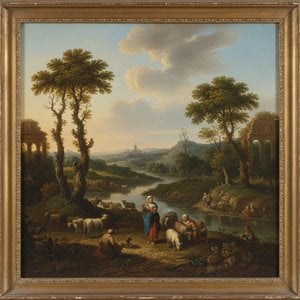
Nicolaes Berchem: Dutch Golden Age Pastoralism & the Evolution of Landscape Painting
Explore the captivating world of Nicolaes Berchem, a leading Dutch Golden Age painter. Discover his idyllic landscapes, masterful technique & lasting influence on art history. Learn more at ArtsDot.