

- 25.0 x 34.0 cm


The picture follows your choices: , .
컬렉션 상세 정보
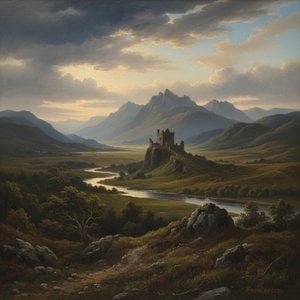
Discover Robert Lillie’s ‘Landscape’ (1918) – a serene oil painting of Scottish beauty. Explore its Impressionistic style & captivating nature scene. Available reproductions at ArtsDot.com!
 상세 보기
상세 보기
작가 소개
Discover Robert Lillie's stunning Scottish landscapes & portraits (1867-1949). Explore his evocative paintings of rivers, lochs, and coastal scenes – a master of light and atmosphere.
핸드메이드 유화 복제화
작가가 직접 캔버스에 손으로 그린 유화 작품으로, 원하는 크기와 액자로 맞춤 제작해 드립니다. ( 프린트 판매로 전환 디지털 이미지 판매 채널로 전환)
More about this painting
 실제 크기로 보기
 보내기
보내기 공유하기
공유하기
 상세 보기
상세 보기 가이드 보기

 이미지 다운로드
 유사 작품 더 보기
 X-레이
X-레이 슬라이드 쇼 보기
 Q&A
Q&A 통계 정보
통계 정보Order your painting in four simple steps
Take your time. You can change any answer; the price in your order card follows each choice.
1 Step one of four
Which size would you like?
These sizes keep the proportions of the original painting. The drawing shows your choice on a wall, above a two-metre sofa.
Or give your own measurements
작품의 원본 비율을 그대로 유지하는 프리셋 사이즈 중에서 선택해 보세요.

액자나 벽면 크기에 맞춰 필요한 가로와 세로 길이를 입력해 주세요. 본 작품은 수작업으로 제작되므로, 요청하신 비율에 따라 작가가 그림의 가장자리를 조금 더 넓게 그리거나 일부를 조정하여 작업할 수 있습니다. 작업 시작 전, 최종 확인을 위해 디지털 목업 이미지를 보내드립니다. 이 페이지에 표시된 이미지는 실제 결과물과 다를 수 있으며, 오직 목업 이미지만이 정확한 결과물을 보여줍니다.
2 Step two of four
How should it be prepared: rolled, stretched or framed?
The prices below are for the size you chose in step one.
Choose the edges of the stretched canvas
Choose your frame

White ₩1

Blurside ₩1

Extended ₩1

P118B ₩10

P118H ₩10

P118W ₩10

P438Z ₩10

P508JH ₩12

P508YH ₩12

P805H ₩10

P805Z ₩10

P919BZ ₩10

P919G ₩10

P919XJ ₩10

P959ZH ₩10

P968JZ ₩12

W106C ₩8

W218G ₩10

W218JH ₩8

W218Y ₩10

W307PJ ₩10

W316G ₩10

W316PJ ₩8

W316Y ₩10

W398PJ ₩8

W4111J ₩10

W500HY ₩15

W500JH ₩15

W692G ₩12

W849H ₩8

W940BG ₩15

W953PJ ₩8

H24-GOLD ₩30

H24-SILVER ₩30

H36-GOLD ₩45

H36-SILVER ₩45
액자형
Moulding: . Overall size with the frame: .
3 Step three of four
Would you like anything changed in the painting?
Most people answer no. Because each painting is made by hand, our artist can also adapt it for you.
After order, ArtsDot.com team will email client for instructions and provide a mockup preview
4 Step four of four
A few finishing options
All of them are optional. The answers already selected cost nothing extra.
Who paints it?
A nameplate, as in a museum?
동판 각인 상세 정보
This elegant plaque features the artist's name and the title of the artwork, finely engraved for a timeless presentation.
It is made from bronze with a refined, elegant finish. The text is precisely laser-engraved for a sharp and permanent result. Measuring 9x2 cm, the plaque is compact yet easy to read. It's built to be durable and scratch-resistant, offering a professional, museum-quality look. Mounting is simple thanks to the included adhesive backing.
투명 아크릴 명판 상세 정보
The plaque includes essential engraved details such as the artist's name, the title of the artwork, the date it was created, the type of media used-like oil on canvas or watercolor-a brief description of the piece, and a QR code that links to the complete artwork information.
It is crafted from clear acrylic, offering a sleek, modern appearance. The text is UV-engraved in black to ensure strong visual contrast. With a size of 10x15 cm, it ensures optimal readability. It comes equipped with two metal hooks for secure wall mounting. The plaque is designed to be weather-resistant, making it suitable for various environments, and it includes interactive features that work seamlessly with smartphone scanning.
블랙 아크릴 명판 상세 정보
This elegant plaque includes engraved information such as the artist's name, the title of the artwork, the date it was created, the type of media used (like oil on canvas or watercolor), a short description of the artwork, and a QR code for quick access to more information.
The plaque itself is made from refined black acrylic with a premium finish. The text is laser-engraved in white for high contrast and readability. Its size is 10x15 cm, designed to be easy to read. It comes with two metal hooks for professional mounting. The design is sleek and fits any interior style. It is also weather-resistant and durable, with built-in digital integration for mobile compatibility.
A protective varnish?
When do you need it?
✓ Check and order
Your painting, as you ordered it

Landscape
재현 매체
복제본 규격
-

최정상급 시니어 아티스트
더욱 세밀한 묘사와 정교함, 그리고 충분한 제작 시간
-

복제화 액자 옵션
-
-
가로 또는 세로 중 어느 한 면이라도 105cm(약 41인치)를 초과하는 작품이나 복제화의 경우, 프레임은 분해된 키트 형태로 배송됩니다. 이는 안전한 배송을 보장하고 운송 중 발생할 수 있는 손상을 방지하기 위함입니다.
전문가 조립 권장 - 본 제품은 DIY용이 아닙니다.
해당 키트는 숙련된 전문 프레임 제작자가 목공용 풀(별도 구매), 캔버스 스트레칭 플라이어 및 풀이 마르는 동안 나무 틀의 수평을 유지할 클램프를 사용하여 캔버스를 팽팽하게 고정하고 조립해야 합니다. 잘못된 조립이나 불균형한 캔버스 장력은 작품에 영구적인 손상을 입힐 수 있으며, 이로 인한 손상은 보증 범위에 포함되지 않습니다.
 가로 또는 세로 중 어느 한 면이라도 105cm(약 41인치)를 초과하는 작품이나 복제화의 경우, 프레임은 분해된 키트 형태로 배송됩니다. 이는 안전한 배송을 보장하고 운송 중 발생할 수 있는 손상을 방지하기 위함입니다.
모든 고형목재 부재가 포함되어 있으며, 정확한 크기로 정밀하게 재단되었습니다.
제공된 나사를 사용하여 조립하며, 모서리 접합부용 목공용 풀은 포함되어 있지 않으므로 제작자께서 별도로 준비해 주셔야 합니다.
전문가용 도구가 필요하며 키트에 포함되어 있지 않습니다: 캔버스 스트레칭 플라이어(텐셔너)와 접착제가 마르는 동안 나무 틀의 수평을 유지하기 위한 클램프가 필요합니다.
주의사항:
모서리 접합부에는 목공용 풀이 필요하며, 풀이 완전히 마를 때까지 클램프로 바(bar)를 고정해야 합니다. 또한 조립된 프레임에 캔버스를 팽팽하게 당기려면 캔버스 스트레칭 플라이어가 필요합니다. 이 제품들 중 어느 것도 키트에 포함되어 있지 않습니다. 이 사이즈를 주문하시기 전에 숙련된 전문 액자 제작업체를 미리 섭외하시기 바랍니다.

캡션
-
-

보호용 바니시
유광 바니시(색감을 선명하게 하며 빛과 습기로부터 보호함)
-

내 작품 맞춤 설정
변경 가능한 예시: 얼굴을 고객의 사진으로 교체, 반려동물 추가(예: 고양이를 강아지로 변경), 배경에 숨겨진 메시지 삽입, 배경 풍경 또는 요소 변경.
-

긴급 배송
전 세계 배송()은 기존 5주의 표준 기간 대신 3~4주 내에 완료됩니다. (1 11월). 품질에는 어떠한 타협도 하지 않습니다.
-
빠른 배송
지역 일반 배송: 약 5주 소요 (8 11월).
기본 배송비 포함
총 결제 금액
₩ 354683
유리 옵션은 110cm 미만 크기에서만 선택 가능합니다.
Included with every order
- 전 세계 무료 특급 배송
- 고품질 린넨 캔버스
- 배송 전 과정 보험 적용
- 관세 환급 보장 서비스
- 원본 색상 일치 보장
- 제조 결함 발견 시 100일 이내 반품 가능
- 100% 환불 보장
- 다량 구매 할인 혜택


Artistic Style and Influences
Robert Lillie's work can be compared to other notable artists, such as George Benjamin Luks, who created the captivating oil painting Blue Devils on Fifth Avenue. Both artists have a unique style that sets them apart from others. The Landscape painting is also reminiscent of the works found in the The Museum Gwynedd County Council Collection in Caernarfon, United Kingdom. Key Features of the painting include:- A beautiful valley with mountains in the background
- Lush green grass and trees
- A river running through the scene
- Several people scattered throughout the scene
Availability and Reproductions
The original Landscape painting by Robert Lillie is available for viewing at the Lillie Art Gallery in the United Kingdom. However, for those who cannot visit the gallery, ArtsDot.com offers handmade oil painting reproductions of the artwork. These reproductions are created by skilled artists and are a great way to own a piece of art history.The Landscape painting by Robert Lillie is a must-see for anyone who appreciates beautiful artwork and nature. With its unique style and captivating scenery, it is a great addition to any art collection. For more information on the painting and other artworks by Robert Lillie, visit ArtsDot.com.
질의응답
"Landscape"의 고해상도 다운로드 버전을 구매할 수 있나요?
Robert Lillie의 "Landscape"의 디지털 파일을 소장하시려면, 디지털 이미지 페이지에서 고해상도 디지털 이미지 다운로드을(를) 주문해 주세요.
Robert Lillie의 "Landscape"의 색채 정체성은 무엇인가요?
Robert Lillie의 "Landscape"은(는) Earthy 색조의 팔레트를 사용하며, Clay (#916d2f)이(가) 주된 색상을 이룹니다.
"Landscape"은(는) Robert Lillie의 평소 작업 스타일을 잘 보여주는 작품인가요?
"Landscape"은(는) landscape, valley, mountains, river, greenery, serenity, rural, nature을(를) 묘사하고 있는 반면, Robert Lillie의 기존 주제들은 scottish landscapes, nature's beauty, serene depictions", luks, gwynedd collection, impressionism, rural life, tranquility입니다. 이 두 가지를 비교해 보면 해당 작품이 작가의 통상적인 소재와 어떻게 연관되는지 알 수 있습니다.
관련 작품들


Robert Lillie
1867 - 1949
작가 소개
A Life Immersed in Scottish Light: The World of Robert Lillie
Robert Lillie, born in 1867 and passing in 1949, was a painter deeply entwined with the spirit of Scotland. While not a name immediately recognized alongside the giants of Victorian art, his work offers a compelling window into the quieter moments of Scottish life and landscape painting during a period of significant change. Lillie wasn’t an artist who sought radical innovation; instead, he dedicated himself to capturing the subtle beauty of his surroundings with remarkable skill and sensitivity. His paintings are not grand statements but intimate observations—a gentle ripple on a loch, the soft glow of twilight over a coastal scene, the quiet dignity of everyday life in rural communities. He was a master of atmosphere, using light and color to evoke a sense of place and mood that resonates deeply with viewers even today.Early Years and Artistic Development
Details surrounding Lillie’s early life remain somewhat sparse, but it is known he received his artistic training at the Glasgow School of Art. This institution was undergoing a period of transformation during his time there, moving away from rigid academic styles towards a more naturalistic approach influenced by the Barbizon school and emerging Impressionism. While Lillie didn't fully embrace the radical techniques of the later Impressionists, this influence is visible in his loose brushwork and focus on capturing fleeting moments of light. He quickly established himself as a painter of Scottish landscapes, drawn to the dramatic scenery of the Highlands and Islands, but also finding beauty in the more subtle charms of the Lowlands. His early works often depict scenes along the River Clyde, showcasing the industrial activity alongside the natural world—a reflection of Scotland’s evolving identity during the late 19th century.Themes and Techniques: A Palette of Serenity
Lillie's oeuvre is characterized by a consistent focus on Scottish landscapes and genre scenes. He painted rivers – particularly the Orchy River, which became a recurring motif in his work – lochs, coastal views, and depictions of rural life. His technique was rooted in traditional oil painting methods, but he employed a softer palette than many of his contemporaries, favoring muted tones and subtle gradations of color to create atmospheric effects. He wasn’t interested in dramatic contrasts or bold statements; instead, he sought to capture the quiet beauty of the Scottish countryside.- Light and Atmosphere: Lillie was a master of capturing light, particularly the soft, diffused light characteristic of Scotland. His paintings often evoke a sense of tranquility and peace.
- Genre Scenes: Alongside landscapes, he painted scenes of everyday life in rural Scotland, depicting figures engaged in work or leisure activities with sensitivity and dignity.
- Brushwork: While rooted in traditional techniques, his brushwork is often loose and expressive, contributing to the atmospheric quality of his paintings.
Later Life and Legacy
Lillie continued to paint throughout his life, exhibiting regularly at galleries across Scotland and beyond. While he never achieved widespread fame during his lifetime, his work was appreciated by collectors and critics for its technical skill and evocative atmosphere. Today, Robert Lillie’s paintings are increasingly recognized as important examples of Scottish landscape painting from the late 19th and early 20th centuries. His works offer a valuable glimpse into a Scotland undergoing rapid change—a world where traditional ways of life were slowly giving way to modernity. He stands as a testament to the enduring power of observation, capturing the essence of a place and time with quiet grace and remarkable skill. His paintings are not merely representations of landscapes; they are evocations of mood, memory, and the subtle beauty of the Scottish countryside.관련 기사

David Roberts: A Scottish Pioneer of Topographical Art & Orientalist Vision
Explore the captivating world of David Roberts, a pioneering Scottish painter renowned for his detailed Orientalist scenes & stunning Egyptian landscapes. Discover his legacy and find museum-quality reproductions at ArtsDot.

Robert Lillie: A Study in Victorian Genre Painting and Domestic Narrative
Explore the captivating Victorian genre paintings of Robert Lillie (1867-1949). Discover his serene Scottish landscapes and intimate domestic scenes, reflecting a unique artistic vision. Learn about his life, style & legacy.
Alexander Nasmyth: Picturing Scotland's Romantic Landscape – Innovation & Identity
Explore the life & art of Alexander Nasmyth, a pivotal figure in Scottish Romantic landscape painting. Discover his iconic works, including portraits of Robert Burns, and learn about his lasting influence on national identity. Fine art reproductions available.