
- 홈

- 유화 복제화
- robert gober
- Untitled

 미리보기
미리보기
 공유하기
공유하기 공유하기
공유하기
 상세 정보
상세 정보

 다운로드
다운로드
 유사 작품
유사 작품 X-레이
X-레이 슬라이드 쇼
Untitled

 더 보기
더 보기
수제 유화 복제품
원하는 크기와 액자로 주문 제작되는, 작가들이 직접 캔버스에 손으로 그린 유화 작품입니다. ( 프린트 주문으로 전환 이미지로 전환)




P118B $10

P118H $10

P118W $10

P438Z $10

P508JH $12

P508YH $12

P805H $10

P805Z $10

P919BZ $10

P919G $10

P919XJ $10

P959ZH $10

P968JZ $12

W106C $8

W218G $10

W218JH $8

W218Y $10

W307PJ $10

W316G $10

W316PJ $8

W316Y $10

W398PJ $8

W4111J $10

W500HY $15

W500JH $15

W692G $12

W849H $8

W940BG $15

W953PJ $8




작품의 원본 비율을 유지하는 미리 설정된 크기 중에서 선택하세요.

특정 프레임이나 공간에 맞도록 직접 크기를 입력할 수 있습니다. 선택하신 크기가 원본 이미지의 비율과 일치하지 않는 경우, 작품을 자르거나 추가적인 손으로 그린 요소를 사용하여 그림을 확장합니다. 제작 시작 전 승인을 위해 디지털 목업을 보내드립니다.
화면 미리 보기는 실제 자르기 또는 확장을 반영하지 않습니다. 최종 구성은 목업을 통해서만 정확하게 확인하실 수 있습니다.
맞춤 크기 제작도 가능하지만, 원본 비율을 유지하기 위해 사전 정의된 목록에서 크기를 선택하시는 것을 권장합니다.
주문 후 ArtsDot.com 팀에서 상세 안내를 위해 고객님께 이메일을 보내드리며, 미리보기 시안을 제공해 드립니다.


 유리 옵션은 110cm 미만 크기에서만 선택 가능합니다.

Untitled
재현 기법
복제본 크기
-


최종 결제 금액
$ 263
유사한 작품들


작가 약력
The Alchemy of the Ordinary: The Art of Robert Gober
In the quiet, unsettling intersection where the domestic meets the uncanny, the work of Robert Gober resides. An American sculptor whose presence in the contemporary art landscape is both profound and haunting, Gober possesses a singular ability to transform the most mundane objects of our daily lives into vessels of deep psychological resonance. Born in Wallingford, Connecticut, in 1954, his journey into the heart of sculptural mastery was not immediate. After studying literature and fine art at Middlebury College and the Tyler School of Art in Rome, Gober arrived in New York in 1976. His early years were defined by a tactile relationship with materials; working as a carpenter crafting stretchers for other artists and renovating lofts, he developed a profound intimacy with wood, structure, and the physical essence of construction.
This foundational period of craftsmanship became the bedrock of his artistic evolution. While he initially focused on painting—even engaging in experimental processes such as the creation of 89 sequential slides depicting a single, mutating painting—it was in the 1980s that Gober pivoted toward sculpture. This transition allowed him to explore the sculptural potential of the familiar. His work began to center on objects that inhabit our most private spaces: sinks, doors, and even human limbs. These are not merely replicas; they are meticulously handcrafted re-creations that demand a second, more careful look. Through layers of plaster, wood, wire lath, and semi-gloss enamel, Gober breathes a strange, sentient life into the inanimate, making the viewer question the boundary between the object and the observer.
Symbolism and the Uncanny Body
To encounter a Gober sculpture is to enter a space of profound ambiguity. His work often navigates the complex territories of sexuality, religion, nature, and politics, using the language of the domestic to speak of the universal. One of his most iconic contributions to contemporary sculpture is his series of increasingly eccentric sinks. These objects, though appearing as common household fixtures, possess an unsettling quality that suggests a hidden history or a latent biological presence. By manipulating the familiar, Gober taps into the "uncanny"—that psychological state where something deeply known becomes suddenly, strangely foreign.
This exploration of the body reached new heights in 1989, when Gober began casting beeswax into sculptures of men's legs. These works, often completed with shoes, trouser legs, and even real human hair inserted into the wax, evoke a sense of vulnerability and visceral presence. The use of beeswax—a material that is both organic and transformative—serves as a metaphor for the malleability of identity and memory. Through these anatomical fragments, Gober touches upon themes of gender, hermaphrodism, and the fragility of the human form, creating a dialogue that is as much about the biological self as it is about the social construct.
Legacy and Curatorial Vision
Beyond his individual practice, Robert Gober has played a vital role in shaping the discourse of contemporary art through his curatorial endeavors. His ability to interpret the legacies of other artists demonstrates a deep understanding of art history and thematic continuity. Notable achievements include:
- The Whitney Biennial 2012: Where he curated a poignant room of Forrest Bess's paintings, exploring themes of hermaphrodism and archival discovery.
- The Hammer Museum (2009): His curation of "Heat Waves in a Swamp: The Paintings of Charles Burchfield," which traveled to the Burchfield Penney Art Center, showcasing his skill in weaving historical narratives.
- Multidisciplinary Mastery: His ability to seamlessly move between sculpture, photography, prints, and drawings, maintaining a cohesive aesthetic language across all media.
Today, Robert Gober remains a pivotal figure in the sculptural canon. His work does not merely sit in a gallery; it haunts the periphery of our consciousness. By elevating the sink, the door, and the limb to the status of high art, he forces us to confront the profound mysteries hidden within the very fabric of our everyday existence. His legacy is one of meticulous craftsmanship and an unwavering commitment to exploring the shadows cast by the light of the familiar.

robert gober
1954 - , United States of America
주요 정보
- Artistic Movement Or Style: Contemporary sculpture
- Date Of Birth: 1954
- Full Name: Robert Gober
- Nationality: American
- Notable Artworks:
- Sink series
- Wax leg sculptures
- Place Of Birth: Wallingford, USA
관련 기사 더 보기

Jim Dine: A Poetic of Everyday Objects – Exploring Autobiographical Narratives & the Evolution of a Pop Art Icon
Explore the captivating world of Jim Dine – Pop Art pioneer & master of autobiographical expression. Discover his iconic tools, robes, and hearts. Expert insights for art collectors.

Hiro Yamagata: Abstraction, Materiality & Spatial Dynamics in Contemporary Sculpture
Explore the captivating world of Hiro Yamagata’s innovative sculptures & paintings. Discover his pioneering use of laser technology, immersive installations, and abstract forms – a must-read for discerning art collectors.

고대 금속의 유산: 청동 조각의 역사, 기법 및 현대적 해석
고대 금속 공예의 정수, 청동 조각의 역사와 기법을 심층 분석합니다. 중국, 그리스, 로마의 대표 작품부터 현대적 해석까지, 미술품 투자 및 컬렉션을 위한 전문가 가이드.
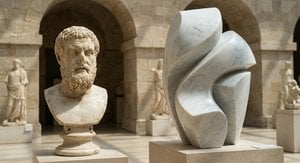
The Enduring Allure of Marble in Art History: From Classical Sculpture to Modern Abstraction
Explore the captivating history of marble sculpture from ancient Greece to modern art. Discover renowned artists like Canova & Michelangelo, carving techniques, and investment insights at ArtsDot.

Emblems of Belonging: Exploring Civic Pride Through Historical & Contemporary Artworks
Explore the evolution of civic art & its powerful role in shaping national identity. From Rembrandt to Monet, discover how masterpieces reflect community values and historical narratives. Learn more at ArtsDot.

