프린트 구매하기
 공유하기
공유하기 공유하기
공유하기
 Details

 다운로드
다운로드
 유사 작품
유사 작품 X-Ray
X-Ray 슬라이드 쇼
Zeno's arrow





P118B $10

P118H $10

P118W $10

P438Z $10

P508JH $12

P508YH $12

P805H $10

P805Z $10

P919BZ $10

P919G $10

P919XJ $10

P959ZH $10

P968JZ $12

W106C $8

W218G $10

W218JH $8

W218Y $10

W307PJ $10

W316G $10

W316PJ $8

W316Y $10

W398PJ $8

W4111J $10

W500HY $15

W500JH $15

W692G $12

W849H $8

W940BG $15

W953PJ $8




 더 알아보기
작품의 원본 비율을 유지하는 미리 설정된 크기 중에서 선택하세요.

특정 프레임이나 공간에 맞도록 직접 크기를 입력할 수 있습니다. 선택하신 크기가 원본 이미지의 비율과 일치하지 않는 경우, 작품을 자르거나 추가적인 손으로 그린 요소를 사용하여 그림을 확장합니다. 제작 시작 전 승인을 위해 디지털 목업을 보내드립니다.
화면 미리 보기는 실제 자르기 또는 확장을 반영하지 않습니다. 최종 구성은 목업을 통해서만 정확하게 확인하실 수 있습니다.
맞춤 크기 제작도 가능하지만, 원본 비율을 유지하기 위해 사전 정의된 목록에서 크기를 선택하시는 것을 권장합니다.
주문 후 ArtsDot.com 팀에서 상세 안내를 위해 고객님께 이메일을 보내드리며, 미리보기 시안을 제공해 드립니다.


 유리 옵션은 110cm 미만 크기에서만 선택 가능합니다.

Zeno's arrow
재현 기법
복제본 크기
-


최종 결제 금액
-
작품 상세 설명
A Suspended Paradox: Unveiling René Magritte’s ‘Zeno's Arrow’
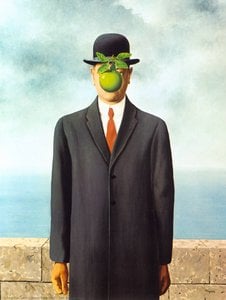
René Magritte’s *Zeno’s Arrow* is a quintessential example of Surrealist painting, a work that doesn’t simply depict a scene but rather poses a profound question about perception, time, and the very nature of reality. Executed with meticulous detail in oil on canvas, this piece invites viewers into a dreamlike world where the laws of physics seem to momentarily suspend themselves.Describing the Dreamscape
The painting presents a striking visual paradox: a massive, spherical blue rock seemingly weightless, floating serenely amidst billowing clouds above a vast ocean. The scale is deliberately unsettling – the rock dwarfs any natural element, creating an immediate sense of disorientation. Two smaller, less defined forms are subtly placed in the upper left and right corners, adding to the enigmatic atmosphere without offering clear narrative clues. The sea below appears turbulent yet distant, further emphasizing the isolation of the floating stone.Magritte’s Surrealist Technique
Magritte masterfully employs a realistic painting technique – smooth brushstrokes, careful rendering of light and shadow – to depict an *impossible* scene. This juxtaposition is central to his Surrealist approach. He doesn't aim for fantastical imagery in the style of some contemporaries; instead, he takes ordinary objects (a rock, clouds, water) and places them in extraordinary contexts, forcing us to question our assumptions about what is “normal.” The cool color palette – dominated by blues, grays, and whites – contributes to a sense of calm detachment, even as the scene itself is inherently unsettling.The Philosophical Weight of Zeno
The title, *Zeno’s Arrow*, directly references the ancient Greek philosopher Zeno of Elea and his famous paradox concerning motion. Zeno argued that an arrow in flight is actually at rest at any given instant, because at each moment it occupies a specific position in space. Magritte visually embodies this concept: the rock appears frozen mid-air, defying gravity and suggesting a momentary suspension of time. The painting isn’t necessarily *about* solving the paradox; rather, it uses it as a springboard to explore the limitations of human perception and our attempts to understand the continuous flow of existence.Symbolism & Emotional Resonance
The symbolism within *Zeno's Arrow* is open to interpretation, which is characteristic of Magritte’s work. The floating rock could represent a weighty burden suspended in time, an idea detached from its earthly constraints, or even the subconscious mind freed from logic. The vastness of the ocean and sky evokes feelings of isolation, mystery, and the sublime. While seemingly serene, the painting carries an undercurrent of unease – a subtle reminder that our perceived reality is often fragile and constructed.Magritte’s Place in Art History
René Magritte (1898-1967) remains one of the most important figures in 20th-century art. His work profoundly influenced subsequent generations of artists, particularly those associated with Pop Art and Conceptual Art. His ability to blend philosophical inquiry with visual artistry continues to captivate audiences today. Museums like the Royal Museums of Fine Arts in Brussels and the Menil Collection in Houston house significant collections of his work, demonstrating his enduring legacy.Integrating ‘Zeno’s Arrow’ into Your Space
A reproduction of *Zeno's Arrow* can serve as a powerful focal point in any interior design scheme. Its cool color palette lends itself well to modern and minimalist spaces, while its intellectual depth adds sophistication and intrigue. The painting’s enigmatic quality encourages contemplation and conversation, making it an ideal choice for living rooms, studies, or offices. Consider pairing it with neutral tones and clean lines to allow the artwork's inherent drama to take center stage. Its subtle yet powerful presence will undoubtedly elevate any collection and inspire a sense of wonder.유사한 작품들


작가 약력
Early Life and the Seeds of Surrealism
René Magritte는 벨기에 레센네스에서 1898년 11월 21일에 태어났습니다. 그의 어린 시절은 충격적인 사건으로 시작되었습니다. 바로 어머니의 자살이었는데, 그는 열세 살 때였습니다. 그녀의 시체가 세브레 강에 발견되었고 그녀의 드레스가 얼굴을 가리는 모습이 눈앞에 펼쳐졌습니다. 이 초기의 트라우마는 그에게 미스터리함과 상실감 그리고 우리가 보지 못하는 힘에 대한 매혹감을 심어주었습니다. 그의 어린 시절에 대한 자세한 정보는 아직 명확하게 밝혀지지 않았지만 그는 삶 전체를 질문하는 방식으로 끊임없이 탐구하며 예술적 비전을 형성했습니다. 그는 열 살 때 그림 레슨을 시작했는데 이는 그에게 시각적 표현에 대한 타고난 기질을 드러냈습니다. 하지만 처음에는 인상주의로 탐구했지만 이후 그의 예술 경로는 서양 미술의 주요 인물 중 한 명으로 나아가기 위해 독특한 길을 택했습니다.
Artistic Development and Influences
마그리트는 예술적 여정이 즉각적이고 간단하지 않았습니다. 그는 브뤼셀 왕립 미술 아카데미에서 공부했지만 전통적인 방법은 그에게 답답함을 안겨주었습니다. 그의 초기 작품은 미래주의와 입체주의를 실험했는데 이 두 현대 미술 운동의 형식을 흡수했지만 형식적인 우려에 대한 관심이 부족했습니다. 그는 1922년 지오르지오 드 치리코의 그림 *사랑의 노래*를 만나면서 새로운 시각을 발견했습니다. 드 치리코의 꿈 같은 풍경과 혼란스러운 대립은 마그리트에게 익숙한 것이 이상하게 변하고 평범함이 깊은 미스터리로 가득 차는 세계로 이끌었습니다. 이 만남은 그가 초현실주의에 대한 약속을 깨고 그의 동료 예술가들보다 더 자유로운 방식으로 탐구하는 것을 촉발했습니다. 그는 초현실주의의 심리적 또는 자동적인 접근 방식과 같은 방법으로 무의식 탐구를 추구하지 않았습니다.
The Heart of Surrealism: Challenging Reality
1926년 마그리트는 초현실주의 원칙을 완전히 받아들였고 *로스트 조커*를 제작했는데 이 작품은 광범위하게 그의 첫 번째 진정한 초현실주의 작품으로 여겨집니다. 그러나 그의 초현실주의는 독특했습니다. 그는 미래주의와 같은 다른 예술가들의 방식과 달리 무의식 탐구에 대한 자유 연관이나 꿈 이미지 사용에 관심이 없었습니다. 대신 마그리트는 일반적인 물건을 예상치 못한 맥락에서 제시하여 관객에게 세계에 대한 가정에 대해 질문하도록 강요하는 방식으로 현실에 도전했습니다. 그는 초현실주의의 핵심은 이처럼 관객에게 새로운 시각을 제공하고 예술이 생각과 경외심을 불러일으키는 능력을 인정하는 것입니다.
Iconic Works: Paradoxes of Perception
마그리트는 초현실주의 원칙에 대한 약속을 깨고 *사랑의 노래*를 제작했는데 이 작품은 광범위하게 그의 첫 번째 진정한 초현실주의 작품으로 여겨집니다. 그는 미래주의와 같은 다른 예술가들의 방식과 달리 무의식 탐구에 대한 자유 연관이나 꿈 이미지 사용에 관심이 없었습니다. 대신 마그리트는 일반적인 물건을 예상치 못한 맥락에서 제시하여 관객에게 세계에 대한 가정에 대해 질문하도록 강요하는 방식으로 현실에 도전했습니다. 그는 초현실주의의 핵심은 이처럼 관객에게 새로운 시각을 제공하고 예술이 생각과 경외심을 불러일으키는 능력을 인정하는 것입니다.
Legacy and Recognition
마그리트는 초기 작품에서 미래주의와 입체주의를 실험했는데 이 두 현대 미술 운동의 형식을 흡수했지만 형식적인 우려에 대한 관심이 부족했습니다. 그는 초현실주의의 심리적 또는 자동적인 접근 방식과 같은 방법으로 무의식 탐구에 대한 자유 연관이나 꿈 이미지 사용에 관심이 없었습니다. 대신 마그리트는 일반적인 물건을 예상치 못한 맥락에서 제시하여 관객에게 세계에 대한 가정에 대해 질문하도록 강요하는 방식으로 현실에 도전했습니다. 그는 초현실주의의 핵심은 이처럼 관객에게 새로운 시각을 제공하고 예술이 생각과 경외심을 불러일으키는 능력을 인정하는 것입니다.

마그리트 레네
1898 - 1967 , 벨기에
주요 정보
- Artistic Movement Or Style: 초현실주의
- Artists Who Influenced This Artist: ['지오르조 디 치리코']
- Date Of Birth: November 21, 1898
- Date Of Death: August 15, 1967
- Full Name: René François Ghislain Magritte
- Nationality: 벨기에인
- Notable Artworks:
- 레 오베르스
- 이미지 기교의 속임수
- 시간 정지된 것
- Place Of Birth: Lessines, Belgium
관련 기사 더 보기

초현실주의를 정의한 10대 걸작: 꿈과 현실의 경계를 넘어서
초현실주의 미술의 정수를 담은 10대 걸작을 만나보세요! 마그리트, 달리 등 거장의 작품 비하인드 스토리와 예술적 의미를 탐구하고, 꿈결 같은 분위기를 당신의 공간에. ArtsDot.com에서 명품 아트 프린트를 찾아 지금 바로 경험하세요.


Surrealist Painting Masterpieces: 10 Artworks That Redefined Reality | ArtsDot
Journey into the dreamlike world of Surrealism! Explore 10 masterpieces by Dali, Magritte & Miró that redefined art. Discover their stories & find museum-quality reproductions to elevate your home decor on ArtsDot.com.

르네 마그리트 최고작 25선: 초현실주의 거장의 시대를 초월한 걸작들 | ArtsDot
르네 마그리트 최고작 25선을 만나보세요. 초현실주의 화가의 기묘하고 철학적인 세계를 탐험하고, 숨겨진 의미와 상징을 발견하세요. ArtsDot에서 고품질 미술 작품과 인테리어 아이디어를 찾아보세요. 지금 바로 컬렉션을 확인하세요!

초현실주의를 정의한 10대 걸작: 예술과 인테리어의 새로운 영감 (ArtsDot)
초현실주의 미술의 정수를 담은 10대 걸작을 만나보세요. 마그리트, 달리 등 거장의 작품 비하인드 스토리와 예술적 의미를 탐구하고, ArtsDot에서 고품질 아트 프린트로 공간에 영감을 불어넣으세요! 지금 바로 ArtsDot.com에서 컬렉션을 둘러보세요.

Mysterious Masterpieces: 10 Artworks That Captivate & Intrigue |
Delve into 10 iconic artworks that stir deep mystery & emotion. Explore masterpieces by [Artist Name], Surrealism, and Romanticism – discover the stories behind their captivating power. Find museum-quality art reproductions at !