

 미리보기
미리보기
 공유하기
공유하기 공유하기
공유하기
 상세 정보
상세 정보 가이드 보기

 다운로드
다운로드
 유사 작품 더 보기
 X-레이
X-레이 슬라이드 쇼 보기
 질의응답
질의응답 통계 정보
통계 정보The Return


 더 보기
더 보기
이 페이지에 표시된 작품은 저작권법의 보호를 받으며, 이에 따라 동일한 복제품을 제작하거나 판매하는 것은 법으로 금지되어 있습니다. 이러한 권리 보호는 다음과 같은 국제 협약에 따라 시행됩니다. 베른 협약 또한 다음에서 명시하는 법률을 포함한 국내법에 의해 보호됩니다. 미국 저작권법 제17조.
이 방식은 저작권 보호를 받는 예술 작품을 복제하거나 그대로 재현하는 것이 아니기에 저작권 규정을 완벽히 준수합니다. 대신, 이는 창의적인 재해석의 과정을 거칩니다. 즉, 원작에서 영감을 받되 원작과 동일하지 않은 새로운 회화 작품을 의미합니다.
지클레 / 아트 프린트
빠른 제작과 다양한 마감 옵션을 제공하는 박물관 수준의 지클레이 및 캔버스 프린트. ( 수작업 채색 복제본 주문하기 디지털 이미지로 전환)




P118B ₩10

P118H ₩10

P118W ₩10

P438Z ₩10

P508JH ₩12

P508YH ₩12

P805H ₩10

P805Z ₩10

P919BZ ₩10

P919G ₩10

P919XJ ₩10

P959ZH ₩10

P968JZ ₩12

W106C ₩8

W218G ₩10

W218JH ₩8

W218Y ₩10

W307PJ ₩10

W316G ₩10

W316PJ ₩8

W316Y ₩10

W398PJ ₩8

W4111J ₩10

W500HY ₩15

W500JH ₩15

W692G ₩12

W849H ₩8

W940BG ₩15

W953PJ ₩8




작품의 원본 비율을 그대로 유지하는 프리셋 사이즈 중에서 선택해 보세요.

액자나 벽면 크기에 맞춰 필요한 가로와 세로 길이를 입력해 주세요. 프린트는 원본 이미지보다 크게 제작할 수 없으며 오직 자르는 것만 가능하므로, 비율이 다른 사이즈를 선택할 경우 이미지의 일부가 잘려 나갈 수 있습니다. 인쇄 작업에 들어가기 전, 최종 확인을 위해 디지털 목업을 보내드립니다. 이 페이지에 표시된 이미지는 실제 잘리는 영역을 나타내지 않으며, 오직 목업을 통해서만 정확한 확인이 가능합니다.


 유리 옵션은 110cm 미만 크기에서만 선택 가능합니다.

The Return
지클레 / 아트 프린트
복제본 크기
-


최종 결제 금액
₩ 84602
A Dreamscape of Potential: Exploring René Magritte’s ‘The Return’
‘The Return’ (1940) by René Magritte is a quintessential example of Surrealist painting, inviting viewers into a world where the familiar becomes unsettlingly strange. This captivating piece transcends simple representation, prompting contemplation on perception, reality, and the fragile beauty of existence.Subject Matter & Composition
The artwork presents a striking juxtaposition of natural and artificial elements. A large, cloud-like form dominates the upper portion of the canvas, rendered in cool shades of blue with subtle white accents that suggest atmospheric depth. Below this ethereal shape rests a small, meticulously depicted nest containing three eggs – symbols of potential life and nascent beginnings. The composition is grounded by a dark silhouette of trees along the horizon line, providing a sense of spatial recession while simultaneously enhancing the dreamlike quality. Magritte masterfully flattens perspective, creating an ambiguous space that feels both expansive and contained.Style & Technique
‘The Return’ embodies the core tenets of Surrealism – illogical juxtapositions, unexpected scale shifts, and a deliberate disruption of conventional reality. Magritte's technique is characterized by smooth, precise brushstrokes and meticulous rendering. He achieves a polished finish that belies the unsettling nature of his subject matter. The use of oil paint on canvas allows for rich color saturation and subtle tonal variations, contributing to the painting’s atmospheric depth. Lines are primarily geometric and defined, contrasting with the amorphous shapes of the cloud and nest.Historical Context & Artistic Influences
Created in 1940, during a period of global upheaval leading up to and including World War II, ‘The Return’ can be interpreted as reflecting anxieties about fragility and renewal. Magritte's artistic journey began with Impressionism before evolving through Cubism and Futurism, ultimately culminating in his signature Surrealist style. He rejected the purely abstract tendencies of some contemporaries, instead grounding his fantastical imagery in recognizable forms. His work often engages with philosophical questions regarding representation and reality – a hallmark of the Surrealist movement’s exploration of the subconscious mind.Symbolism & Interpretation
The symbolism within ‘The Return’ is layered and open to interpretation. The cloud, simultaneously natural and seemingly constructed, could represent the ephemeral nature of thought or the illusionary quality of perception. The nest and eggs are potent symbols of hope, vulnerability, and the cycle of life. Their placement beneath the imposing cloud suggests a delicate balance between potential and threat. Some scholars suggest the painting explores themes of return – perhaps to innocence, to origins, or to a state of pre-conscious awareness. The overall effect is one of quiet contemplation, inviting viewers to project their own meanings onto the scene.Emotional Impact & Aesthetic Appeal
‘The Return’ evokes a sense of both wonder and unease. Its dreamlike atmosphere and ambiguous imagery create a lingering emotional resonance. The painting's cool color palette and precise execution contribute to its sophisticated aesthetic, making it a compelling addition to any art collection or interior space. Its subtle yet powerful symbolism invites ongoing engagement, rewarding repeated viewing with new insights and interpretations. This artwork is not merely a visual experience; it’s an invitation to explore the depths of the imagination and question the nature of reality itself.Collecting & Reproduction
- Original works by René Magritte are highly sought after by collectors worldwide.
- High-quality reproductions allow art enthusiasts to experience the beauty and intrigue of ‘The Return’ in their homes or offices.
- This piece complements a variety of interior design styles, from modern minimalist to eclectic bohemian.
- Consider pairing it with neutral color palettes to enhance its visual impact.
질의응답
마그리트 레네은(는) 몇 세에 "The Return"을(를) 제작했을까요?
마그리트 레네은(는) 42세에 "The Return"을(를) 제작했습니다. 작가는 1898년에 태어났으며, 이 작품의 제작 연도는 1940년입니다.
마그리트 레네의 "The Return"의 프린트 제품은 어디에서 구매할 수 있나요?
마그리트 레네의 "The Return"의 프린트는 해당 파인 아트 프린트 페이지에서 바로 주문하실 수 있습니다: 코튼 캔버스 또는 아카이브용 캔버스지에 인쇄된 파인 아트 프린트
"The Return"이(가) 공간에 어떤 분위기를 선사할까요?
마그리트 레네의 "The Return"의 Ethereal한 분위기는 추천 공간인 Living Room과 완벽하게 어우러집니다.


작가 정보
Early Life and the Seeds of Surrealism
René Magritte는 벨기에 레센네스에서 1898년 11월 21일에 태어났습니다. 그의 어린 시절은 충격적인 사건으로 시작되었습니다. 바로 어머니의 자살이었는데, 그는 열세 살 때였습니다. 그녀의 시체가 세브레 강에 발견되었고 그녀의 드레스가 얼굴을 가리는 모습이 눈앞에 펼쳐졌습니다. 이 초기의 트라우마는 그에게 미스터리함과 상실감 그리고 우리가 보지 못하는 힘에 대한 매혹감을 심어주었습니다. 그의 어린 시절에 대한 자세한 정보는 아직 명확하게 밝혀지지 않았지만 그는 삶 전체를 질문하는 방식으로 끊임없이 탐구하며 예술적 비전을 형성했습니다. 그는 열 살 때 그림 레슨을 시작했는데 이는 그에게 시각적 표현에 대한 타고난 기질을 드러냈습니다. 하지만 처음에는 인상주의로 탐구했지만 이후 그의 예술 경로는 서양 미술의 주요 인물 중 한 명으로 나아가기 위해 독특한 길을 택했습니다.
Artistic Development and Influences
마그리트는 예술적 여정이 즉각적이고 간단하지 않았습니다. 그는 브뤼셀 왕립 미술 아카데미에서 공부했지만 전통적인 방법은 그에게 답답함을 안겨주었습니다. 그의 초기 작품은 미래주의와 입체주의를 실험했는데 이 두 현대 미술 운동의 형식을 흡수했지만 형식적인 우려에 대한 관심이 부족했습니다. 그는 1922년 지오르지오 드 치리코의 그림 *사랑의 노래*를 만나면서 새로운 시각을 발견했습니다. 드 치리코의 꿈 같은 풍경과 혼란스러운 대립은 마그리트에게 익숙한 것이 이상하게 변하고 평범함이 깊은 미스터리로 가득 차는 세계로 이끌었습니다. 이 만남은 그가 초현실주의에 대한 약속을 깨고 그의 동료 예술가들보다 더 자유로운 방식으로 탐구하는 것을 촉발했습니다. 그는 초현실주의의 심리적 또는 자동적인 접근 방식과 같은 방법으로 무의식 탐구를 추구하지 않았습니다.
The Heart of Surrealism: Challenging Reality
1926년 마그리트는 초현실주의 원칙을 완전히 받아들였고 *로스트 조커*를 제작했는데 이 작품은 광범위하게 그의 첫 번째 진정한 초현실주의 작품으로 여겨집니다. 그러나 그의 초현실주의는 독특했습니다. 그는 미래주의와 같은 다른 예술가들의 방식과 달리 무의식 탐구에 대한 자유 연관이나 꿈 이미지 사용에 관심이 없었습니다. 대신 마그리트는 일반적인 물건을 예상치 못한 맥락에서 제시하여 관객에게 세계에 대한 가정에 대해 질문하도록 강요하는 방식으로 현실에 도전했습니다. 그는 초현실주의의 핵심은 이처럼 관객에게 새로운 시각을 제공하고 예술이 생각과 경외심을 불러일으키는 능력을 인정하는 것입니다.
Iconic Works: Paradoxes of Perception
마그리트는 초현실주의 원칙에 대한 약속을 깨고 *사랑의 노래*를 제작했는데 이 작품은 광범위하게 그의 첫 번째 진정한 초현실주의 작품으로 여겨집니다. 그는 미래주의와 같은 다른 예술가들의 방식과 달리 무의식 탐구에 대한 자유 연관이나 꿈 이미지 사용에 관심이 없었습니다. 대신 마그리트는 일반적인 물건을 예상치 못한 맥락에서 제시하여 관객에게 세계에 대한 가정에 대해 질문하도록 강요하는 방식으로 현실에 도전했습니다. 그는 초현실주의의 핵심은 이처럼 관객에게 새로운 시각을 제공하고 예술이 생각과 경외심을 불러일으키는 능력을 인정하는 것입니다.
Legacy and Recognition
마그리트는 초기 작품에서 미래주의와 입체주의를 실험했는데 이 두 현대 미술 운동의 형식을 흡수했지만 형식적인 우려에 대한 관심이 부족했습니다. 그는 초현실주의의 심리적 또는 자동적인 접근 방식과 같은 방법으로 무의식 탐구에 대한 자유 연관이나 꿈 이미지 사용에 관심이 없었습니다. 대신 마그리트는 일반적인 물건을 예상치 못한 맥락에서 제시하여 관객에게 세계에 대한 가정에 대해 질문하도록 강요하는 방식으로 현실에 도전했습니다. 그는 초현실주의의 핵심은 이처럼 관객에게 새로운 시각을 제공하고 예술이 생각과 경외심을 불러일으키는 능력을 인정하는 것입니다.

마그리트 레네
1898 - 1967 , 벨기에
작가 정보 요약
- Artistic Movement Or Style: 초현실주의
- Artists Who Influenced This Artist: ['지오르조 디 치리코']
- Date Of Birth: November 21, 1898
- Date Of Death: August 15, 1967
- Full Name: René François Ghislain Magritte
- Nationality: 벨기에인
- Notable Artworks:
- 레 오베르스
- 이미지 기교의 속임수
- 시간 정지된 것
- Place Of Birth: Lessines, Belgium
관련 콘텐츠

초현실주의를 정의한 10대 걸작: 예술과 인테리어의 새로운 영감 (ArtsDot)
초현실주의 미술의 정수를 담은 10대 걸작을 만나보세요. 마그리트, 달리 등 거장의 작품 비하인드 스토리와 예술적 의미를 탐구하고, ArtsDot에서 고품질 아트 프린트로 공간에 영감을 불어넣으세요! 지금 바로 ArtsDot.com에서 컬렉션을 둘러보세요.

Slate Blue Masterpieces: 10 Iconic Paintings & Timeless Home Decor Ideas
Immerse yourself in the captivating world of slate blue! Explore 10 iconic paintings by Monet, Van Gogh & Renoir. Discover their stories, techniques & find museum-quality art reproductions for your home at .
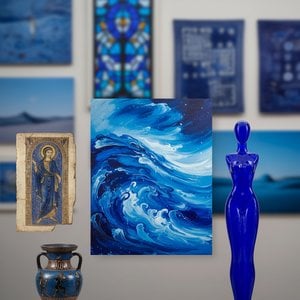
The Allure of Azure: Exploring the Symbolic & Aesthetic Depths of Blue in Art History
Explore the rich history of blue in art! Discover its symbolism, from ancient pigments to modern masterpieces by Kandinsky & Seurat. Uncover the psychological impact and cultural meanings behind this captivating hue.

Surrealist Painting Masterpieces: 10 Artworks That Redefined Reality | ArtsDot
Journey into the dreamlike world of Surrealism! Explore 10 masterpieces by Dali, Magritte & Miró that redefined art. Discover their stories & find museum-quality reproductions to elevate your home decor on ArtsDot.com.

초현실주의를 정의한 10대 걸작: 꿈과 현실의 경계를 넘어서
초현실주의 미술의 정수를 담은 10대 걸작을 만나보세요! 마그리트, 달리 등 거장의 작품 비하인드 스토리와 예술적 의미를 탐구하고, 꿈결 같은 분위기를 당신의 공간에. ArtsDot.com에서 명품 아트 프린트를 찾아 지금 바로 경험하세요.


