


 실제 크기로 보기
 보내기
보내기 공유하기
공유하기
 상세 보기
상세 보기 가이드 보기

 이미지 다운로드
 유사 작품 더 보기
 X-레이
X-레이 슬라이드 쇼 보기
 통계 정보
통계 정보Interior with Flowers
 Oil On Canvas
- WallArt
- Post-Impressionism
 1919
1919 116.0 x 88.0 cm
 상세 보기
상세 보기
지클레 / 아트 프린트
빠른 제작과 다양한 마감 옵션을 선택할 수 있는 박물관 수준의 지클레이 및 캔버스 프린트. ( 수작업 채색 복제본 주문하기 디지털 이미지 판매 채널로 전환)




P118B ₩10

P118H ₩10

P118W ₩10

P438Z ₩10

P508JH ₩12

P508YH ₩12

P805H ₩10

P805Z ₩10

P919BZ ₩10

P919G ₩10

P919XJ ₩10

P959ZH ₩10

P968JZ ₩12

W106C ₩8

W218G ₩10

W218JH ₩8

W218Y ₩10

W307PJ ₩10

W316G ₩10

W316PJ ₩8

W316Y ₩10

W398PJ ₩8

W4111J ₩10

W500HY ₩15

W500JH ₩15

W692G ₩12

W849H ₩8

W940BG ₩15

W953PJ ₩8




작품의 원본 비율을 그대로 유지하는 프리셋 사이즈 중에서 선택해 보세요.

액자나 벽면 크기에 맞춰 필요한 가로와 세로 길이를 입력해 주세요. 프린트는 원본 이미지보다 크게 제작할 수 없으며 오직 자르는 것만 가능하므로, 비율이 다른 사이즈를 선택할 경우 이미지의 일부가 잘려 나갈 수 있습니다. 인쇄 작업에 들어가기 전, 최종 확인을 위해 디지털 목업을 보내드립니다. 이 페이지에 표시된 이미지는 실제 잘리는 영역을 나타내지 않으며, 오직 목업을 통해서만 정확한 확인이 가능합니다.


 유리 옵션은 110cm 미만 크기에서만 선택 가능합니다.

Interior with Flowers
지클레 / 아트 프린트
복제본 규격
-


총 결제 금액
₩ 84616
A Sanctuary of Light and Domestic Intimacy
To gaze upon Bonnard's Interior with Flowers is to step through a veil into a moment suspended in time—a warm, luminous breath captured within the quietude of a well-loved room. This painting is not merely a depiction of objects; it is an immersion into atmosphere itself. The composition unfolds around a central table, laden with an exquisite arrangement of blooms spilling from various vases. These flowers, vibrant yet softened by Bonnard's characteristic palette, mingle with the deep greens of potted plants scattered throughout the scene. To the right, a plush couch invites repose, while on the left, a solitary chair suggests recent departure or imminent return. Every element—from the visible book resting near the corner to the varied sizes of the vessels holding life—contributes to an overwhelming sense of cozy, lived-in elegance.
The Luminous Touch of Post-Impressionism
Painted in 1919, this work sits beautifully within the orbit of Post-Impressionism, a style that allowed Bonnard to move beyond mere optical recording toward something more deeply felt. While the subject matter—a still life enriched by domestic architecture—might suggest simple genre painting, Bonnard elevates it through his masterful handling of light and color. His technique is characterized by an almost sensual application of paint; colors do not simply exist on the canvas but seem to emanate from within the scene itself. The light filtering into this interior feels palpable, bathing the textiles and petals in a golden, diffused glow that speaks volumes about the time of day and the emotional tenor of the space.
Symbolism of Domestic Stillness
The inclusion of flowers, books, and comfortable furniture imbues the piece with rich symbolism. Flowers, eternally transient, speak to the cycle of life, beauty, and inevitable decay—a poignant meditation rendered beautiful. The interior itself functions as a microcosm of memory; it is a space curated by moments lived and affections held. Bonnard often imbued his domestic scenes with an almost private intimacy, suggesting that true beauty resides not in grand historical narratives, but in the quiet rituals of daily life: the scent of cut flowers, the weight of a book read late into the afternoon.
Bringing the Salon Home
For those who appreciate art that enhances rather than dominates a space, this reproduction offers unparalleled depth. The scale of 116 x 88 cm allows the viewer to appreciate both the overall harmony of the room and the delicate brushwork on individual petals. It serves as more than just decoration; it acts as an emotional anchor for any living area—a place where one might pause, breathe deeply, and recall a moment of perfect, sun-drenched tranquility. Owning this piece is to invite Bonnard’s signature warmth into your own sanctuary.
질의응답
프레리 본나르드의 "Interior with Flowers"의 색감을 고려했을 때, 어떤 공간에 배치하는 것이 가장 좋을까요?
Earthy 색조를 담은 프레리 본나르드의 "Interior with Flowers"는 Living Room에 배치하시길 추천드립니다. 이 작품의 색감이 이러한 제안의 이유이기도 합니다.
프레리 본나르드의 "Interior with Flowers"은(는) 세로형, 가로형 또는 정사각형 구도인가요?
프레리 본나르드의 "Interior with Flowers"은(는) Portrait 구도로 이루어져 있습니다. 프린트 크기를 결정하시기 전에 비율을 확인해 보시는 것이 좋습니다.
프레리 본나르드의 "Interior with Flowers"의 프린트물로 권장되는 사이즈와 방향은 무엇인가요?
Medium 크기, Portrait 방향: 이는 프레리 본나르드의 "Interior with Flowers" 작품에 권장되는 인쇄 설정입니다.
관련 작품들


작가 소개
Pierre Bonnard (1867-1947): A Life Bathed in Light
Pierre Bonnard, born October 3, 1867, in Fontenay-aux-Roses, France, wasn’t destined for a life consumed by artistic ambition. His father, a high-ranking official within the French Ministry of War, envisioned a legal profession for his son—a path sharply contrasting with Bonnard's burgeoning passion for color and form. Despite this expectation, young Pierre diligently pursued law studies, securing his license in 1888, yet his artistic soul stubbornly resisted conformity, gravitating toward the captivating realm beyond academic constraints. Initially drawn to caricature, honing observational skills that would later transform into exquisitely rendered domestic scenes—a fascination that would define his oeuvre—Bonnard’s formative years were punctuated by encounters with kindred spirits at the Académie Julian, fostering a shared rejection of traditional artistic conventions and embracing the avant-garde fervor permeating Parisian society. This pivotal connection propelled him toward Les Nabis, a collective of artists—Maurice Denis, Paul Sérusier, Édouard Vuillard among them—who championed spirituality and symbolism within art, transcending mere representation to delve into subjective experience.The Nabi Influence: Flattened Forms & Vibrant Color
The Nabi movement profoundly shaped Bonnard’s artistic trajectory. Recognizing the profound resonance of flattened forms and bold color palettes with his sensibilities, he found inspiration in Japanese prints—their elegant lines and harmonious compositions—and the Symbolist movement's exploration of inner emotion. Rejecting perspectival illusionism, Bonnard embraced a stylistic approach that prioritized emotional impact over visual realism. This decision wasn’t merely aesthetic; it reflected a deeper conviction that art could communicate truths inaccessible to rational thought. He meticulously studied the techniques employed by his fellow Nabis, absorbing their innovative methods and integrating them into his own artistic practice. The Nabi's emphasis on capturing atmosphere and mood—rather than documenting precise details—became a cornerstone of Bonnard’s distinctive style.Domestic Intimacy: Capturing Everyday Moments
Bonnard’s artistic focus centered on the quiet beauty of domestic life—a theme that would become synonymous with his name ("Intimist"). Unlike Impressionists who sought to depict fleeting impressions of external landscapes, Bonnard turned inward, exploring the emotional resonance of familiar surroundings. His subjects—women bathing, families gathered for dinner, sunlit gardens—were rendered not as mere objects of observation but as embodiments of feeling—expressions of memory and emotion filtered through the prism of personal experience. He approached painting with a remarkable sensitivity to light and color, painstakingly recreating the nuances of illumination and hue to evoke specific moods and sensations. This meticulous attention to detail wasn’t driven by a desire for photographic accuracy; it stemmed from an earnest conviction that art could convey intangible qualities—the warmth of companionship, the serenity of contemplation.Color as Emotion: Bonnard's Chromatic Vision
Bonnard’s mastery of color stands apart as arguably his most defining characteristic—a testament to his unwavering dedication to chromatic balance. He didn’t merely employ color; he *felt* it, allowing it to dictate the mood and atmosphere of his paintings. His palette defied conventional categorization, often juxtaposing unexpected hues that created a shimmering luminosity—a technique rooted in both scientific observation and intuitive artistic judgment. Bonnard's approach mirrored the Symbolist movement's belief that color possessed inherent expressive power, capable of conveying emotions and ideas beyond linguistic articulation. He revisited completed canvases repeatedly, subtly adjusting colors across multiple works to achieve perfect harmony—a practice reflecting his obsessive pursuit of chromatic perfection.Later Life & Legacy: A Painter Until His Final Days
As Bonnard matured, he increasingly prioritized the exploration of color and light—drawing inspiration from his surroundings in Provence, France. He cultivated a close friendship with Claude Monet, whose Impressionistic style served as a catalyst for Bonnard’s own artistic evolution. Despite this influence, Bonnard maintained an unwavering commitment to his singular artistic vision—rejecting trends and conventions that threatened to dilute the essence of his aesthetic sensibilities. Until shortly before his death in January 23, 1947, he continued painting prolifically, leaving behind a vast corpus of work that continues to captivate audiences worldwide. Bonnard’s enduring legacy resides not merely in his iconic paintings—such as “Woman in Checkered Dress,” “The Dining Room,” and “Bowl of Fruit”—but also in his profound contribution to the history of art—demonstrating that beauty could be found in simplicity, introspection, and the unwavering pursuit of chromatic harmony. His influence extends across generations of artists who recognize the power of color to convey emotion and memory—a testament to Bonnard’s indelible mark on modern artistic expression.- Woman in Checkered Dress (1890): An early exemplar of Nabi style, characterized by flattened forms and bold chromatic combinations.
- The Dining Room (1913): A quintessential Intimist scene capturing the warmth and intimacy of domestic life.
- Bowl of Fruit (c. 1933): Illustrates Bonnard’s exceptional skill in still life, imbued with luminous depth and vibrant hues.

프레리 본나르드
1867 - 1947 , 프랑스
작가 정보 요약
- Artistic Movement Or Style: 인상주의 스타일 및 인미즘
- Artists Who Influenced This Artist:
- 폴 고흐
- 호쿠사이
- Date Of Birth: 1867년 10월 3일
- Date Of Death: 1947년 1월 23일
- Full Name: Pierre Bonnard
- Nationality: 프랑스인
- Notable Artworks:
- 체크된 드레스 입은 여성
- 알몬드 나무 꽃핌
- Place Of Birth: 프랑스 프랑베이 오 드 라 갈레트
관련 기사

폴 세잔 명작 25선: 시대를 초월하는 예술과 공간의 미학 | ArtsDot
폴 세잔의 시대를 초월하는 명작 25점을 만나보세요. 인상주의를 넘어 후기 인상주의를 개척한 화가의 예술 세계와 정물화, 풍경화 속 숨겨진 이야기를 ArtsDot에서 감상하세요. 고품질 아트 프린트와 캔버스 액자로 공간에 예술을 더해보세요! 지금 바로 컬렉션을 탐험하세요.

르누아르 명작 25선: 빛과 색채로 물든 삶의 순간들 | ArtsDot
빛과 색채의 마법사 르누아르! 인상주의 대표 화가 르누아르의 명작 25선을 만나보세요. '물랭 드 라 갈레트', '우산 속의 소녀들' 등 시대를 초월하는 아름다움을 ArtsDot에서 감상하고, 특별한 공간을 완성하세요. 지금 바로 온라인 컬렉션을 탐험하세요!

후기인상주의를 정의한 10대 걸작: 예술과 홈데코의 새로운 영감
후기인상주의를 빛낸 10대 명작! 고흐, 세잔 등 거장의 작품 비하인드 스토리와 예술적 의미를 만나보세요. ArtsDot에서 최고급 미술 복제 및 인테리어 영감을 얻고, 당신의 공간을 예술로 채워보세요. 지금 바로 확인하세요!
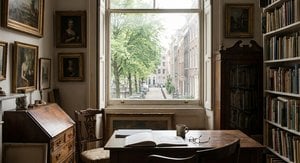
The Interior Gaze: Exploring Representations of Domestic Space in Art History
Explore the fascinating history of domestic interiors in art! From Dutch Masters to Impressionism, discover how artists captured home life & social meaning. Expert analysis and insights at ArtsDot.

Intimate Interiors: Domestic Life & Artistic Representation from Renaissance to Impressionism
Explore the evolution of domestic life in Western art from the Renaissance to Impressionism. Discover symbolism, realism & artistic techniques shaping intimate interior scenes. Learn more with ArtsDot.


