


 실제 크기로 보기
 보내기
보내기 공유하기
공유하기
 상세 보기
상세 보기 가이드 보기

 이미지 다운로드
 유사 작품 더 보기
 X-레이
X-레이 슬라이드 쇼 보기
 통계 정보
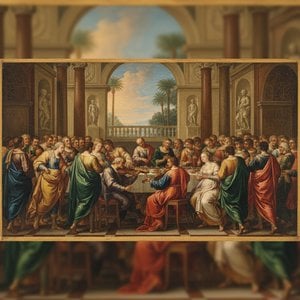
통계 정보Pietà
 Acrylic On Canvas
- WallArt
- Baroque Splendor
 1581
1581 112.0 x 147.0 cm
 에르미타주 박물관
 상세 보기
상세 보기
지클레 / 아트 프린트
빠른 제작과 다양한 마감 옵션을 선택할 수 있는 박물관 수준의 지클레이 및 캔버스 프린트. ( 수작업 채색 복제본 주문하기 디지털 이미지 판매 채널로 전환)




P118B $10

P118H $10

P118W $10

P438Z $10

P508JH $12

P508YH $12

P805H $10

P805Z $10

P919BZ $10

P919G $10

P919XJ $10

P959ZH $10

P968JZ $12

W106C $8

W218G $10

W218JH $8

W218Y $10

W307PJ $10

W316G $10

W316PJ $8

W316Y $10

W398PJ $8

W4111J $10

W500HY $15

W500JH $15

W692G $12

W849H $8

W940BG $15

W953PJ $8




작품의 원본 비율을 그대로 유지하는 프리셋 사이즈 중에서 선택해 보세요.

특정 프레임이나 공간에 맞춰 직접 치수를 입력하실 수 있습니다. 선택하신 사이즈가 원본 이미지의 비율과 일치하지 않을 경우, 작품을 크롭(자르기)하거나 이미지를 대칭 또는 단색 채우기로 확장하여 제작합니다. 제작 시작 전, 최종 확인을 위해 디지털 목업이 전송됩니다.
화면상의 미리보기는 실제 크롭이나 확장 상태를 반영하지 않으므로, 최종 구도는 오직 목업을 통해서만 정확하게 확인하실 수 있습니다.
맞춤 사이즈 제작도 가능하지만, 원본 비율을 유지하기 위해서는 사전 정의된 목록에서 치수를 선택하시는 것을 권장합니다.


 유리 옵션은 110cm 미만 크기에서만 선택 가능합니다.

Pietà
지클레 / 아트 프린트
복제본 규격
-


총 결제 금액
$ 62
A Symphony of Color and Faith: Exploring Paolo Veronese’s Pietà
Paolo Caliari, universally known as Paolo Veronese (1528-1588), stands as a titan amongst Venetian Renaissance artists—a visionary who redefined artistic expression through an unparalleled mastery of color, composition, and theatrical grandeur. Born in Verona amidst the burgeoning humanist fervor of his time, Veronese’s formative years instilled within him a profound appreciation for classical ideals interwoven with the vibrant spirit of his region's artistic heritage. His initial apprenticeship under Antonio Badile and Giovanni Francesco Caroto honed foundational skills in traditional painting methods, yet it was his relocation to Venice in the 1550s that irrevocably propelled him toward unparalleled creative heights. The city itself became Veronese’s unwavering muse—its bustling marketplaces, opulent palaces, and shimmering canals fueling the monumental scale and dramatic narrative power of his oeuvre. He swiftly assimilated the stylistic innovations championed by Titian, whose masterful use of color served as a crucial catalyst for Veronese's distinctive palette – one characterized by luminous hues and subtle gradations that captured the very essence of Venetian light. Simultaneously, he cultivated an independent artistic voice, forging a style distinct from his contemporaries yet firmly rooted in Venetian tradition.The Baroque Embrace: Style and Technique
Veronese’s Pietà (1581), housed within Basilica dei Santi Giovanni e Paolo in Bologna, exemplifies this masterful blend of influences. Painted during the High Renaissance's waning years and transitioning into the Baroque era, it represents a pivotal moment in Venetian art history. Unlike the serene piety characteristic of earlier devotional paintings, Veronese’s Pietà bursts forth with vibrant color—a deliberate departure from prevailing artistic conventions—demonstrating his embrace of Baroque theatricality. The artist employed oil paint on canvas, utilizing layering techniques and meticulous glazing to achieve an astonishing level of realism and luminosity. Notice the masterful manipulation of light; it cascades across Mary's drapery, illuminating Jesus’s lifeless body with a poignant glow – a technique perfected by Veronese and his followers that would become synonymous with Baroque painting. The artist’s attention to detail extends beyond mere visual representation; he meticulously rendered textures—the folds of Mary’s robe, the smoothness of Jesus’s skin—creating an immersive experience for the viewer.Historical Context: Venetian Patronage and Artistic Innovation
The Pietà emerged from a period marked by significant artistic patronage within Venice – a city that actively fostered innovation and celebrated artistic achievement. Commissioned by Cardinal Giovanni Battista Castelli, Veronese's undertaking was ambitious in scope—a monumental altarpiece intended to dominate the basilica’s interior space and inspire devotion amongst its worshippers. This commission underscored Venice’s position as Europe’s foremost cultural center and fueled a competitive spirit among artists striving for recognition. Furthermore, Veronese’s work reflects broader intellectual currents of the time – particularly humanist ideals emphasizing human dignity and emotion alongside religious contemplation. He skillfully incorporated classical motifs—such as pyramidal composition—into his narrative scenes, demonstrating an awareness of artistic precedents while simultaneously forging a new visual language.Symbolism: Grief, Compassion, and Divine Grace
The Pietà transcends mere depiction; it embodies profound symbolic meaning rooted in Christian theology. Mary’s sorrowful posture conveys universal grief – the anguish experienced by mothers upon losing their children—yet her serene countenance speaks to an inner fortitude underpinned by faith and divine grace. Jesus’s lifeless body symbolizes humanity's vulnerability before death, while Mary’s embrace represents compassion and maternal love—a testament to God’s mercy and redemption. The positioning of Mary and Jesus within the pyramidal composition reinforces the centrality of Christ’s sacrifice as the cornerstone of Christian belief. Veronese’s masterful use of color – predominantly blues and reds – further amplifies these symbolic resonances, conveying feelings of solemnity and spiritual intensity.Emotional Impact: A Moment Frozen in Time
Ultimately, Veronese's Pietà achieves its enduring power through its ability to evoke profound emotional responses from the viewer. The luminous colors, combined with meticulous detail and dramatic lighting, transport us back to the moment of Jesus’s deposition—capturing the palpable grief of Mary and conveying a sense of sublime beauty amidst sorrow. It is a painting that compels contemplation – prompting viewers to grapple with questions of faith, mortality, and compassion. More than simply representing an iconic biblical scene, Veronese's Pietà serves as a timeless meditation on human suffering and divine grace—a masterpiece that continues to inspire awe and reverence centuries after its creation.관련 작품들


작가 소개
베네치아의 환상: 파올로 베로네세의 삶과 예술
파올로 칼리아리는 세상에 파올로 베로네세라는 이름으로 알려졌으며, 16세기 베네치아의 생동감 넘치는 예술적 풍경 속에서 색채, 구도, 화려한 볼거리를 마스터한 예술가로 떠올랐다. 1528년 베로나에서 석공의 아들로 태어난 그는 어린 시절 주변 환경의 시각적인 풍요로움에 깊이 뿌리내렸다. 고전 건축물, 조각 형태, 그리고 이 지역을 특징짓는 새로운 인문주의 이상들이 그의 삶을 채웠다. 안토니오 바딜레와 지오반니 프란체스코 카로토 밑에서 초기 훈련을 받았지만, 1550년대 베네치아로 이주하면서 예술적 천재성이 진정으로 발휘되었다. 도시는 그 자체로 그의 뮤즈가 되어 번화한 시장, 웅장한 궁전, 반짝이는 수로가 작품의 규모와 드라마를 형성했다. 그는 티티안과 같은 확립된 베네치아 거장의 영향을 빠르게 흡수했는데, 티티안의 색채에 대한 숙달은 베로네세의 팔레트에 심오한 영향을 미쳤지만, 그는 타의 추종을 불허하는 극적인 감각과 웅장함으로 특징지어지는 독특한 스타일을 창조했다.축제와 장대한 서사의 화가
베로네세의 명성은 특히 호화로운 축제와 성경 장면을 베네치아 생활의 눈부신 전시로 변모시킨 기념비적인 그림에 달려 있다. 1563년에 산 조르조 마조레 수도원을 위해 완성된 <카나의 결혼>은 그의 기술에 대한 증거이다. 이 거대한 캔버스는 단순히 기적을 설명하는 것이 아니다. 우아하게 차려입은 인물, 음악가, 숨막힐 듯한 정밀도로 렌더링된 건축 세부 사항으로 가득 찬 16세기 사회의 생생한 파노라마이다. 그림은 카나에서 일어난 일에 대한 것이 아니라 베로네세 시대에 베네치아에서 발생했다면 어떻게 보였을지에 대한 것이다. 원래 <최후의 만찬>이라고 불렸던 <레위 집에서의 축제>는 동시대 인물과 경건하지 않은 듯한 분위기 때문에 종교 재판의 논란을 불러일으켰다. 베로네세는 예술적 자유를 옹호하며 화가는 시인이나 익살꾼과 같은 창작의 자유가 있다고 주장했다. 이것은 성스러운 서사를 해석하고 재창조하는 예술의 힘에 대한 그의 강한 믿음을 반영하는 대담한 진술이었다. 이 작품들은 단순히 종교적인 묘사가 아니었다. 그것들은 삶, 부유함, 베네치아 자체의 화려함을 축하했다. 그는 금욕적인 영성에 관심이 없었지만 존재의 기쁨과 풍요로움을 포착하는 데 관심이 있었다.영향 및 예술적 발전
티티안의 색채에 대한 영향은 부인할 수 없지만, 베로네세의 예술적 발전은 다양한 영향의 복잡한 상호 작용이었다. 그의 구도에 가져온 건축적인 정밀함은 그의 형성기에 베로나에서 유행했던 고전 전통, 특히 미켈레 산미케리와 같은 건축가의 작품에 많은 빚을 지고 있다. 그는 라파엘과 파르미지아노와 같은 중앙 이탈리아 거장의 요소들을 흡수했는데, 이는 그림 내의 우아한 선과 조화로운 배열에서 분명히 드러난다. 그러나 베로네세는 단순히 이러한 영향력을 모방하지 않았다. 그는 빛의 극적인 사용, 생생한 색상 팔레트, 세심한 디테일에 대한 주의를 특징으로 하는 독특한 베네치아 스타일로 그것들을 종합했다. 그는 공간과 깊이의 환상을 창조하는 데 탁월했으며, 원근법 기술을 사용하여 관객을 그의 정교한 장면의 중심부로 끌어들였다. 그는 유화에 대한 숙달을 통해 타의 추종을 불허하는 광도와 질감의 풍요로움을 달성했다. 그는 또한 형제 베네데토와 아들 가브리엘레, 카를로가 참여한 대규모 워크숍을 운영하여 그의 죽음 이후에도 그의 스타일이 번성하도록 보장했다.유산과 역사적 중요성
파올로 베로네세의 영향력은 르네상스 예술의 영역을 훨씬 넘어 확장된다. 그의 작품은 수세기 동안 울려 퍼져 다양한 분야의 예술가들에게 영감을 주었다. 그의 극적인 구성과 생생한 색상 구성은 바로크 회화부터 현대 영화에 이르기까지 모든 것에 영향을 미친 것으로 인용되었으며 심지어 스파게티 웨스턴의 시각적 미학에서도 메아리를 찾았다. 그는 티티안, 틴토레토와 함께 베네치아 화가 "위대한 삼인방"의 일원이었다. 각자는 도시의 예술적 유산에 독특하게 기여했지만, 베로네세는 종종 그의 순수한 열정과 세속적인 즐거움에 대한 축하로 두드러진다. 그의 그림은 계속해서 관객을 사로잡으며 16세기 베네치아의 화려한 세계를 엿볼 수 있게 해준다.- 그는 동시대 생활을 주입하여 역사 회화를 재정의했다.
- 그의 색채 사용은 오늘날 예술가들에게도 영향을 미치고 있다.
- 그의 작품은 르네상스 인문주의 정신과 세속적인 아름다움에 대한 축하를 구현한다.

파올로 베로네제
1528 - 1588 , 이탈리아
작가 정보 요약
- Artistic Movement Or Style: 르네상스, 매너리즘
- Artists Or Movements Influenced By This Artist:
- 루벤스
- 와토
- Artists Who Influenced This Artist: ['티치아노']
- Date Of Birth: 1528년
- Date Of Death: 1588년
- Full Name: 파올로 베로네세
- Nationality: 이탈리아인
- Notable Artworks (List Of Titles):
- 카나의 결혼식
- 레위 집에서의 잔치
- Place Of Birth (City And Country): 베로나, 이탈리아
관련 기사

화려함 속에 감춰진 진실! 바로크 미술을 정의한 10대 걸작 탐구
화려함과 극적인 표현이 압권! 바로크 미술을 대표하는 10대 걸작의 숨겨진 이야기를 만나보세요. 베르니니, 루벤스 등 거장의 작품부터 바로크 색감, 예술적 기법까지 – ArtsDot.com에서 명품 복제 & 인테리어 영감을 얻으세요! 지금 바로 컬렉션을 탐험해보세요.

The Dramatic Flourish: Exploring the Baroque Movement's Enduring Legacy in Art History
Explore the dramatic world of Baroque art! Discover iconic artists like Caravaggio & Rubens, defining techniques, and its lasting impact on art history. Expert insights for collectors & enthusiasts at ArtsDot.

바로크의 드라마: 현대 인테리어에 풍요로움과 감동을 불어넣기
바로크 예술의 풍요로운 세계를 탐험하고, 현대 인테리어에 감동을 불어넣는 방법을 ArtsDot에서 만나보세요. 카라바조, 렘브란트 등 거장들의 작품과 키아로스쿠로 기법 활용 노하우를 공개합니다.
Paolo Veronese: A Renaissance Master of Color, Composition, and Venetian Splendor
Explore the vibrant world of Paolo Veronese, a Renaissance master renowned for his opulent compositions, masterful use of color, and dramatic Venetian scenes. Discover key artworks & legacy.

틴토레토의 걸작 25선: 베네치아 회화 거장의 드라마와 빛의 향연 | ArtsDot
틴토레토의 드라마틱한 빛과 색채가 살아 숨쉬는 걸작 25선을 만나보세요. 베네치아 회화 거장의 명작 속 역사, 기법, 그리고 영감을 느껴보세요. ArtsDot에서 고품질 유화와 아트 프린트를 감상하고 특별한 인테리어를 완성하세요. 지금 바로 컬렉션을 탐험하세요!


