


 실제 크기로 보기
 보내기
보내기 공유하기
공유하기
 상세 보기
상세 보기 가이드 보기

 이미지 다운로드
 유사 작품 더 보기
 X-레이
X-레이 슬라이드 쇼 보기
 통계 정보
통계 정보Upper Arm Study
 Chalk
Chalk- WallArt
- Northern Renaissance
 1512
1512 279.0 x 195.0 cm
 슈타틀리체 쿤스트자무운군겐 드레스덴
 상세 보기
상세 보기
핸드메이드 유화 복제화
작가가 직접 캔버스에 손으로 그린 유화 작품으로, 원하는 크기와 액자로 맞춤 제작해 드립니다. ( 프린트 판매로 전환 디지털 이미지 판매 채널로 전환)




P118B ₩10

P118H ₩10

P118W ₩10

P438Z ₩10

P508JH ₩12

P508YH ₩12

P805H ₩10

P805Z ₩10

P919BZ ₩10

P919G ₩10

P919XJ ₩10

P959ZH ₩10

P968JZ ₩12

W106C ₩8

W218G ₩10

W218JH ₩8

W218Y ₩10

W307PJ ₩10

W316G ₩10

W316PJ ₩8

W316Y ₩10

W398PJ ₩8

W4111J ₩10

W500HY ₩15

W500JH ₩15

W692G ₩12

W849H ₩8

W940BG ₩15

W953PJ ₩8




작품의 원본 비율을 그대로 유지하는 프리셋 사이즈 중에서 선택해 보세요.

액자나 벽면 크기에 맞춰 필요한 가로와 세로 길이를 입력해 주세요. 본 작품은 수작업으로 제작되므로, 요청하신 비율에 따라 작가가 그림의 가장자리를 조금 더 넓게 그리거나 일부를 조정하여 작업할 수 있습니다. 작업 시작 전, 최종 확인을 위해 디지털 목업 이미지를 보내드립니다. 이 페이지에 표시된 이미지는 실제 결과물과 다를 수 있으며, 오직 목업 이미지만이 정확한 결과물을 보여줍니다.
주문 완료 후 ArtsDot.com 팀에서 상세 안내를 위해 고객님께 이메일을 보내드리며, 미리보기 시안을 함께 제공해 드립니다.


 유리 옵션은 110cm 미만 크기에서만 선택 가능합니다.

Upper Arm Study
재현 매체
복제본 규격
-


총 결제 금액
₩ 361470
A Detailed Examination of Grünewald’s Anatomical Sketch
Matthias Grünewald's “Upper Arm Study,” created in 1512-14, stands as a testament to the enduring fascination with human anatomy during the Renaissance. More than just a preparatory drawing for the monumental Isenheim Altarpiece—a masterpiece of expressive religious art—it embodies the meticulous observation and profound spiritual contemplation characteristic of Grünewald’s oeuvre.
- Subject Matter: The artwork focuses entirely on the human upper arm, meticulously rendered in black chalk on brown-yellowish paper. Its simplicity belies its significance as a foundational element within Grünewald's larger artistic vision.
- Style & Technique: Grünewald’s style aligns squarely with Northern Renaissance realism, prioritizing accuracy and emotional depth over idealized beauty. The technique employs delicate hatching lines and shading to achieve remarkable textural detail—the roughness of the skin and the subtle contours of muscle fibers are rendered with astonishing precision. Circular shapes subtly delineate muscle forms, while angular lines define bone structure, demonstrating a masterful understanding of spatial representation.
- Historical Context: Produced during a period marked by burgeoning humanist scholarship and artistic innovation, Grünewald’s study reflects the Renaissance preoccupation with scientific inquiry alongside religious devotion. Unlike his contemporaries in Italy who embraced classical ideals, Grünewald channeled his intellectual curiosity into exploring the human form as a vehicle for conveying spiritual truths.
- Symbolism & Emotional Impact: Though seemingly devoid of overt symbolism beyond anatomical accuracy, the clenched hand—a central element of the composition—suggests latent tension and unwavering strength. This gesture speaks to the artist’s conviction in confronting suffering with resolute faith – a theme powerfully echoed throughout Grünewald's religious paintings.
Material & Medium Considerations
The choice of chalk as the medium is crucial to understanding Grünewald’s artistic process. Chalk allows for unparalleled tonal control, facilitating the creation of nuanced shading and highlighting that imbues the drawing with a palpable sense of volume and depth. The paper substrate contributes to the artwork's overall texture—a subtle roughness mirroring the physicality of human flesh.
A Window into Grünewald’s Artistic Vision
“Upper Arm Study” isn’t merely an anatomical illustration; it’s a distillation of Grünewald’s artistic philosophy. It exemplifies his commitment to capturing not only physical form but also the inner spirit—a characteristic that distinguishes him from many other artists of his time and secures his place as one of the most influential figures in Northern Renaissance art.
Discovering Grünewald's Legacy
Reproductions of “Upper Arm Study” offer a captivating glimpse into Grünewald’s artistic genius. Available at ArtsDot.com, these high-quality prints allow collectors and enthusiasts alike to appreciate the enduring beauty and intellectual rigor of this seminal artwork.
질의응답
마티아스 그뤼네발트의 "Upper Arm Study"에서 예술 사조와 시대상은 어떻게 맞닿아 있나요?
마티아스 그뤼네발트의 "Upper Arm Study"은(는) 작가의 르네상스 시대 중 Northern Renaissance 사조에 속합니다.
마티아스 그뤼네발트의 "Upper Arm Study"의 제작 연도와 화풍은 무엇인가요?
마티아스 그뤼네발트의 "Upper Arm Study"은(는) 1512년에 제작되었으며 Northern Renaissance에 속합니다.
마티아스 그뤼네발트의 "Upper Arm Study"은 밝은 분위기의 작품인가요, 아니면 어두운 분위기의 작품인가요?
마티아스 그뤼네발트의 "Upper Arm Study"의 느껴지는 밝기는 brilliant입니다. 이는 의도한 공간의 조명과 조화를 이룰 수 있습니다.
관련 작품들


작가 소개
마티아스 그뤼네발트: 삶과 유산
초기 생애와 예술적 여정의 시작
독일 뷔르츠부르크에서 1470~1475년경 마티스 고트하르트 나이트하르트라는 이름으로 태어난 마티아스 그뤼네발트는 독일 르네상스의 중추적인 인물이었습니다. 이 시기는 이탈리아 르네상스의 이상주의가 점차 확산되던 때였음에도 불구하고, 그뤼네발트는 중세 후기 중앙유럽의 예술적 전통에 깊은 뿌리를 두고 있었습니다. 그의 초기 생애에 대한 구체적인 기록은 드물지만, 그는 지역 화실에서 예술가로서의 기틀을 닦으며 성장했음을 알 수 있습니다.
예술적 발전과 영향력
그뤼네발트의 예술적 성장은 사실주의와 정서적 강렬함, 그리고 세밀한 관찰력을 중시하던 북유럽 전통의 영향을 받으며 형성되었습니다. 그의 작품에서는 알브레히트 뒤러나 마르틴 쇼엔가우어 같은 거장들의 흔적이 엿보이기도 하지만, 그는 단순히 이를 따르는 데 그치지 않고 극적인 표현과 생생한 색채를 특징으로 하는 자신만의 독창적인 길을 개척했습니다. 이탈리아에서 유행하던 인문주의 서클에 직접적으로 참여하기보다는, 그의 예술은 당대의 영적 불안을 투영하며 주로 종교적인 목적을 수행하는 데 집중되었습니다.
주요 작품과 예술적 양식
- 이젠하임 제단화 (1512-1516): 콜마르의 뮐뤼스 박물관(Musée d'Unterlinden)에 소장된 이 걸작은 그뤼네발트의 최고 역작으로 손꼽힙니다. 그리스도의 생애를 처절할 정도의 사실주의로 그려낸 이 작품은 특히 고통과 구원의 서사에 초점을 맞추고 있습니다.
- 십자가 처형 (c. 1502-1503): 그의 초기작으로서, 발전해가는 예술적 양식과 함께 강렬한 감정 및 해부학적 세밀함을 잘 보여줍니다.
- 수태고지 성모 (1512-14): 이젠하임 제단화를 위한 습작으로, 작품을 완성하기 위한 그의 치밀한 계획 과정을 엿볼 수 있습니다.
그뤼네발트의 화풍은 다음과 같은 독보적인 요소들로 정의됩니다.
- 극적인 구도: 그는 감정적 충격을 극대화하기 위해 역동적인 배치를 활용했습니다.
- 생생한 색채 팔레트: 강렬하고 때로는 대비가 뚜렷한 색상의 사용은 관람객에게 강력한 시각적 경험을 선사합니다.
- 고통의 사실적 묘사: 그는 종교적 서사에 수반되는 육체적, 정신적 고통을 묘사하는 데 있어 결코 주저하지 않았습니다.
- 표현력이 풍부한 인물: 그의 인물들은 깊은 심리적 깊이와 강렬한 감정으로 가득 차 있습니다.
역사적 의의와 예술적 유산
그뤼네발트의 작품은 르네상스 시대 독일에서 중세 예술 전통이 지녔던 지속적인 힘을 증명하는 소중한 유산입니다. 그는 후기 고딕 양식과 새롭게 떠오르는 르네상스 사이의 간극을 메우며, 당대인들의 마음을 울리는 독특한 시각적 언어를 창조해냈습니다. 그의 영향력은 종교적 열정과 정서적 강렬함을 탐구했던 이후 독일 예술가들에게도 고스란히 이어졌습니다. 1528년 그의 사후 수 세기 동안 대중의 기억 속에서 잊혀지기도 했으나, 19세기에 이르러 재조명받기 시작한 그는 오늘날 독일 르네상스를 대표하는 가장 중요한 화가 중 한 명으로 인정받고 있습니다. 그의 예술은 가공되지 않은 날 것 그대로의 감정과 기술적 탁월함, 그리고 심오한 영적 깊이를 통해 오늘날의 관람객들에게도 여전히 깊은 울림을 주고 있습니다.
더 알아보기
마티아스 그뤼네발트의 삶과 작품에 대한 더 자세한 내용은 다음에서 확인하세요: ArtsDot

마티아스 그뤼네발트
1480 - 1528 , 독일
작가 정보 요약
- Birth Date: c. 1470–1475
- Birth Place: 독일 뷔르츠부르크
- Death Date: 1528
- Movement: 독일 르네상스, 후기 중세
- Name: 마티아스 그뤼네발트
- Nationality: 독일
- Notable Works: 이젠 알타르(Isenheim Altarpiece), 십자가 처형
관련 기사
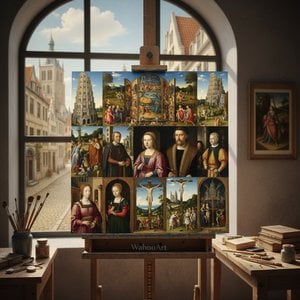
북부 르네상스 미술의 거장 10선: 예술과 품격으로 당신의 공간을 채우다
북부 르네상스 미술의 정수를 담은 10가지 대작! 뒤러, 반호이켄 등 거장의 작품으로 예술적 영감을 얻고, ArtsDot.com에서 고품격 아트 프린트와 인테리어 아이디어를 만나보세요. 지금 바로 온라인 컬렉션을 탐험하세요.

The Intimate Gaze: Study & Intellectual Pursuit in Western Art
Explore the fascinating history of study and intellectual pursuit in Western art! Discover Renaissance scholars, iconic portraits like Holbein's Erasmus, and Leonardo’s studies – a journey through humanist ideals & artistic mastery. Learn more at ArtsDot.
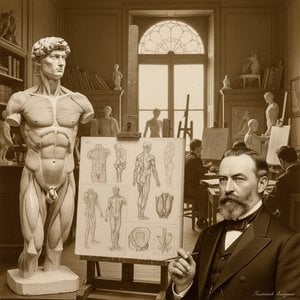
Frederick Bridgman: Anatomical Mastery & the Evolution of Figure Drawing Instruction
Explore the anatomical mastery of George B. Bridgman & his revolutionary figure drawing techniques. Discover how his methods transformed art instruction and continue to inspire artists today. Learn more at ArtsDot.

Matthias Grünewald: Devotion, Distortion & Spiritual Turmoil in Renaissance Art
Explore the profound religious art of Matthias Grünewald, master of the Isenheim Altarpiece. Discover his unique expressionism, symbolism & lasting impact on Renaissance painting. A guide for collectors and enthusiasts.

레오나르도 다 빈치 최고 걸작 25선: 예술과 과학의 경계를 넘어서 (Leonardo da Vinci's 25 Masterpieces)
레오나르도 다 빈치의 시대를 초월하는 25개의 명작을 만나보세요. 모나리자, 최후의 만찬 등 예술과 과학이 융합된 걸작들의 숨겨진 이야기와 기법을 탐험합니다. ArtsDot.com에서 고품질 미술 작품을 감상하고 특별한 인테리어 영감을 얻으세요.


