


 실제 크기로 보기
 보내기
보내기 공유하기
공유하기
 상세 보기
상세 보기 가이드 보기

 이미지 다운로드
 유사 작품 더 보기
 X-레이
X-레이 슬라이드 쇼 보기
 통계 정보
통계 정보Thomas Jefferson
 Acrylic On Canvas
- WallArt
- Neoclassicism
 1786
1786 90.0 x 72.0 cm
 국립미술관
국립미술관
 상세 보기
상세 보기
지클레 / 아트 프린트
빠른 제작과 다양한 마감 옵션을 선택할 수 있는 박물관 수준의 지클레이 및 캔버스 프린트. ( 수작업 채색 복제본 주문하기 디지털 이미지 판매 채널로 전환)




P118B ₩10

P118H ₩10

P118W ₩10

P438Z ₩10

P508JH ₩12

P508YH ₩12

P805H ₩10

P805Z ₩10

P919BZ ₩10

P919G ₩10

P919XJ ₩10

P959ZH ₩10

P968JZ ₩12

W106C ₩8

W218G ₩10

W218JH ₩8

W218Y ₩10

W307PJ ₩10

W316G ₩10

W316PJ ₩8

W316Y ₩10

W398PJ ₩8

W4111J ₩10

W500HY ₩15

W500JH ₩15

W692G ₩12

W849H ₩8

W940BG ₩15

W953PJ ₩8




작품의 원본 비율을 그대로 유지하는 프리셋 사이즈 중에서 선택해 보세요.

특정 프레임이나 공간에 맞춰 직접 치수를 입력하실 수 있습니다. 선택하신 사이즈가 원본 이미지의 비율과 일치하지 않을 경우, 작품을 크롭(자르기)하거나 이미지를 대칭 또는 단색 채우기로 확장하여 제작합니다. 제작 시작 전, 최종 확인을 위해 디지털 목업이 전송됩니다.
화면상의 미리보기는 실제 크롭이나 확장 상태를 반영하지 않으므로, 최종 구도는 오직 목업을 통해서만 정확하게 확인하실 수 있습니다.
맞춤 사이즈 제작도 가능하지만, 원본 비율을 유지하기 위해서는 사전 정의된 목록에서 치수를 선택하시는 것을 권장합니다.


 유리 옵션은 110cm 미만 크기에서만 선택 가능합니다.

Thomas Jefferson
지클레 / 아트 프린트
복제본 규격
-


총 결제 금액
₩ 83398
A Portrait of Enlightenment: Mather Brown’s Likeness of Thomas Jefferson
The portrait of Thomas Jefferson by Mather Brown, completed in 1786, stands as an arresting emblem of the burgeoning neoclassical aesthetic within Britain during the late Enlightenment. More than simply a likeness—though remarkably accurate for its time—it embodies the intellectual currents that shaped America’s founding ideals and continues to resonate with collectors and art historians alike. Painted on canvas using oil paints, Brown's masterful technique captures Jefferson’s dignified countenance against a backdrop of rich crimson, skillfully employing linear perspective and textural brushstrokes to convey both physical presence and psychological depth.The Artist & His Context
Mather Brown (1761-1831), born in Boston, Massachusetts, represents a pivotal figure bridging the stylistic divide between Neoclassicism and Romanticism. Trained under John Singleton Copley—Boston’s foremost artist—Brown absorbed the meticulous precision of classical artistic principles, prioritizing order and balance as hallmarks of his oeuvre. His decision to relocate to London in 1790 solidified his position within the British art landscape, where he gained membership to the Royal Academy, securing a prominent role in shaping artistic discourse and production. The portrait reflects Brown’s engagement with European intellectual traditions—particularly the influence of Greek sculpture—demonstrating an awareness of the broader philosophical debates concerning reason versus emotion that characterized the era.Style & Technique: Neoclassical Precision
Brown's approach to Jefferson’s depiction exemplifies neoclassical ideals. Linear perspective dominates, creating a convincing illusion of three-dimensionality and anchoring Jefferson’s figure within a carefully constructed space. Geometric shapes—squares and rectangles defining Jefferson’s attire—underscore the compositional stability characteristic of the style. Texture is achieved through deliberate brushstrokes that imbue the fabric of Jefferson's coat and wig with palpable volume, mirroring the monumental grandeur favored by neoclassical painters. The dramatic lighting—originating from an unseen source above—casts strong shadows across Jefferson’s face, highlighting his features and conveying a subtle sense of introspection. These meticulous details underscore Brown’s commitment to capturing not merely appearance but also character—a testament to the artist's skill in translating philosophical concepts into visual form.Symbolism & Emotional Resonance
Beyond its technical brilliance, the portrait is laden with symbolic significance. The inclusion of a classical statue in the background serves as an explicit reference to reason and knowledge—values central to Enlightenment thought. Jefferson’s attire—reflecting his connection to European intellectual traditions—further reinforces this thematic dimension. However, Brown's portrayal transcends mere stylistic convention; it conveys a palpable emotional resonance. The gaze of Jefferson—direct yet contemplative—suggests a profound engagement with internal reflection, hinting at the complexities inherent in reconciling philosophical convictions with personal realities. This subtle melancholy contributes to the portrait’s enduring appeal, inviting viewers to contemplate themes of intellectuality, morality, and the burdens of leadership.A Legacy Enduring Through Reproduction
Today, reproductions of Brown's Jefferson offer art lovers and interior designers alike a captivating glimpse into a pivotal moment in American history and artistic innovation. The painting’s masterful technique—characterized by its luminous color palette and nuanced textural rendering—continues to inspire artists and collectors globally. Its enduring emotional impact—rooted in the portrayal of an intellectual titan wrestling with moral dilemmas—remains profoundly relevant, prompting contemplation on the intersection of reason and emotion within the human experience.질의응답
메이더 브라운의 "Thomas Jefferson"의 제작 연도는 언제인가요?
메이더 브라운의 "Thomas Jefferson"의 제작 연도는 1786년입니다.
메이더 브라운은(는) 몇 세에 "Thomas Jefferson"을(를) 제작했을까요?
1786년에 "Thomas Jefferson"이(가) 제작되었을 당시, 1761년에 태어난 메이더 브라운의 나이는 25세였습니다.
"Thomas Jefferson"의 작가는 누구인가요?
"Thomas Jefferson"은(는) 메이더 브라운의 작품입니다. 이 페이지의 정보는 메이더 브라운의 원작에 대해 설명합니다.
메이더 브라운의 "Thomas Jefferson"에는 무엇이 묘사되어 있나요?
메이더 브라운의 "Thomas Jefferson"에 나타난 주제로는 portrait, enlightenment, american history, jefferson, neoclassicism, philosophy, dignified, intellectual 등이 있습니다. 이들은 모여 작품의 소재를 요약해 보여줍니다.
"Thomas Jefferson"은(는) 누가 제작했으며 어떤 화풍인가요?
"Thomas Jefferson"의 뒤에는 메이더 브라운와 Neoclassicism 운동이 자리하고 있습니다.
메이더 브라운의 "Thomas Jefferson"의 엑스레이(X-ray) 이미지를 볼 수 있을까요?
"Thomas Jefferson"은 작품의 X선 분석 페이지에서 층별로 자세히 살펴볼 수 있습니다. 이 뷰어는 보존 과학자의 라이트 벤치(light bench)에서 영감을 얻었으며, 이미지의 11가지 광학적 판독값을 제공합니다.
"Thomas Jefferson"은(는) 작가의 국가에 소장되어 있나요?
아니요 - 해당 작품은 해외에 보관되어 있습니다. 작가는 미국에서 태어났으며, 원작은 영국에 소장되어 있습니다.
관련 작품들


작가 소개
메이더 브라운의 대서양을 가로지르는 유산
메이더 브라운은 두 시대 사이를 잇는 매혹적인 가교와 같은 화가로, 그의 삶과 작품은 18세기 후반에서 19세기 초반으로 이어지는 격동의 흐름을 그대로 체현하고 있습니다. 1761년 보스턴에서 태어난 그의 예술적 정체성은 식민지 시대 미국이라는 지적 용광로 속에서 형성되었으며, 이후 런던의 웅장한 화실에서 그 궁극적인 표현을 찾아냈습니다. 그의 여정은 단순한 개인적 경력을 넘어, 엄격하고 구조적인 신고전주의 원칙에서 감성적이고 극적인 낭만주의 정신으로 이동하던 예술적 이상의 변화를 반영합니다. 이러한 전환기를 거치며 브라운은 인물 초상화의 정적인 품격과 역사적 갈등이 지닌 혼돈스러운 장엄함을 모두 포착해낼 수 있는 다재다능한 이야기꾼으로 거듭날 수 있었습니다.
브라운이 이룩한 거장의 토대는 전설적인 화가 존 싱글턴 코플리의 지도 아래서 시작되었습니다. 코플리의 세심한 눈길 아래, 브라운은 정교한 묘사의 중요성과 고전적 형태에 대한 깊은 이해를 학습했습니다. 이러한 훈련은 그가 경쟁이 치열한 유럽 미술 시장을 헤쳐 나가는 데 필요한 기술적 규율을 제공했습니다. 1790년 런던으로 이주했을 때, 그는 단순한 이방인이 아닌 준비된 전문가로서 등장하여 권위 있는 로열 아카데미 내에서 빠르게 자신의 자리를 확보했습니다. 이 아카데미 입회는 그의 예술 인생에서 결정적인 성취였으며, 영국 미술계의 최고층에 진입했음을 알리는 신호탄이자 당대의 가장 영향력 있는 인물들과 교류할 수 있는 무대를 마련해 주었습니다.
초상화와 역사적 서사의 거장
브라운의 작품 세계는 대상의 요구에 맞춰 자신의 기법을 변화시키는 놀라운 적응력으로 특징지어집니다. 초상화 작업에서 그는 인물의 미묘한 성격과 사회적 지위를 구현해내는 탁월한 재능을 보여주었습니다. 토머스 제퍼슨이나 벤자민 웨스트와 같은 시대의 거목들을 그린 그의 초상화는 당대의 정치적, 사회적 흐름을 읽어내는 예리한 시각을 드러내며, 인물들에게 영속성과 무게감을 부여합니다. 개와 함께 있는 여인에서 보여준 세련된 우아함이나 토머스 로턴 초상화의 품격 있는 존재감에 이르기까지, 브라운은 빛과 질감을 활용하여 캔버스 위에 살아 숨 쉬는 듯한 생동감을 창조해냈습니다.
친밀한 규모의 초상화를 넘어, 브라운은 서사적이고 거대한 대서사시를 포착하고자 했습니다. 그는 원대한 야망을 품은 화가였으며, 복잡한 구도와 극적인 움직임을 요구하는 역사화 작업에 종종 몰두했습니다. 그의 작품 나일 해전은 이러한 접근 방식의 정점을 보여줍니다. 이 작품에서 그는 정적인 고전적 형태에서 벗어나 해전이 지닌 휘몰아치는 에너지와 본능적인 강렬함을 수용했습니다. 이러한 대작들을 통해 우리는 숭고함과 강력한 힘, 그리고 역사적 사건이 지닌 변혁적 성격에 집중하는 낭만주의적 감수성의 발현을 목도할 수 있습니다.
예술적 의의와 영원한 인상
메이더 브라운의 진정한 가치는 문화적 매개체로서의 역할에 있습니다. 미국에서 쌓은 정교한 훈련과 런던 미술계의 양식적 혁신을 결합함으로써, 그는 혁명과 전환으로 정의되는 한 시대의 시각적 언어를 형성하는 데 기여했습니다. 의뢰받은 초상화의 형식적 요구와 역사화의 서사적 요구 사이를 자유롭게 넘나드는 그의 능력은 영국과 미국의 예술적 의식 모두에 지워지지 않을 깊은 흔적을 남겼습니다.
오늘날 그의 작품들은 서양 미술의 진화를 이해하는 데 있어 여전히 중요한 이정표로 남아 있습니다. 우리는 그의 캔버스를 통해 다음과 같은 가치들을 발견합니다:
- 양식의 교차: 신고전주의적 구조와 낭만주의적 감성이 이루는 매끄러운 조화.
- 역사적 기록: 계몽주의 시대 가장 중요한 인물들의 모습과 그 유산을 보존함.
- 기술적 숙련도: 직물의 질감, 빛의 표현, 그리고 인간의 표정을 구현해낸 탁월한 기량이 현대 관람객들에게도 끊임없는 감동을 선사함.

메이더 브라운
1761 - 1831 , 미국
작가 정보 요약
- Artistic Movement Or Style: 신고전주의/낭만주의
- Artists Or Movements Influenced By This Artist: ['로열 아카데미']
- Artists Who Influenced This Artist: ['벤자민 웨스트']
- Date Of Birth: 1761
- Full Name: 메이더 브라운
- Nationality: 미국인
- Notable Artworks:
- 로미오와 줄리엣
- 앨런 토머스 그윈 목사
- Place Of Birth: 미국 보스턴
관련 기사

American Realism's Defining Works: 10 Masterpieces for Your Home
Explore 10 defining American Realism masterpieces – Hopper, Homer & more. Discover the stories behind these iconic paintings and bring timeless art to your home with ArtsDot's museum-quality reproductions. Explore the full collection online.

American Regionalism: A Crucible of Identity – Exploring Themes of Place, Labor & Social Commentary
Explore American Regionalism's powerful depiction of the American heartland during the Great Depression. Discover Grant Wood, Thomas Hart Benton & more. Expert analysis & high-quality art reproductions at ArtsDot.

Asher Brown Durand: Luminism, Landscape & the American Ideal – A Comprehensive Exploration
Explore the life & art of Asher Brown Durand, a founding member of the Hudson River School. Discover his masterful landscapes, Luminist techniques, and lasting impact on American painting. Learn about key works like 'Kindred Spirits' & collecting Durand today.

Grant Wood & American Regionalism: Identity, Myth & the Rural Landscape
Explore the world of Grant Wood & American Regionalism with ArtsDot. Discover the symbolism behind 'American Gothic', recurring themes, and the movement's lasting impact on art history. High-quality reproductions available.
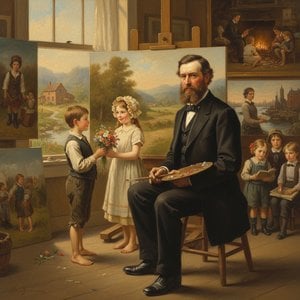
John George Brown: Capturing American Life & Sentiment in 19th-Century Genre Painting
Explore the captivating genre paintings of John George Brown, celebrated for his realistic depictions of 19th-century American life. Discover his legacy & find museum-quality reproductions at ArtsDot.