

 미리보기
미리보기
 공유하기
공유하기 공유하기
공유하기
 상세 정보
상세 정보 가이드 보기

 다운로드
다운로드
 유사 작품 더 보기
 X-레이
X-레이 슬라이드 쇼 보기
 질의응답
질의응답 통계 정보
통계 정보Marine Element

- 81.0 x 65.0 cm


 더 보기
더 보기
이 페이지에 표시된 작품은 저작권법의 보호를 받으며, 이에 따라 동일한 복제품을 제작하거나 판매하는 것은 법으로 금지되어 있습니다. 이러한 권리 보호는 다음과 같은 국제 협약에 따라 시행됩니다. 베른 협약 또한 다음에서 명시하는 법률을 포함한 국내법에 의해 보호됩니다. 미국 저작권법 제17조.
이 방식은 저작권 보호를 받는 예술 작품을 복제하거나 그대로 재현하는 것이 아니기에 저작권 규정을 완벽히 준수합니다. 대신, 이는 창의적인 재해석의 과정을 거칩니다. 즉, 원작에서 영감을 받되 원작과 동일하지 않은 새로운 회화 작품을 의미합니다.
지클레 / 아트 프린트
빠른 제작과 다양한 마감 옵션을 제공하는 박물관 수준의 지클레이 및 캔버스 프린트. ( 수작업 채색 복제본 주문하기 디지털 이미지로 전환)




































작품의 원본 비율을 그대로 유지하는 프리셋 사이즈 중에서 선택해 보세요.

액자나 벽면 크기에 맞춰 필요한 가로와 세로 길이를 입력해 주세요. 프린트는 원본 이미지보다 크게 제작할 수 없으며 오직 자르는 것만 가능하므로, 비율이 다른 사이즈를 선택할 경우 이미지의 일부가 잘려 나갈 수 있습니다. 인쇄 작업에 들어가기 전, 최종 확인을 위해 디지털 목업을 보내드립니다. 이 페이지에 표시된 이미지는 실제 잘리는 영역을 나타내지 않으며, 오직 목업을 통해서만 정확한 확인이 가능합니다.


 유리 옵션은 110cm 미만 크기에서만 선택 가능합니다.

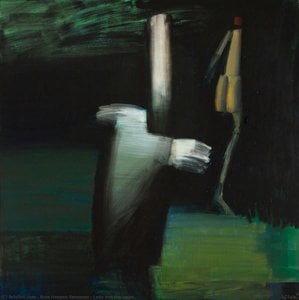
Marine Element
지클레 / 아트 프린트
복제본 크기
-


최종 결제 금액
₩ 84481
유사한 작품들




작가 정보
Early Life and Artistic Foundations in Turin
Mario Bionda, born in the vibrant city of Turin, Italy on July 25th, 1913, emerged as an artist deeply rooted in the traditions of his region yet destined to forge a unique path within the evolving landscape of twentieth-century art. His formative years coincided with a period of significant social and political change, a backdrop that subtly informed his artistic sensibility. The young Bionda demonstrated an early aptitude for visual expression, leading him to seek tutelage under the esteemed Felice Casorati from 1927 to 1933. This mentorship proved pivotal; Casorati’s rigorous academic approach and emphasis on precise draftsmanship instilled in Bionda a foundational technical skill that would remain a hallmark of his work throughout his career. Casorati's studio wasn't merely a place for learning technique, but an immersive environment where the principles of composition, form, and light were meticulously explored. Bionda actively participated in group exhibitions organized by Casorati during this period, gaining early exposure to the art world and establishing himself within a network of fellow artists. These initial experiences fostered a collaborative spirit and provided valuable opportunities for critical feedback and artistic growth.Developing a Unique Vision: From Figurative Studies to Mixed Media Exploration
While deeply influenced by Casorati’s classical training, Bionda didn't remain confined within its boundaries. He embarked on a journey of artistic exploration that gradually led him away from purely figurative representation and towards more abstract modes of expression. This transition wasn’t abrupt but rather a slow unfolding, marked by experimentation with different materials and techniques. The post-war era witnessed a surge in artistic innovation, and Bionda responded to this climate by embracing new possibilities. He began incorporating diverse elements into his work – fragments of found objects, textured surfaces, and unconventional color palettes – ultimately leading him to develop a distinctive style characterized by mixed media compositions. This period reflects a broader shift within the Italian art scene, as artists sought to break free from traditional constraints and explore the psychological and emotional depths of human experience.The Evocative Power of ‘Marine Element’
Among Bionda's most recognized achievements is his mixed media artwork, *‘Marine Element’*, created in 1962. This piece encapsulates the artist’s evolving aesthetic and serves as a powerful example of his ability to synthesize diverse influences into a cohesive and emotionally resonant whole. The work isn’t simply a depiction of the sea; it's an evocation of its essence – its vastness, its power, its mystery. Through layers of texture, color, and form, Bionda captures not just the visual appearance of the marine world but also its underlying energy and emotional weight. The use of mixed media allows for a richness and complexity that would be difficult to achieve with traditional painting techniques alone. *‘Marine Element’* demonstrates Bionda's mastery of composition and his ability to create a sense of depth and movement within a two-dimensional space. It is a testament to his skill as a colorist, employing subtle gradations and unexpected juxtapositions to convey the shifting moods of the ocean.Historical Significance and Lasting Legacy
Mario Bionda’s contribution to Italian art lies in his ability to bridge the gap between tradition and innovation. He wasn't a revolutionary who sought to dismantle established norms, but rather an artist who skillfully adapted them to express his own unique vision. His early training under Felice Casorati provided him with a solid foundation in technique, while his later experimentation with mixed media allowed him to explore new avenues of artistic expression. Bionda’s work reflects the broader trends within twentieth-century art – the move towards abstraction, the exploration of psychological themes, and the embrace of diverse materials and techniques. While not as widely celebrated as some of his contemporaries, Bionda's *‘Marine Element’* and other works continue to resonate with viewers today, offering a glimpse into the mind of an artist deeply connected to both his historical roots and the evolving world around him. His influence can be seen in the work of subsequent generations of Italian artists who have sought to blend tradition with innovation and explore the emotional depths of human experience through mixed media compositions.Further Exploration
- Key Influences: Felice Casorati, Italian Futurism, Abstract Expressionism.
- Recurring Themes: Coastal landscapes, the sea, emotional abstraction, texture and form.
- Notable Works: ‘Marine Element’ (1962), various mixed media compositions from the 1950s-1970s.
- Artistic Style: Mixed Media, Abstract Expressionism with Figurative Roots

Mario Bionda
1913 - , Italy
작가 정보 요약
- Full Name: Mario Bionda
- Nationality: Italian
- Date Of Birth: 1913
- Place Of Birth: Turin, Italy
- Notable Artworks: ['Marine Element']
- Artistic Movement Or Style: Informel
- Artists Who Influenced This Artist: ['Felice Casorati']
- Artists Or Movements Influenced By This Artist: ['Abstract Expressionism']