


 실제 크기로 보기
 보내기
보내기 공유하기
공유하기
 상세 보기
상세 보기 가이드 보기

 이미지 다운로드
 유사 작품 더 보기
 X-레이
X-레이 슬라이드 쇼 보기
 통계 정보
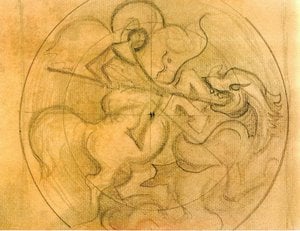
통계 정보Floating Circle
 35.0 x 43.0 cm
 Royal West of England Academy
 상세 보기
상세 보기
이 페이지에 표시된 작품은 저작권법의 보호를 받으며, 이에 따라 동일한 복제품을 제작하거나 판매하는 것은 법으로 금지되어 있습니다. 이러한 권리 보호는 다음과 같은 국제 협약에 따라 시행됩니다. 베른 협약 또한 다음에서 명시하는 법률을 포함한 국내법에 의해 보호됩니다. 미국 저작권법 제17조.
이 방식은 저작권 보호를 받는 예술 작품을 복제하거나 그대로 재현하는 것이 아니기에 저작권 규정을 완벽히 준수합니다. 대신, 이는 창의적인 재해석의 과정을 거칩니다. 즉, 원작에서 영감을 받되 원작과 동일하지 않은 새로운 회화 작품을 의미합니다.
지클레 / 아트 프린트
빠른 제작과 다양한 마감 옵션을 선택할 수 있는 박물관 수준의 지클레이 및 캔버스 프린트. ( 수작업 채색 복제본 주문하기 디지털 이미지 판매 채널로 전환)




































작품의 원본 비율을 그대로 유지하는 프리셋 사이즈 중에서 선택해 보세요.

액자나 벽면 크기에 맞춰 필요한 가로와 세로 길이를 입력해 주세요. 프린트는 원본 이미지보다 크게 제작할 수 없으며 오직 자르는 것만 가능하므로, 비율이 다른 사이즈를 선택할 경우 이미지의 일부가 잘려 나갈 수 있습니다. 인쇄 작업에 들어가기 전, 최종 확인을 위해 디지털 목업을 보내드립니다. 이 페이지에 표시된 이미지는 실제 잘리는 영역을 나타내지 않으며, 오직 목업을 통해서만 정확한 확인이 가능합니다.


 유리 옵션은 110cm 미만 크기에서만 선택 가능합니다.

Floating Circle
지클레 / 아트 프린트
복제본 규격
-


총 결제 금액
₩ 84616
관련 작품들


작가 소개
Margaret Gregory: A Weaver of Myth and Memory
Margaret Gregory (1927-2011) wasn’t merely an artist; she was a chronicler, a storyteller deeply rooted in the folklore and landscape of County Galway. Her work, particularly her monumental “Homage to Joseph Beuys” series, transcends simple abstraction, becoming intricate tapestries woven with personal memory, Irish mythology, and a profound engagement with the social and political currents of her time. Born Margaret Parry in Cheltenham, England, she inherited a rich artistic lineage through her mother’s family, steeped in Victorian art patronage and a deep appreciation for the visual arts. This early exposure fostered a lifelong fascination with color, texture, and the evocative power of image – elements that would become central to her distinctive style.
Gregory's formative years were spent largely at Coole Park, the ancestral home of Lady Gregory, a pivotal figure in the Irish Literary Revival. Living within this vibrant intellectual community—a gathering place for Yeats, Joyce, Synge, and countless others—shaped her artistic sensibilities profoundly. She witnessed firsthand the struggles for cultural identity and independence that defined Ireland’s 20th-century experience. This engagement with national narratives, coupled with a deep connection to the rural landscape, fueled a desire to capture not just visual appearances but also the spirit of place – the whispers of history embedded within the stones and fields of Galway.
Her artistic journey began in earnest after marrying Robert Gregory, son of Lady Gregory, in 1907. This union brought her firmly into the heart of Irish cultural life, providing access to a wealth of knowledge and experience. She initially worked as an illustrator for her mother-in-law’s books, meticulously rendering scenes from Irish mythology – tales of fairies, giants, and ancient heroes—with a remarkable attention to detail and a subtle infusion of personal interpretation. These early illustrations reveal a nascent talent for layering symbolism and creating images that resonate with both the literal and the metaphorical.
The “Homage to Joseph Beuys” Series: A Dialogue Across Generations
Gregory’s most celebrated work, the “Homage to Joseph Beuys” series (1986-1993), represents a significant shift in her artistic practice. Inspired by the German artist's concept of ‘shamanic art,’ which sought to connect with ancestral spirits and revitalize communities through ritualistic creation, Gregory developed a complex visual language that blended abstract expressionism with elements of Irish folk art. The panels—each measuring approximately six feet tall—are not simply representations of Beuys’s work; they are layered meditations on his ideas, filtered through her own experiences and memories.
The series is characterized by a rich palette of earthy tones – ochres, siennas, and umbers – punctuated by bursts of vibrant color. Gregory employed a variety of techniques: layering acrylic paint, incorporating collage elements (including fragments of Irish newspapers and textiles), and applying textured surfaces to create a tactile and immersive experience for the viewer. Recurring motifs—circles, spirals, and animal figures—evoke ancient symbols and connect her work to the pre-Christian traditions of Ireland. The deliberate ambiguity of these images invites multiple interpretations, suggesting a dialogue between past and present, personal and collective memory.
Minimalist Compositions: “Floating Circle” and Beyond
Alongside the “Homage” series, Gregory produced a body of smaller, more restrained works—often referred to as her minimalist compositions. These pieces, exemplified by "Floating Circle" (1998), demonstrate a remarkable control over color and form. She pared down her palette to its essential elements – often just two or three colors – and employed simple geometric shapes to create visually arresting arrangements. The “Floating Circle,” for instance, is a deceptively complex work that suggests both stability and movement, inviting the viewer to contemplate the relationship between interiority and exteriority.
These minimalist works can be seen as a counterpoint to the more elaborate scale of her larger paintings. They represent a distillation of her artistic principles—a commitment to clarity, precision, and the power of suggestion. They also reflect a growing interest in exploring the fundamental elements of visual perception – color, line, and space – without relying on narrative or symbolic content.
Legacy and Historical Context
Margaret Gregory’s work occupies a unique position within the history of Irish art. She was part of a generation grappling with questions of national identity in the wake of independence, yet she resisted easy categorization. Her paintings are not simply portraits of Ireland; they are reflections on its past, present, and future—a complex tapestry woven from personal memory, folklore, and social commentary.
Her engagement with Joseph Beuys’s ideas is particularly significant. Beuys's emphasis on the transformative power of art resonated deeply with Gregory’s own belief in the potential of creativity to heal and revitalize communities. Her “Homage” series can be interpreted as a gesture of solidarity—a recognition of shared struggles and aspirations across generations and cultures. Margaret Gregory died in 2011, leaving behind a substantial body of work that continues to inspire and challenge viewers today. Her paintings serve as a powerful reminder of the enduring relevance of folklore, myth, and memory in shaping our understanding of the world.

Margaret Gregory
1927 - 2011
작가 정보 요약
- Artistic Movement Or Style: Abstract expressionism, Color field painting, Minimalist art
- Artists Or Movements Influenced By This Artist:
- Color field painting
- Minimalist art
- Artists Who Influenced This Artist: ['Joseph Beuys']
- Date Of Birth: 1927
- Date Of Death: 2011
- Full Name: Margaret Gregory
- Nationality: American
- Notable Artworks:
- Homage to Joseph Beuys
- Floating Circle
- Place Of Birth: WahooArt