작품 구매하기
 공유하기
공유하기 공유하기
공유하기
 상세 정보
상세 정보

 다운로드
다운로드
 유사 작품
유사 작품 X-레이
X-레이 슬라이드 쇼
Cubist landscape
 Oil On Canvas
- WallArt
- Cubist Landscape
 1918
1918 100.0 x 59.0 cm
 더 보기
더 보기




P118B $10

P118H $10

P118W $10

P438Z $10

P508JH $12

P508YH $12

P805H $10

P805Z $10

P919BZ $10

P919G $10

P919XJ $10

P959ZH $10

P968JZ $12

W106C $8

W218G $10

W218JH $8

W218Y $10

W307PJ $10

W316G $10

W316PJ $8

W316Y $10

W398PJ $8

W4111J $10

W500HY $15

W500JH $15

W692G $12

W849H $8

W940BG $15

W953PJ $8




작품의 원본 비율을 유지하는 미리 설정된 크기 중에서 선택하세요.

특정 프레임이나 공간에 맞춰 직접 치수를 입력하실 수 있습니다. 선택하신 사이즈가 원본 이미지의 비율과 일치하지 않을 경우, 작품을 크롭(자르기)하거나 이미지를 대칭 또는 단색 채우기로 확장하여 제작합니다. 제작 시작 전, 최종 확인을 위해 디지털 목업이 전송됩니다.
화면상의 미리보기는 실제 크롭이나 확장 상태를 반영하지 않으므로, 최종 구도는 오직 목업을 통해서만 정확하게 확인하실 수 있습니다.
맞춤 사이즈 제작도 가능하지만, 원본 비율을 유지하기 위해서는 사전 정의된 목록에서 치수를 선택하시는 것을 권장합니다.


 유리 옵션은 110cm 미만 크기에서만 선택 가능합니다.

Cubist landscape
지클레 / 아트 프린트
복제본 크기
-


최종 결제 금액
-
작품 상세 설명
A Fragmented Vision: Unpacking Marc Chagall's 1918 “Cubist Landscape”
Marc Chagall’s “Cubist Landscape,” painted in 1918, isn’t merely a depiction of a cityscape; it’s an immersion into the artist’s intensely personal and profoundly symbolic world. Born Moishe Shagal in Vitebsk, Belarus – a town that would forever haunt his memory and artistic vision – Chagall navigated a turbulent century, yet consistently channeled his experiences through a lens uniquely his own. This particular canvas captures a pivotal moment in his artistic evolution, bridging the expressive fervor of early Fauvism with the nascent geometric explorations of Cubism, while retaining the deeply rooted emotionality that defined his entire oeuvre.
The painting immediately confronts the viewer with an unsettling yet captivating scene. Buildings, rendered not as realistic structures but as fractured planes and interlocking geometric forms – rectangles, triangles, and circles – dominate the foreground. These aren’t the precise lines of architectural blueprints; they are fragments, echoes of memory, suggesting a city both familiar and utterly transformed. A solitary figure, seemingly adrift within this constructed space, adds to the sense of disorientation and introspection. The color palette is vibrant yet restrained, dominated by deep blues, ochres, and earthy reds – colors that evoke the landscapes of his childhood in Vitebsk, blending with the muted tones of urban life.
The Echoes of Vitebsk: Folklore and Memory
Vitebsk itself is crucial to understanding this work. The town’s unique cultural tapestry—a confluence of Russian Orthodox churches alongside bustling Jewish marketplaces – provided a rich source of inspiration for Chagall. This duality, the juxtaposition of religious and secular life, finds its way into his art through recurring motifs: flying figures, whimsical animals, and a pervasive sense of dreamlike nostalgia. “Cubist Landscape” is no exception; it’s as if fragments of Vitebsk's vibrant streets and sacred spaces have been deconstructed and reassembled in the artist’s mind.
The influence of Cubism is evident in the fragmented forms and multiple perspectives presented within the painting. Inspired by artists like Pablo Picasso and Georges Braque, Chagall experiments with presenting a single subject from various viewpoints simultaneously, creating an effect of dynamism and instability. This technique wasn’t simply about replicating reality; it was about conveying the subjective experience of seeing – how memory shapes our perception of space and time. The painting isn't aiming for photographic accuracy but rather to capture the *feeling* of a place, its essence distilled through the artist’s unique sensibility.
A Bridge Between Styles: Chagall’s Evolving Vision
Painted in 1918, during a period of immense social and political upheaval, “Cubist Landscape” reflects the broader artistic shifts occurring at the time. Chagall was actively experimenting with new approaches to representation, moving away from the more overtly expressive styles of his earlier work. Yet, despite these explorations, he never abandoned his deeply personal vision. The painting retains a distinctly Chagallean quality – a sense of lyricism, emotional intensity, and a profound connection to Jewish folklore and tradition.
Consider the solitary figure in the center of the composition. Often interpreted as a self-portrait, it embodies Chagall’s own feelings of displacement and longing—a common theme throughout his work. The figure's posture suggests contemplation, perhaps even a sense of isolation within this fragmented cityscape. The painting invites us to contemplate our own memories and perceptions, questioning the nature of reality itself. “Cubist Landscape” is not just a depiction of a place; it’s an invitation to enter into Chagall’s dreamscape – a world where the familiar becomes strange, and the boundaries between memory and imagination blur.
ArtsDot offers meticulously crafted hand-painted reproductions of this iconic artwork, allowing you to bring this evocative piece into your home or office. Each reproduction captures the nuances of Chagall’s brushstrokes and color palette, ensuring an authentic representation of this masterpiece. Explore our collection today and experience the magic of “Cubist Landscape” firsthand.


작가 약력
꿈과 색채의 시인, 마르크 샤갈
마르크 샤갈은 1887년 벨라루스 리오즈나 마을에서 모이셰 샤갈이라는 이름으로 태어났습니다. 그의 삶은 20세기 격동의 시간을 반영하며, 동시에 깊은 개인적 비전을 통해 유대교 민속과 상상력에 대한 변함없는 믿음을 담아냈습니다. 고향인 비테브스크는 단순한 출생지가 아닌, 그의 예술 세계의 핵심이 되었습니다. 하늘을 나는 인물들, 기발한 동물들, 그리고 기억 속 풍경의 생생한 색채로 채워진 반복적인 모티프가 그 증거입니다. 러시아 정교회 교회와 번화한 유대인 시장이 공존하는 도시의 독특한 문화적 혼합은 그의 예술을 쉽게 분류할 수 없게 만드는 미학적 감수성을 만들어냈습니다. 그는 지역 사인 페인터 밑에서, 그리고 이후 상트페테르부르크에서 르옹 바크스트에게 정식 교육을 받았지만, 어떤 특정 예술 운동에도 완전히 동화되지 않았습니다. 입체주의, 상징주의, 야수파의 요소를 흡수했지만, 항상 자신의 강렬한 개인적 시각을 통해 걸러내어 독특하고 분명한 샤갈 스타일을 창조했습니다.초창기의 흔들림과 예술적 언어의 형성
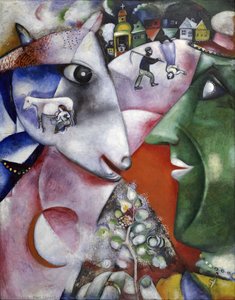
샤갈의 초기 작품들은 이미 그가 개발할 뚜렷한 언어를 암시했습니다. 나 그리고 마을(1911)은 단순한 장소 묘사가 아닌, 정체성, 기억, 개인과 공동체의 관계를 탐구하는 작품입니다. 마을은 현실적으로 묘사되지 않고, 상징적인 의미로 가득 찬 회상들의 파편화된 모음으로 표현됩니다. 이러한 개인적 경험을 보편적인 주제로 변환시키는 능력은 그의 예술의 특징이 되었습니다. 그의 팔레트는 대담하고 표현력이 풍부했으며, 종종 문자 그대로의 묘사보다는 감정을 전달하기 위해 생생하고 비자연스러운 색상을 사용했습니다. 인물들은 중력을 거스르며 캔버스 위를 떠다니고 춤추며, 보는 이들을 그의 내면 세계로 초대하는 듯한 꿈결 같은 분위기를 자아냅니다. 이러한 스타일적 접근은 우연이 아니었습니다. 그것은 현실의 단순한 모방을 넘어 감정의 본질, 기억의 무게, 민속의 힘을 포착하고자 하는 열망에서 비롯된 것이었습니다. 러시아 혁명은 샤갈을 비테브스크로 다시 불러들였고, 그는 문화적 활동에 참여하여 잠시 번성했던 미술 학교를 설립했습니다. 이 시기는 창조적인 에너지와 정치적 실망이 공존하는 시기였으며, 이는 그의 예술적 여정을 계속 형성하는 긴장감을 만들어냈습니다.세계를 횡단하며 꽃피운 예술혼: 파리, 뉴욕 그리고 그 너머
결국 샤갈은 러시아를 떠나 프랑스에 정착하여 국제적인 명성을 얻고 다작 활동을 펼쳤습니다. 비테브스크 위로(1920-1922)는 그의 어린 시절의 기억과의 지속적인 교감을 보여주며, 성경 이야기를 주제로 한 작품들은 종교적 테마에 대한 관심이 커지고 있음을 드러냅니다. 제2차 세계 대전 발발로 인해 그는 나치 점령 하의 프랑스를 떠나 미국으로 피신했고, 7년 동안 뉴욕에서 생활했습니다. 이 시기는 깊은 감정적인 동요와 예술적 실험으로 가득 차 있었습니다. 그는 자신의 예술 속에서 위안을 찾았으며, 그 시대의 불안과 불확실성을 반영하는 강력한 작품들을 창조했습니다. 백색 십자가(1938)는 고통과 박해를 묘사한 작품으로, 이 시기의 그의 예술에 대한 증거입니다. 전쟁 이후 샤갈은 프랑스로 돌아와 1985년 97세의 나이로 세상을 떠날 때까지 그림을 그리고 창작 활동을 이어갔습니다.영원히 빛나는 유산
말년에 마르크 샤갈은 파리 오페라 극장의 천장(1964)과 예루살렘의 하다사 히브리 대학교 의료 센터 회당의 스테인드글라스 창문 등 수많은 명망 있는 의뢰를 받았습니다. 이러한 대규모 프로젝트는 그의 예술적 비전을 건축 공간으로 전환시켜 경외심과 놀라움을 불러일으키는 몰입형 환경을 만들었습니다. 샤갈의 영향력은 후대 예술가들에게도 부정할 수 없습니다. 그의 서정적인 품질, 감정적인 깊이, 상상력이 풍부한 힘은 초현실주의자들을 포함하여 환상과 상징주의를 포용하는 다양한 운동에 영향을 미쳤습니다. 그는 유럽 현대주의와 유대 문화적 정체성 사이의 간극을 메우며 “20세기 최고의 유대인 예술가”로 알려지게 되었습니다. 그의 작품은 개인적인 경험, 민속, 보편적인 주제를 융합하는 능력을 통해 전 세계 관객들에게 계속해서 공감을 불러일으키고 있습니다. 그의 작품은 경계를 초월하고, 우리 모두의 인간성을 연결하며, 삶의 아름다움과 신비에 빛을 비추는 예술이 얼마나 강력한지를 상기시켜 줍니다.영원히 남겨진 흔적
마르크 샤갈의 유산은 그림과 스테인드글라스 너머로 확장됩니다. 그것은 꿈과 빛나는 희망으로 그려진 세상 속에서 자신을 잃어버리도록 초대하는 그의 비전, 즉 영원한 힘을 지닌 비전에 있습니다. 그는 깊고 보편적인 공감을 불러일으키는 예술 작품들을 남겨두었습니다. 니스의 마르크 샤갈 미술관은 그의 지속적인 영향력을 증명하며, 방문객들에게 이 특별한 예술가의 마음과 영혼을 엿볼 수 있는 기회를 제공합니다. 그의 예술은 계속해서 영감을 주고, 도전하고, 우리를 감동시키며, 그의 생생하고 상상력이 풍부한 정신이 대대로 이어질 것임을 보장합니다.
마르크 샤갈
1887 - 1985 , 벨라루스
주요 정보
- 국적: 러시아/프랑스
- 영향을 받은 예술가:
- 파블로 피카소
- 장 미로
- 영향을 준 예술가:
- 레온 바크스트
- 로베르트 델라unay
- 예술 사조: 모더니즘, 입체주의
- 전체 이름: 마르크 샤갈
- 주요 작품:
- 나와 마을
- 백색십자가
- 이스라엘의 축제
- 출생일: 1887년 7월 6일
관련 기사 더 보기

마르크 샤갈 대표작 25선: 꿈과 기억의 화가, 예술 세계 탐험 | ArtsDot
마르크 샤갈 대표작 25선을 만나보세요. 꿈과 사랑, 고향에 대한 그리움이 담긴 샤갈의 예술 세계를 탐험하고, ArtsDot에서 명화 레플리카와 특별한 홈 데코 아이디어를 찾아보세요. 지금 바로 컬렉션을 확인하세요!

폴 세잔 명작 25선: 시대를 초월하는 예술과 공간의 미학 | ArtsDot
폴 세잔의 시대를 초월하는 명작 25점을 만나보세요. 인상주의를 넘어 후기 인상주의를 개척한 화가의 예술 세계와 정물화, 풍경화 속 숨겨진 이야기를 ArtsDot에서 감상하세요. 고품질 아트 프린트와 캔버스 액자로 공간에 예술을 더해보세요! 지금 바로 컬렉션을 탐험하세요.
페르낭 레제 최고 걸작 25선: 현대 미술의 거장을 만나다 | ArtsDot
페르낭 레제의 최고 걸작 25선을 만나보세요. 큐비즘, 추상 미술의 거장이 그린 명작들의 탄생 비화와 예술적 의미를 탐구합니다. ArtsDot에서 고품질 아트 프린트와 인테리어 액자로 공간에 예술을 더하세요. 지금 바로 컬렉션을 확인하세요!

조르주 브라크의 걸작 25선: 예술과 공간을 초월하는 시선 | ArtsDot
조르주 브라크의 시대를 초월한 25개의 걸작을 만나보세요. 입체주의를 개척한 프랑스 화가의 예술 세계와 숨겨진 이야기를 ArtsDot에서 감상하고, 명작 유화 복제본으로 공간에 특별함을 더하세요. 지금 바로 컬렉션을 탐험하세요!

뉴욕 MoMA 명작 25선: 예술의 영혼을 담은 컬렉션 | ArtsDot
뉴욕 MoMA 명작 25선을 만나보세요. 반 고흐, 피카소, 워홀 등 거장들의 예술 세계와 숨겨진 이야기를 담았습니다. 인상주의부터 추상 표현주의까지, ArtsDot에서 미술 작품을 감상하고 홈 데코에 영감을 불어넣으세요. 지금 바로 컬렉션을 탐험하세요!