


 실제 크기로 보기
 보내기
보내기 공유하기
공유하기
 상세 보기
상세 보기 가이드 보기

 이미지 다운로드
 유사 작품 더 보기
 X-레이
X-레이 슬라이드 쇼 보기
 통계 정보
통계 정보비
 캔버스에 아크릴 물감
- 월아트
- 입체주의
 1911
1911- 근현대
 86.0 x 108.0 cm
 상세 보기
상세 보기
지클레 / 아트 프린트
빠른 제작과 다양한 마감 옵션을 선택할 수 있는 박물관 수준의 지클레이 및 캔버스 프린트. ( 수작업 채색 복제본 주문하기 디지털 이미지 판매 채널로 전환)




P118B ₩10

P118H ₩10

P118W ₩10

P438Z ₩10

P508JH ₩12

P508YH ₩12

P805H ₩10

P805Z ₩10

P919BZ ₩10

P919G ₩10

P919XJ ₩10

P959ZH ₩10

P968JZ ₩12

W106C ₩8

W218G ₩10

W218JH ₩8

W218Y ₩10

W307PJ ₩10

W316G ₩10

W316PJ ₩8

W316Y ₩10

W398PJ ₩8

W4111J ₩10

W500HY ₩15

W500JH ₩15

W692G ₩12

W849H ₩8

W940BG ₩15

W953PJ ₩8




작품의 원본 비율을 그대로 유지하는 프리셋 사이즈 중에서 선택해 보세요.

특정 프레임이나 공간에 맞춰 직접 치수를 입력하실 수 있습니다. 선택하신 사이즈가 원본 이미지의 비율과 일치하지 않을 경우, 작품을 크롭(자르기)하거나 이미지를 대칭 또는 단색 채우기로 확장하여 제작합니다. 제작 시작 전, 최종 확인을 위해 디지털 목업이 전송됩니다.
화면상의 미리보기는 실제 크롭이나 확장 상태를 반영하지 않으므로, 최종 구도는 오직 목업을 통해서만 정확하게 확인하실 수 있습니다.
맞춤 사이즈 제작도 가능하지만, 원본 비율을 유지하기 위해서는 사전 정의된 목록에서 치수를 선택하시는 것을 권장합니다.


 유리 옵션은 110cm 미만 크기에서만 선택 가능합니다.

비
지클레 / 아트 프린트
복제본 규격
-


총 결제 금액
₩ 83637
Rain by Marc Chagall
Marc Chagall, a Russian-French artist, is celebrated for his unique blend of modernism and folk art. His painting, Rain, created in 1911, is a captivating example of his early work, showcasing the influence of Cubism on his style.Artistic Context
During the early 20th century, Chagall was part of the avant-garde movement that sought to break away from traditional art forms. His association with various artistic styles, including Cubism, is evident in Rain. This painting reflects his experimentation with geometric shapes and fragmented forms, characteristic of Cubist techniques. The movement aimed to challenge established conventions and explore new visual languages—a reaction against academic realism and Impressionism—fueled by intellectual currents like Nietzsche’s philosophy and Einstein's theories of relativity. Artists like Picasso and Braque spearheaded this revolution, pushing boundaries in representation and composition. Chagall embraced these innovations while retaining a deeply rooted connection to his Jewish heritage and the traditions of Vitebsk.Composition and Symbolism
The charcoal drawing depicts a serene farm scene with a house in the background. The red roof of the house stands out against the monochromatic backdrop, while several figures are scattered throughout the landscape. A cow is seen grazing near the bottom left corner, adding to the peaceful ambiance. Chagall’s use of charcoal creates a sense of depth and texture, drawing the viewer into the scene. This technique lends an earthy quality to the depiction, mirroring the rural setting and conveying a feeling of quiet contemplation. The figures in the painting appear abstracted, with simplified forms that blend seamlessly into the surrounding environment. This blending of human and natural elements is a recurring theme in Chagall’s work, reflecting his deep connection to his Jewish heritage and the Russian countryside. The house symbolizes stability and home—a comforting presence amidst the turbulent forces of nature depicted by the rain clouds and fragmented landscape. The cow represents fertility and nourishment—essential elements of rural life and imbued with symbolic significance within Jewish tradition.Artistic Influences
Chagall's style was influenced by various movements, including Cubism and Dada. His work often featured dream-like scenarios and fantastical creatures, which set him apart from other artists of his time. Picasso’s fractured perspectives and Braque’s geometric abstractions provided a crucial framework for Chagall’s exploration of form and space. Dada, with its rejection of logic and reason, encouraged experimentation and spontaneity—values that resonated deeply within Chagall's artistic sensibility. The artist deliberately distorted proportions and flattened planes to create an illusionistic effect that prioritized emotion over accurate representation. This stylistic choice aligns perfectly with the expressive goals of Expressionism, which sought to convey inner feelings and psychological states through vivid color and distorted imagery.Legacy and Impact
Marc Chagall’s contributions to modern art are undeniable. His unique blend of styles and techniques has inspired generations of artists. The Van Gogh Museum acknowledges his influence on the development of Expressionism in modern art—a testament to his enduring legacy as a visionary artist who dared to reimagine the possibilities of visual expression. Chagall's work continues to captivate audiences worldwide, celebrated for its lyrical beauty and profound emotional depth. For those interested in exploring more of Chagall’s oeuvre, visit Painting by 'Marc Chagall' | Marc Chagall:Rain on ArtsDot. Key Points:- Rain is a charcoal drawing created in 1911.
- The painting reflects Chagall’s early experimentation with Cubism.
- The serene farm scene features abstracted figures and a prominent red-roofed house.
- Chagall's work was influenced by various artistic movements, including Cubism and Dada.
- Painting by 'Marc Chagall' | Marc Chagall:Rain
- Vincent van Gogh
질의응답
마르크 샤갈의 "비"은(는) 몇 년도에 제작되었나요?
마르크 샤갈의 "비"은(는) 1911년에 제작되었습니다.
마르크 샤갈의 "비"을(를) 어떤 용도로 활용하기에 좋을까요?
"비" 프린트의 권장 용도는 포인트 색상입니다.
제작 시기를 고려할 때, "비"은 마르크 샤갈의 예술적 여정 중 어느 단계에 해당하나요?
1911년에 제작된 "비"은(는) 마르크 샤갈의 예술 활동기 중 초기에 속합니다.
제 방에 "비"을(를) 어떤 사이즈로 프린트하는 것이 좋을까요?
마르크 샤갈의 "비"에 추천하는 조합: 호텔 로비 및 공용 공간 공간에 어울리는 대형 사이즈 프린트입니다.
마르크 샤갈의 "비"은(는) 잘 알려진 작품인가요?
마르크 샤갈의 "비"의 기록된 인기도는 상징적인입니다.
"비"은(는) 어느 작가의 작품인가요?
"비"은(는) 마르크 샤갈의 작품입니다. 이 페이지의 정보는 마르크 샤갈의 원작에 대해 설명합니다.
마르크 샤갈은(는) 몇 세에 "비"을(를) 제작했을까요?
1911년에 "비"이(가) 제작되었을 당시, 1887년에 태어난 마르크 샤갈의 나이는 24세였습니다.
관련 작품들


작가 소개
꿈과 색채의 시인, 마르크 샤갈
마르크 샤갈은 1887년 벨라루스 리오즈나 마을에서 모이셰 샤갈이라는 이름으로 태어났습니다. 그의 삶은 20세기 격동의 시간을 반영하며, 동시에 깊은 개인적 비전을 통해 유대교 민속과 상상력에 대한 변함없는 믿음을 담아냈습니다. 고향인 비테브스크는 단순한 출생지가 아닌, 그의 예술 세계의 핵심이 되었습니다. 하늘을 나는 인물들, 기발한 동물들, 그리고 기억 속 풍경의 생생한 색채로 채워진 반복적인 모티프가 그 증거입니다. 러시아 정교회 교회와 번화한 유대인 시장이 공존하는 도시의 독특한 문화적 혼합은 그의 예술을 쉽게 분류할 수 없게 만드는 미학적 감수성을 만들어냈습니다. 그는 지역 사인 페인터 밑에서, 그리고 이후 상트페테르부르크에서 르옹 바크스트에게 정식 교육을 받았지만, 어떤 특정 예술 운동에도 완전히 동화되지 않았습니다. 입체주의, 상징주의, 야수파의 요소를 흡수했지만, 항상 자신의 강렬한 개인적 시각을 통해 걸러내어 독특하고 분명한 샤갈 스타일을 창조했습니다.초창기의 흔들림과 예술적 언어의 형성
샤갈의 초기 작품들은 이미 그가 개발할 뚜렷한 언어를 암시했습니다. 나 그리고 마을(1911)은 단순한 장소 묘사가 아닌, 정체성, 기억, 개인과 공동체의 관계를 탐구하는 작품입니다. 마을은 현실적으로 묘사되지 않고, 상징적인 의미로 가득 찬 회상들의 파편화된 모음으로 표현됩니다. 이러한 개인적 경험을 보편적인 주제로 변환시키는 능력은 그의 예술의 특징이 되었습니다. 그의 팔레트는 대담하고 표현력이 풍부했으며, 종종 문자 그대로의 묘사보다는 감정을 전달하기 위해 생생하고 비자연스러운 색상을 사용했습니다. 인물들은 중력을 거스르며 캔버스 위를 떠다니고 춤추며, 보는 이들을 그의 내면 세계로 초대하는 듯한 꿈결 같은 분위기를 자아냅니다. 이러한 스타일적 접근은 우연이 아니었습니다. 그것은 현실의 단순한 모방을 넘어 감정의 본질, 기억의 무게, 민속의 힘을 포착하고자 하는 열망에서 비롯된 것이었습니다. 러시아 혁명은 샤갈을 비테브스크로 다시 불러들였고, 그는 문화적 활동에 참여하여 잠시 번성했던 미술 학교를 설립했습니다. 이 시기는 창조적인 에너지와 정치적 실망이 공존하는 시기였으며, 이는 그의 예술적 여정을 계속 형성하는 긴장감을 만들어냈습니다.세계를 횡단하며 꽃피운 예술혼: 파리, 뉴욕 그리고 그 너머
결국 샤갈은 러시아를 떠나 프랑스에 정착하여 국제적인 명성을 얻고 다작 활동을 펼쳤습니다. 비테브스크 위로(1920-1922)는 그의 어린 시절의 기억과의 지속적인 교감을 보여주며, 성경 이야기를 주제로 한 작품들은 종교적 테마에 대한 관심이 커지고 있음을 드러냅니다. 제2차 세계 대전 발발로 인해 그는 나치 점령 하의 프랑스를 떠나 미국으로 피신했고, 7년 동안 뉴욕에서 생활했습니다. 이 시기는 깊은 감정적인 동요와 예술적 실험으로 가득 차 있었습니다. 그는 자신의 예술 속에서 위안을 찾았으며, 그 시대의 불안과 불확실성을 반영하는 강력한 작품들을 창조했습니다. 백색 십자가(1938)는 고통과 박해를 묘사한 작품으로, 이 시기의 그의 예술에 대한 증거입니다. 전쟁 이후 샤갈은 프랑스로 돌아와 1985년 97세의 나이로 세상을 떠날 때까지 그림을 그리고 창작 활동을 이어갔습니다.영원히 빛나는 유산
말년에 마르크 샤갈은 파리 오페라 극장의 천장(1964)과 예루살렘의 하다사 히브리 대학교 의료 센터 회당의 스테인드글라스 창문 등 수많은 명망 있는 의뢰를 받았습니다. 이러한 대규모 프로젝트는 그의 예술적 비전을 건축 공간으로 전환시켜 경외심과 놀라움을 불러일으키는 몰입형 환경을 만들었습니다. 샤갈의 영향력은 후대 예술가들에게도 부정할 수 없습니다. 그의 서정적인 품질, 감정적인 깊이, 상상력이 풍부한 힘은 초현실주의자들을 포함하여 환상과 상징주의를 포용하는 다양한 운동에 영향을 미쳤습니다. 그는 유럽 현대주의와 유대 문화적 정체성 사이의 간극을 메우며 “20세기 최고의 유대인 예술가”로 알려지게 되었습니다. 그의 작품은 개인적인 경험, 민속, 보편적인 주제를 융합하는 능력을 통해 전 세계 관객들에게 계속해서 공감을 불러일으키고 있습니다. 그의 작품은 경계를 초월하고, 우리 모두의 인간성을 연결하며, 삶의 아름다움과 신비에 빛을 비추는 예술이 얼마나 강력한지를 상기시켜 줍니다.영원히 남겨진 흔적
마르크 샤갈의 유산은 그림과 스테인드글라스 너머로 확장됩니다. 그것은 꿈과 빛나는 희망으로 그려진 세상 속에서 자신을 잃어버리도록 초대하는 그의 비전, 즉 영원한 힘을 지닌 비전에 있습니다. 그는 깊고 보편적인 공감을 불러일으키는 예술 작품들을 남겨두었습니다. 니스의 마르크 샤갈 미술관은 그의 지속적인 영향력을 증명하며, 방문객들에게 이 특별한 예술가의 마음과 영혼을 엿볼 수 있는 기회를 제공합니다. 그의 예술은 계속해서 영감을 주고, 도전하고, 우리를 감동시키며, 그의 생생하고 상상력이 풍부한 정신이 대대로 이어질 것임을 보장합니다.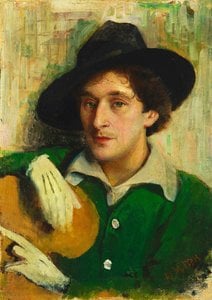
마르크 샤갈
1887 - 1985 , 벨라루스
작가 정보 요약
- 국적: 러시아/프랑스
- 영향을 받은 예술가:
- 파블로 피카소
- 장 미로
- 영향을 준 예술가:
- 레온 바크스트
- 로베르트 델라unay
- 예술 사조: 모더니즘, 입체주의
- 전체 이름: 마르크 샤갈
- 주요 작품:
- 나와 마을
- 백색십자가
- 이스라엘의 축제
- 출생일: 1887년 7월 6일
관련 기사

Deconstructing Reality: Cubism's Revolutionary Impact on 20th-Century Art
Explore the revolutionary world of Cubism with ArtsDot. Discover Picasso & Braque's groundbreaking techniques, its philosophical roots, and lasting impact on modern art. Expert insights for collectors.

조르주 브라크의 걸작 25선: 예술과 공간을 초월하는 시선 | ArtsDot
조르주 브라크의 시대를 초월한 25개의 걸작을 만나보세요. 입체주의를 개척한 프랑스 화가의 예술 세계와 숨겨진 이야기를 ArtsDot에서 감상하고, 명작 유화 복제본으로 공간에 특별함을 더하세요. 지금 바로 컬렉션을 탐험하세요!

Jean Dominique Antony Metzinger: Pioneering Cubism & the Evolution of Abstract Form
Explore the life & work of Jean Metzinger, a pivotal Cubist painter and theorist. Discover his innovations in proto-Cubism, 'Du Cubisme,' and Crystal Cubism – a journey through modern art's evolution.

Deconstructing Reality: Cubism's Evolution, Impact & Enduring Legacy
Explore the revolutionary world of Cubism with expert insights from ArtsDot. Discover Picasso & Braque's groundbreaking techniques, its philosophical roots, and lasting impact on modern art. Expert appraisal & custom reproductions available.

Deconstructing Reality: A Comprehensive Exploration of Synthetic Cubism's Evolution & Impact
Explore the revolutionary world of Synthetic Cubism! Discover its origins, key artists like Picasso & Braque, techniques, and lasting impact on modern art. A comprehensive guide for enthusiasts.


