

- 1120.0 x 1620.0 cm


선택하신 옵션에 따른 작품 정보입니다: , .
수집품 상세 설명
A detailed contemporary painting by Lee Jong-gu captures the soulful gaze of a cow in a rural setting, offering a serene glimpse into Korean landscape art that you can bring to your private collection.
 더 보기
더 보기
작가 프로필
Explore the powerful paintings of Lee Jong-gu, a Korean artist renowned for his realistic depictions of rural life & evocative use of acrylic & collage. Influenced by Suiboku ga, his large-scale works like 'Black Grassland' capture Korea’s changing l
핸드메이드 유화 복제화
작가가 직접 캔버스에 손으로 그린 유화 작품으로, 원하는 크기와 액자로 맞춤 제작해 드립니다. ( 프린트 판매로 전환 디지털 이미지로 전환)
본 작품은 저작권법의 보호를 받습니다.
이 페이지에 표시된 작품은 저작권법의 보호를 받으며, 이에 따라 동일한 복제품을 제작하거나 판매하는 것은 법으로 금지되어 있습니다. 이러한 권리 보호는 다음과 같은 국제 협약에 따라 시행됩니다. 베른 협약 또한 다음에서 명시하는 법률을 포함한 국내법에 의해 보호됩니다. 미국 저작권법 제17조.
저희는 존중을 담은 합법적인 대안으로서, 원작에서 영감을 받은 맞춤형 수제 유화 작품을 제공합니다. 저희의 숙련된 전문 화가들은 원작의 스타일, 분위기, 예술적 정수를 면밀히 연구하여, 그 자체로 독창적인 창작물이면서도 원작과 동일한 감동을 불러일으키는 새로운 작품을 만들어냅니다.
이 방식은 저작권 보호를 받는 예술 작품을 복제하거나 그대로 재현하는 것이 아니기에 저작권 규정을 완벽히 준수합니다. 대신, 이는 창의적인 재해석의 과정을 거칩니다. 즉, 원작에서 영감을 받되 원작과 동일하지 않은 새로운 회화 작품을 의미합니다.
이 작품에 대해 더 알아보기
 미리보기
미리보기
 공유하기
공유하기 공유하기
공유하기
 상세 정보
상세 정보 가이드 보기

 다운로드
다운로드
 유사 작품 더 보기
 X-레이
X-레이 슬라이드 쇼 보기
 질의응답
질의응답 통계 정보
통계 정보단 네 단계로 완성되는 간편한 작품 주문 방법
천천히 진행하셔도 좋습니다. 답변은 언제든 변경할 수 있으며, 선택 사항에 따라 주문 카드 내의 가격이 실시간으로 반영됩니다.
1 4단계 중 1단계
원하시는 사이즈를 선택해 주세요.
이 사이즈들은 원작의 비율을 그대로 유지합니다. 그림 속 예시는 2미터 길이의 소파 위 벽면에 선택하신 작품을 배치했을 때의 모습입니다.
또는 직접 치수 입력하기
작품의 원본 비율을 그대로 유지하는 프리셋 사이즈 중에서 선택해 보세요.

액자나 벽면 크기에 맞춰 필요한 가로와 세로 길이를 입력해 주세요. 본 작품은 수작업으로 제작되므로, 요청하신 비율에 따라 작가가 그림의 가장자리를 조금 더 넓게 그리거나 일부를 조정하여 작업할 수 있습니다. 작업 시작 전, 최종 확인을 위해 디지털 목업 이미지를 보내드립니다. 이 페이지에 표시된 이미지는 실제 결과물과 다를 수 있으며, 오직 목업 이미지만이 정확한 결과물을 보여줍니다.
2 4단계 중 2단계
어떤 방식으로 준비해 드릴까요: 롤 형태로, 캔버스에 씌워서, 또는 액자에 넣어?
아래 가격은 첫 번째 단계에서 선택하신 크기를 기준으로 합니다.
캔버스 옆면 스타일 선택
프레임을 선택하세요

화이트 테두리 ₩1

블러사이드 ₩1

옆면 확장형 ₩1

P118B ₩10

P118H ₩10

P118W ₩10

P438Z ₩10

P508JH ₩12

P508YH ₩12

P805H ₩10

P805Z ₩10

P919BZ ₩10

P919G ₩10

P919XJ ₩10

P959ZH ₩10

P968JZ ₩12

W106C ₩8

W218G ₩10

W218JH ₩8

W218Y ₩10

W307PJ ₩10

W316G ₩10

W316PJ ₩8

W316Y ₩10

W398PJ ₩8

W4111J ₩10

W500HY ₩15

W500JH ₩15

W692G ₩12

W849H ₩8

W940BG ₩15

W953PJ ₩8

H24-GOLD ₩30

H24-SILVER ₩30

H36-GOLD ₩45

H36-SILVER ₩45
액자형
몰딩: . 액자 포함 전체 크기: .
3 4단계 중 3단계
그림에서 변경하고 싶은 부분이 있으신가요?
대부분의 사람들은 아니라고 답합니다. 모든 작품은 수작업으로 제작되기에, 저희 작가는 고객님의 요청에 맞춰 작품을 변경해 드릴 수도 있습니다.
주문 완료 후, ArtsDot.com 팀에서 상세 안내를 위해 고객님께 이메일을 보내드리며, 시안 미리보기를 제공해 드립니다.
4 4단계 중 4단계
몇 가지 마감 옵션
모두 선택 사항입니다. 이미 선택된 답변에 대해서는 추가 비용이 발생하지 않습니다.
작가는 누구인가요?
박물관에 있는 것과 같은 명판을 원하시나요?
동판 각인 상세 정보
This elegant plaque features the artist's name and the title of the artwork, finely engraved for a timeless presentation.
It is made from bronze with a refined, elegant finish. The text is precisely laser-engraved for a sharp and permanent result. Measuring 9x2 cm, the plaque is compact yet easy to read. It's built to be durable and scratch-resistant, offering a professional, museum-quality look. Mounting is simple thanks to the included adhesive backing.
투명 아크릴 명판 상세 정보
The plaque includes essential engraved details such as the artist's name, the title of the artwork, the date it was created, the type of media used-like oil on canvas or watercolor-a brief description of the piece, and a QR code that links to the complete artwork information.
It is crafted from clear acrylic, offering a sleek, modern appearance. The text is UV-engraved in black to ensure strong visual contrast. With a size of 10x15 cm, it ensures optimal readability. It comes equipped with two metal hooks for secure wall mounting. The plaque is designed to be weather-resistant, making it suitable for various environments, and it includes interactive features that work seamlessly with smartphone scanning.
블랙 아크릴 명판 상세 정보
This elegant plaque includes engraved information such as the artist's name, the title of the artwork, the date it was created, the type of media used (like oil on canvas or watercolor), a short description of the artwork, and a QR code for quick access to more information.
The plaque itself is made from refined black acrylic with a premium finish. The text is laser-engraved in white for high contrast and readability. Its size is 10x15 cm, designed to be easy to read. It comes with two metal hooks for professional mounting. The design is sleek and fits any interior style. It is also weather-resistant and durable, with built-in digital integration for mobile compatibility.
보호용 바니시를 선택하시겠습니까?
언제 받기를 원하시나요?
✓ 확인 및 주문하기
주문하신 그대로의 작품

Black Grassland
재현 기법
복제본 크기
-

엄선된 시니어 아티스트
더욱 세밀한 묘사와 정교함, 그리고 충분한 제작 시간
-

복제화 액자 구성
-
-
가로 또는 세로 중 어느 한 면이라도 105cm(약 41인치)를 초과하는 작품이나 복제화의 경우, 프레임은 분해된 키트 형태로 배송됩니다. 이는 안전한 배송을 보장하고 운송 중 발생할 수 있는 손상을 방지하기 위함입니다.
전문가 조립 권장 - 본 제품은 DIY용이 아닙니다.
해당 키트는 숙련된 전문 프레임 제작자가 목공용 풀(별도 구매), 캔버스 스트레칭 플라이어 및 풀이 마르는 동안 나무 틀의 수평을 유지할 클램프를 사용하여 캔버스를 팽팽하게 고정하고 조립해야 합니다. 잘못된 조립이나 불균형한 캔버스 장력은 작품에 영구적인 손상을 입힐 수 있으며, 이로 인한 손상은 보증 범위에 포함되지 않습니다.
 가로 또는 세로 중 어느 한 면이라도 105cm(약 41인치)를 초과하는 작품이나 복제화의 경우, 프레임은 분해된 키트 형태로 배송됩니다. 이는 안전한 배송을 보장하고 운송 중 발생할 수 있는 손상을 방지하기 위함입니다.
모든 원목 부재가 포함되어 있으며, 조립에 딱 맞게 정밀하게 재단되었습니다.
제공된 나사와 함께, 별도로 준비해야 하는 모서리 접합부용 목공용 풀을 사용하여 조립합니다. (목공용 풀은 포함되어 있지 않으므로 제작자께서 직접 준비해 주셔야 합니다.)
전문가용 도구가 필요하며 키트에 포함되어 있지 않습니다: 캔버스 스트레칭 플라이어(텐셔너)와 접착제가 마르는 동안 나무 틀의 수평을 유지하기 위한 클램프가 필요합니다.
주의사항:
모서리 접합부에는 목공용 풀이 필요하며, 풀이 완전히 마를 때까지 클램프로 바(bar)를 고정해야 합니다. 또한 조립된 프레임에 캔버스를 팽팽하게 당기려면 캔버스 스트레칭 플라이어가 필요합니다. 이 제품들 중 어느 것도 키트에 포함되어 있지 않습니다. 이 사이즈를 주문하시기 전에 숙련된 전문 액자 제작업체를 미리 섭외하시기 바랍니다.

작품 설명문
-
-

보호용 바니시
유광 바니시(색감을 선명하게 하며 빛과 습기로부터 보호함)
-

내 작품 맞춤 설정
변경 가능한 예시: 얼굴을 고객의 사진으로 교체, 반려동물 추가(예: 고양이를 강아지로 변경), 배경에 숨겨진 메시지 삽입, 배경 풍경 또는 요소 변경.
-

빠른 배송
전 세계 배송()은 기존 5주의 표준 기간 대신 3~4주 내에 완료됩니다. (5 11월). 품질에는 어떠한 타협도 하지 않습니다.
-
특급 배송
전 세계 배송(): 약 5주 소요 (12 11월).
포함됨
최종 결제 금액
₩ 352171
유리 옵션은 110cm 미만 크기에서만 선택 가능합니다.
모든 주문에 포함되는 혜택
- 전 세계 무료 특급 배송
- 프리미엄 린넨 캔버스
- 배송 전 과정 보험 적용
- 관세 및 수입세 환급 보장 서비스
- 원본과 동일한 색상 구현 보장
- 100일 이내 반품 정책 (결함 발생 시)
- 100% 환불 보장
- 다량 구매 할인 혜택


A Quiet Encounter in the Korean Countryside
In the evocative painting Black Grassland, the viewer is invited into a moment of profound stillness, a singular encounter that transcends the boundaries of time and space. Created in 2008 by the esteemed South Korean master Lee Jong-gu, this work serves as a window into the soul of rural life. At first glance, the composition centers on the striking presence of a cow, its sturdy form rendered with an intimacy that feels almost tactile. The subject, adorned with a detailed metal halter, gazes softly off-camera, suggesting a narrative that exists just beyond our field of vision. This sense of looking away creates a poignant tension, drawing the observer into a state of quiet contemplation alongside the animal.
The artistry of Lee Jong-gu is deeply rooted in his meticulous observation of the Korean landscape and its inhabitants. In this piece, the artist employs a technique that balances realism with an atmospheric, almost dreamlike quality. The rich, earthy tones of the cow's brown fur are set against a striking blue background, a color choice that provides a luminous contrast and elevates the subject from a mere pastoral study to a monumental portrait. This juxtaposition of warmth and cool depth creates a visual harmony that is both soothing and intellectually stimulating, making it an ideal centerpiece for those looking to introduce a sense of calm and sophistication into a curated interior.
Symbolism and the Essence of Tradition
Beyond its surface beauty, Black Grassland carries the weight of cultural heritage. Lee Jong-gu’s work is famously informed by his lifelong dedication to documenting the enduring traditions of Seosan and the broader Korean countryside. The cow, a symbol of fertility, patience, and the hardworking spirit of agrarian societies, acts as a totem for the resilience of rural life. The presence of the metal halter serves as a subtle reminder of the intersection between nature and human stewardship—a delicate bond that has defined the Korean landscape for centuries.
For the discerning collector or interior designer, this painting offers more than just aesthetic appeal; it offers an emotional anchor. The large-scale presence of the work allows its textures and subtle gradients to command a room, while its subject matter provides a grounding influence. Whether placed in a contemporary minimalist setting or a classic, richly textured study, Black Grassland acts as a bridge between the modern world and the timeless rhythms of the natural world. It is an invitation to slow down, to breathe, and to reconnect with the quiet dignity found in the simplest of lives.
질의응답
"Black Grassland" 작품은 어떤 사이즈로 출력하는 것을 추천하시나요?
Lee, Jong Gu의 "Black Grassland"의 권장 인쇄 사이즈는 Large입니다.
주문하기 전에 Lee, Jong Gu의 "Black Grassland"를 미리 볼 수 있나요?
Lee, Jong Gu의 "Black Grassland"의 미리보기는 작품의 가상 배치 미리보기 페이지에서 확인하실 수 있습니다.
원작 Lee, Jong Gu의 "Black Grassland"의 기법과 크기는 어떻게 되나요?
"Black Grassland"은(는) Painting 기법으로 제작되었으며, 원작의 크기는 1120 x 1620 cm입니다.
유사한 작품들


Lee, Jong Gu
1954 - , South Korea
작가 정보
A Vision of Korean Rural Landscape
Lee Jong-gu stands as a prominent figure in contemporary Korean painting, recognized for his masterful depictions of the serene beauty and enduring traditions of rural Korea. Born in Seosan, South Korea, in 1954, he embarked on an artistic journey shaped by a profound engagement with the cultural heritage of his homeland—a connection that deeply informs his distinctive style and technique. His formative years were marked by a dedication to scholarly pursuits at Chungang University in Seoul, followed by advanced studies at Inha University in Incheon, where he earned an M.F.A. in Arts Education. This rigorous academic grounding instilled within him a meticulous approach to observation and representation, providing the foundation for a career dedicated to capturing the essence of Korean folk life with unwavering commitment.The Artistry of Texture and Atmosphere
Lee Jong-gu’s artistic signature lies in his innovative use of acrylic paint combined with collage techniques, a dual approach that creates textured surfaces and layered visual narratives. Rather than mere imitation, he strives to convey the spirit and atmosphere of his subjects through a tactile medium. His technique allows for vibrant colors and luminous effects, while the introduction of collage elements—fragments of paper or fabric—enriches the overall composition with a sense of materiality and narrative depth. This method is perhaps most breathtakingly realized in his monumental painting Black Grassland (2008). Measuring an immense 1120 x 1620 cm, this work exemplifies his ability to use scale to capture not just visual details but the profound emotional resonance of the natural world. In this piece, the viewer is invited into a moment of profound stillness, encountering a large, horned cow whose steady gaze meets our own, creating an intimate tension between the grounded reality of the animal and the infinite, ethereal sky.Symbolism and the Echo of Tradition
Beyond the striking visual impact of his works, Lee Jong-gu’s paintings serve as poignant meditations on the changing landscape of Korean life. His imagery often draws upon deep-seated cultural symbols; for instance, the cow frequently appears in his work as a sentinel of tradition, representing strength, patience, and the foundational rhythms of an agricultural society facing rapid modernization. Through his lens, the pastoral scenes are not merely nostalgic retreats but visceral encounters with the enduring spirit of Korea. His work is subtly informed by the Suiboku ga style, reflecting a command over texture and atmosphere that bridges traditional ink wash sensibilities with modern acrylic application. In pieces like Black Grassland, the "black" of the grassland is more than a color; it is a mood—a deep, evocative tone suggesting the fertile, shadowed earth of his birthplace in Seosan.Legacy and Cultural Significance
The historical significance of Lee Jong-gu’s work lies in his ability to document a vanishing way of life with both intimacy and grandeur. As rural existence has faced the pressures of economic and social shifts, Lee’s paintings remain vital records of the Korean countryside's soul. His achievements are marked by his ability to elevate the humble subjects of agrarian life—cattle, bells, and quiet fields—into the realm of high contemporary art. By blending meticulous academic training with an experimental, textured approach, he has created a body of work that resonates both as a personal tribute to his roots and as a universal exploration of the relationship between humanity, memory, and the natural world. His contributions continue to inspire a deep appreciation for the quiet dignity found within the rhythmic, pastoral traditions of the Korean landscape.관련 콘텐츠
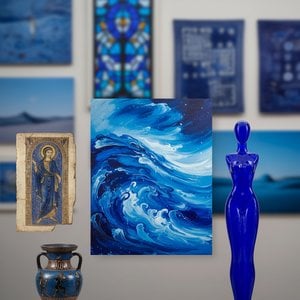
The Allure of Azure: Exploring the Symbolic & Aesthetic Depths of Blue in Art History
Explore the rich history of blue in art! Discover its symbolism, from ancient pigments to modern masterpieces by Kandinsky & Seurat. Uncover the psychological impact and cultural meanings behind this captivating hue.
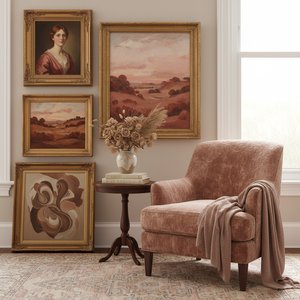
Rosy Brown Hues: 10 Master Paintings & Timeless Decor Ideas |
Explore 10 iconic paintings bathed in captivating rosy brown tones! From Rembrandt to Titian, discover the stories behind these masterpieces & their warm color palettes. Find museum-quality art reproductions and decor inspiration at .

Earthy Hues & Masterpieces: Top 10 Paintings with 'Mushroom' Tones |
Explore 10 iconic paintings with captivating 'mushroom' tones! Discover Van Gogh, Monet & Rembrandt’s masterpieces—earthy palettes, rich history & artistic techniques. Find museum-quality art reproductions and curated decor ideas at