


 미리보기
미리보기
 공유하기
공유하기 공유하기
공유하기
 상세 정보
상세 정보

 다운로드
다운로드
 유사 작품
유사 작품 X-레이
X-레이 슬라이드 쇼
Tatriz
 Contemporary Abstract
 2004
2004 100.0 x 100.0 cm
 The Ramzi and Saeda Dalloul Art Foundation
 더 보기
더 보기
수제 유화 복제품
원하는 크기와 액자로 주문 제작되는, 작가들이 직접 캔버스에 손으로 그린 유화 작품입니다. ( 프린트 주문으로 전환 이미지로 전환)




P118B $10

P118H $10

P118W $10

P438Z $10

P508JH $12

P508YH $12

P805H $10

P805Z $10

P919BZ $10

P919G $10

P919XJ $10

P959ZH $10

P968JZ $12

W106C $8

W218G $10

W218JH $8

W218Y $10

W307PJ $10

W316G $10

W316PJ $8

W316Y $10

W398PJ $8

W4111J $10

W500HY $15

W500JH $15

W692G $12

W849H $8

W940BG $15

W953PJ $8




작품의 원본 비율을 유지하는 미리 설정된 크기 중에서 선택하세요.

특정 프레임이나 공간에 맞도록 직접 크기를 입력할 수 있습니다. 선택하신 크기가 원본 이미지의 비율과 일치하지 않는 경우, 작품을 자르거나 추가적인 손으로 그린 요소를 사용하여 그림을 확장합니다. 제작 시작 전 승인을 위해 디지털 목업을 보내드립니다.
화면 미리 보기는 실제 자르기 또는 확장을 반영하지 않습니다. 최종 구성은 목업을 통해서만 정확하게 확인하실 수 있습니다.
맞춤 크기 제작도 가능하지만, 원본 비율을 유지하기 위해 사전 정의된 목록에서 크기를 선택하시는 것을 권장합니다.
주문 후 ArtsDot.com 팀에서 상세 안내를 위해 고객님께 이메일을 보내드리며, 미리보기 시안을 제공해 드립니다.


 유리 옵션은 110cm 미만 크기에서만 선택 가능합니다.

Tatriz
재현 기법
복제본 크기
-


최종 결제 금액
$ 263
유사한 작품들


작가 약력
Khaled Hourani: A Voice of Palestine Through Textile and Memory
Born in the ancient city of Hebron in 1965, Khaled Hourani’s artistic journey is inextricably linked to his Palestinian heritage and the complex realities of life under occupation. More than simply an artist, he's a curator, critic, and writer—a multifaceted voice deeply engaged with the cultural landscape of Palestine and its enduring struggle for self-determination. His work, primarily rooted in textile art, transcends mere aesthetics; it’s a potent visual narrative woven with threads of memory, resistance, and profound human connection.
Hourani's early life in Hebron, a city with a rich history and a poignant story of displacement, undoubtedly shaped his artistic sensibilities. After obtaining a BA in History from Hebron University in 1987, he began to actively participate in the burgeoning Palestinian art scene. His involvement with organizations like the League of Palestinian Artists and his work within the Ministry of Culture provided him with invaluable experience and insight into the challenges facing Palestinian artists and culture. This period solidified his commitment to using art as a tool for social commentary and cultural preservation.
The Rise of Textile Narratives
Hourani’s artistic career gained significant momentum in the early 2000s, marked by a shift towards textile work – a medium that resonated deeply with Palestinian traditions. He skillfully blends ancient motifs and patterns—often drawn from traditional embroidery and weaving techniques—with contemporary themes of struggle, displacement, and resilience. These aren't simply decorative elements; they are carefully chosen symbols imbued with layers of meaning. His pieces frequently incorporate bold colors, geometric shapes, and intricate textures, creating a visual language that is both captivating and deeply symbolic.
A pivotal moment in his career arrived in 2011 with the ambitious project “Picasso in Palestine.” This involved borrowing Pablo Picasso’s iconic painting, *Bust de Femme*, from the Van Abbemuseum in Eindhoven, Netherlands, and exhibiting it within the International Academy of Art in Ramallah. The meticulous planning and execution of this project—requiring significant funding and a specially constructed museum space—demonstrated Hourani's organizational skills and his dedication to bringing international art to Palestine while simultaneously highlighting Palestinian artistic talent. The exhibition drew considerable attention and cemented his reputation as a visionary curator.
Influences and Artistic Vision
Hourani’s artistic vision is informed by a diverse range of influences, reflecting a deep engagement with both Western and Eastern artistic traditions. He cites Pablo Picasso as a key inspiration, particularly for his use of bold colors and geometric forms. However, he also draws heavily from the rich tapestry of Palestinian cultural heritage, incorporating traditional motifs and patterns into his work. The influence of Expressionism is also evident in his vibrant color palettes and emotionally charged compositions – an intentional choice to convey the intensity of lived experience within a challenging context.
Beyond these specific influences, Hourani’s work speaks to broader themes of displacement, memory, and identity. His pieces often evoke a sense of longing for lost homelands and a determination to preserve cultural traditions in the face of adversity. He masterfully utilizes textile techniques not just as a medium but as a means of storytelling—weaving together personal narratives with collective histories.
Recognition and Legacy
Khaled Hourani’s contributions to the contemporary art scene in Ramallah have been widely recognized by critics and curators, who view him as an important voice within the region. He has received numerous awards, including the Leonore Annenberg Prize for Art and Social Change from Creative Time in 2013, a testament to his commitment to using art as a catalyst for social change. His work is held in prestigious collections worldwide, reflecting its enduring appeal and significance.
From his early involvement with Palestinian cultural institutions to his groundbreaking curatorial projects and his distinctive textile narratives, Khaled Hourani has established himself as a leading figure in contemporary Palestinian art. His art serves not only as a reflection of the past but also as a powerful statement about the present and a hopeful vision for the future—a testament to the enduring spirit of Palestine.

Khaled Hourani
1965 - , Palestine
주요 정보
- Artistic Movement Or Style: Textile art, Expressionism
- Artists Or Movements Influenced By This Artist: ['Expressionism']
- Artists Who Influenced This Artist: ['Pablo Picasso']
- Date Of Birth: 1965
- Full Name: Khaled Hourani
- Nationality: Palestinian
- Notable Artworks:
- Tatriz
- Dispersed Crowds
- Place Of Birth: Hebron, Palestine
관련 기사 더 보기
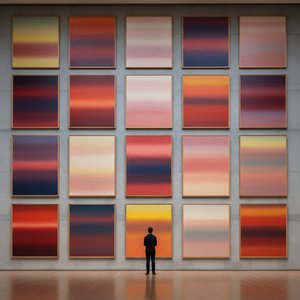
마크 로스코 최고작 25선: 색채로 표현된 심오한 감정과 예술의 세계 | ArtsDot
마크 로스코 최고작 25선을 만나보세요. 추상 표현주의 거장의 색채로 표현된 심오한 감정과 예술의 세계를 탐험하고, ArtsDot에서 명화 복제본과 특별한 인테리어 아이디어를 찾아보세요. 지금 바로 컬렉션을 확인하세요!

Kandinsky's Masterpieces: 25 Paintings That Define Abstract Art | ArtsDot
Journey through Wassily Kandinsky's 25 most iconic abstract paintings. Explore his revolutionary use of color, form & spiritual expressionism. Find museum-quality Kandinsky reproductions and elevate your home decor with ArtsDot.com. Discover all masterpieces on ArtsDot.com!

추상표현주의를 정의한 10대 걸작: 예술과 인테리어의 새로운 영감
추상표현주의의 심장을 뛰게 한 10대 걸작을 만나보세요. 폴록, 로스코 등 거장의 작품 비하인드 스토리와 예술적 영감을 ArtsDot에서! 지금 바로 미술품 컬렉션을 탐험하고, 당신의 공간에 특별한 예술적 감성을 더하세요. ArtsDot.com

Dark Masterpieces: 10 Iconic Paintings Dominated by Black Tones |
Explore 10 iconic paintings dominated by black tones, from Rembrandt’s chiaroscuro to Goya's dark expressions. Discover the stories behind these masterpieces & find museum-quality art reproductions for your home at .

기하학적 추상 미술을 정의한 명작 10가지 | ArtsDot.com
몬드리안, 말레비치 등 거장들의 기하학적 추상 미술 명작 10선을 만나보세요. 각 작품의 예술사적 의미와 색채, 구성을 탐구하고 ArtsDot.com에서 고품질 아트 프린트를 소장하세요. 지금 바로 온라인 컬렉션을 확인하세요!

