- 홈

- 유화 복제화
- 요하네스 페르메이르
- Saint Praxedis
 프린트 구매하기
 공유하기
공유하기 공유하기
공유하기
 Details

 다운로드
다운로드
 유사 작품
유사 작품 X-Ray
X-Ray 슬라이드 쇼
Saint Praxedis






P118B $10

P118H $10

P118W $10

P438Z $10

P508JH $12

P508YH $12

P805H $10

P805Z $10

P919BZ $10

P919G $10

P919XJ $10

P959ZH $10

P968JZ $12

W106C $8

W218G $10

W218JH $8

W218Y $10

W307PJ $10

W316G $10

W316PJ $8

W316Y $10

W398PJ $8

W4111J $10

W500HY $15

W500JH $15

W692G $12

W849H $8

W940BG $15

W953PJ $8




 더 알아보기
작품의 원본 비율을 유지하는 미리 설정된 크기 중에서 선택하세요.

특정 프레임이나 공간에 맞도록 직접 크기를 입력할 수 있습니다. 선택하신 크기가 원본 이미지의 비율과 일치하지 않는 경우, 작품을 자르거나 추가적인 손으로 그린 요소를 사용하여 그림을 확장합니다. 제작 시작 전 승인을 위해 디지털 목업을 보내드립니다.
화면 미리 보기는 실제 자르기 또는 확장을 반영하지 않습니다. 최종 구성은 목업을 통해서만 정확하게 확인하실 수 있습니다.
맞춤 크기 제작도 가능하지만, 원본 비율을 유지하기 위해 사전 정의된 목록에서 크기를 선택하시는 것을 권장합니다.
주문 후 ArtsDot.com 팀에서 상세 안내를 위해 고객님께 이메일을 보내드리며, 미리보기 시안을 제공해 드립니다.


 유리 옵션은 110cm 미만 크기에서만 선택 가능합니다.

Saint Praxedis
재현 기법
복제본 크기
-


최종 결제 금액
-
작품 상세 설명
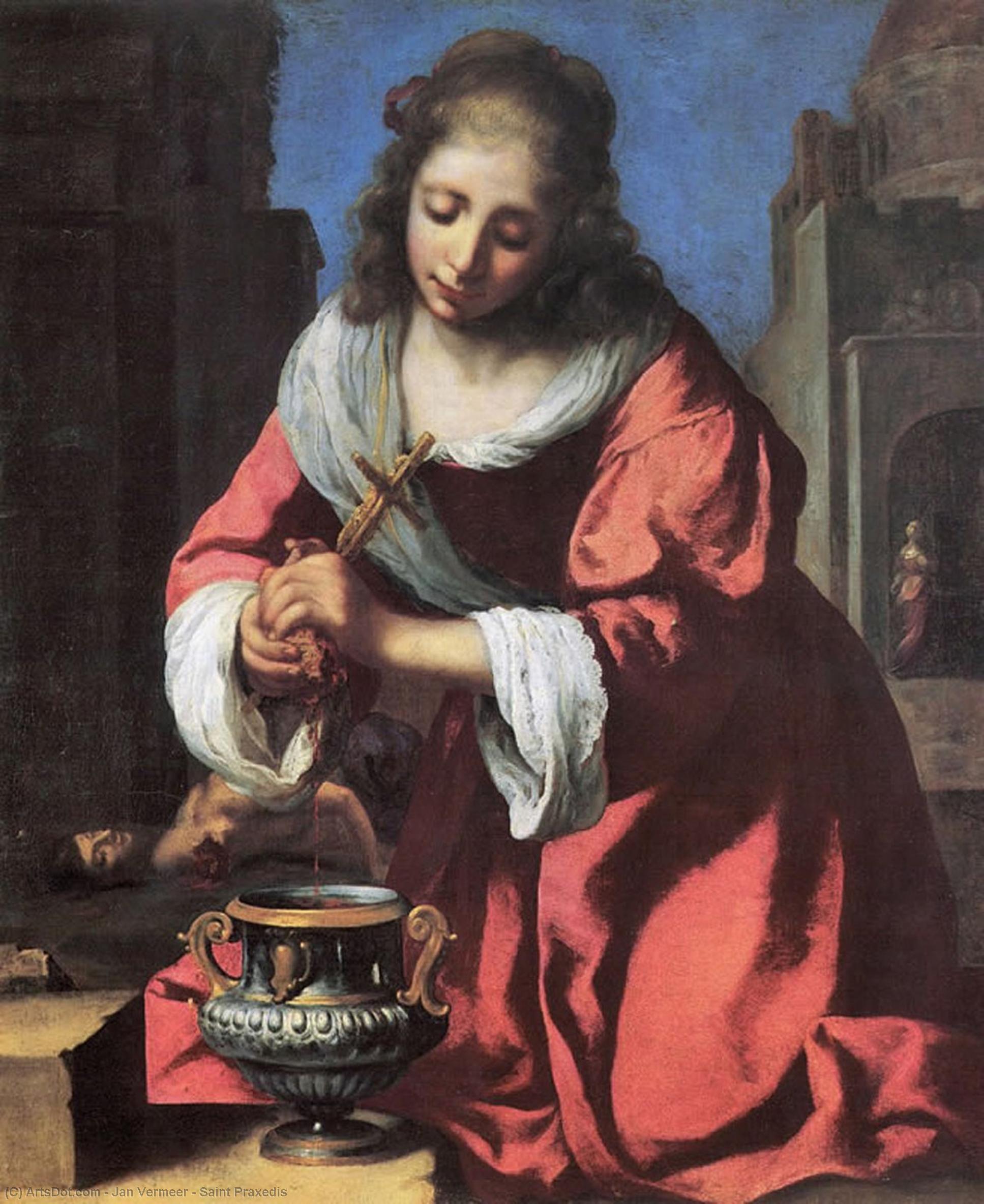
The Enigmatic Saint – Unveiling Johannes Vermeer’s *Saint Praxedis*
Johannes Vermeer, a name synonymous with the quiet intimacy of 17th-century Dutch life, remains an artist shrouded in captivating mystery. Born in Delft in October 1632, his existence unfolded against the backdrop of the Dutch Golden Age – a period of unprecedented prosperity, artistic innovation, and burgeoning civic pride. His father, Reijnier Janszoon, was a silk weaver and art dealer, a combination that subtly shaped young Johannes’s path, instilling in him an understanding of materials, composition, and the delicate dance between creation and commerce. This early immersion wasn't merely observational; it provided a foundation upon which Vermeer would build his own unique artistic vision – one characterized by an unparalleled sensitivity to light, color, and the subtle nuances of human emotion.
Amongst his remarkably small oeuvre, *Saint Praxedis* stands as a particularly poignant example of this early mastery. Painted in 1659, it’s a work that immediately draws the viewer into a world of restrained piety and quiet contemplation. The scene depicts a woman, identified as Saint Praxedis, kneeling before a simple bowl or cup, holding a pair of scissors – an object laden with symbolic weight. The setting is an interior space, subtly suggesting a domestic environment, yet imbued with a profound sense of solemnity. Vermeer’s genius lies not just in the meticulous rendering of detail—the folds of the woman's clothing, the texture of the bowl, the play of light on the wall—but also in his ability to evoke a powerful emotional response through suggestion and restraint.
A Baroque Composition – Light, Color, and Symbolism
*Saint Praxedis* firmly establishes itself within the Baroque style, popular during the 17th century. The hallmarks of this period—dramatic lighting, intense emotions, and a heightened sense of realism—are all present in Vermeer’s work. However, unlike many of his contemporaries, Vermeer doesn't employ overt theatricality or bombastic displays of emotion. Instead, he utilizes subtle gradations of light and shadow to create an atmosphere of quiet reverence. The dominant color palette is warm – reds, browns, and ochres—contrasting with the cool blues and greens of the background, creating a harmonious balance that draws the eye inward.
The significance of the scissors is particularly intriguing. While interpretations vary, they are often linked to the story of Saint Praxedis, who was martyred for her faith. Legend tells that she used these very scissors to cut the ropes binding her parents before their execution, demonstrating a profound devotion and willingness to sacrifice everything for her beliefs. The bowl or cup, too, holds symbolic meaning – it could represent the offering of prayers, the reception of grace, or perhaps even the remembrance of Christ’s blood. The inclusion of a building visible in the background adds depth to the scene, grounding the narrative within a specific time and place.
Vermeer's Early Style - A Reflection of Influences
The attribution of *Saint Praxedis* to Johannes Vermeer has been a subject of ongoing debate among art historians. Initially, it was believed to be a copy of a work by Felice Ficherelli, an Italian painter who created a similar depiction of the saint in 1640-1645. However, recent research suggests that *Saint Praxedis* is indeed an original Vermeer painting, possibly created around the same time as his other early works like *The Procuress* and *The Astronomer*. The signature “Meer 1655” found on the canvas supports this attribution, though its authenticity has been questioned. Regardless of its precise origins, *Saint Praxedis* offers a fascinating glimpse into Vermeer’s artistic development – a period marked by experimentation with light, color, and composition.
Interestingly, Vermeer's connection to the Delft Jesuits—a prominent Catholic order in the Netherlands—has been increasingly recognized as a significant influence on his work. The themes explored in *Saint Praxedis* – faith, sacrifice, and devotion – align perfectly with Jesuit values. The painting’s quiet intimacy and emotional depth reflect the order's emphasis on personal piety and contemplation. It is believed that Vermeer may have been commissioned to create this piece by a member of the Jesuit community.
A Legacy of Light - Reproductions and Appreciation
Today, *Saint Praxedis* resides in the National Museum of Western Art in Tokyo, on long-term loan from a private collector. Reproductions of this remarkable painting are available through ArtsDot.com, offering art lovers the opportunity to experience Vermeer’s genius firsthand. Whether displayed in a grand salon or a cozy corner, a high-quality reproduction of *Saint Praxedis* will undoubtedly evoke the same sense of quiet contemplation and spiritual resonance that captivated viewers upon its creation centuries ago. It remains a testament to Vermeer's unparalleled skill and his ability to capture the essence of human experience with remarkable subtlety and grace.
유사한 작품들


작가 약력
델프트의 수수께끼, 요하네스 페르메이르: 빛으로 그려낸 일상
17세기 네덜란드 황금시대, 델프트라는 작은 도시에서 태어난 요하네스 페르메이르는 오늘날 ‘빛의 마에스트로’라 불리는 화가입니다. 그의 삶은 다소 베일에 싸여 있지만, 남아있는 작품들은 평범한 일상의 순간들을 놀라운 섬세함과 빛의 표현으로 담아내며 시대를 초월하는 아름다움을 선사합니다. 페르메이르는 1632년 델프트에서 태어났으며, 그의 아버지는 실크 직조공이자 미술품 거래인이었습니다. 이러한 환경은 젊은 요하네스에게 예술과 상업의 세계를 동시에 경험하게 해주었고, 이는 이후 그의 작품 세계에 깊은 영향을 미쳤습니다. 그는 초기에는 역사화와 신화화를 그렸지만, 곧 평범한 사람들의 일상을 담은 장르 회화에 몰두하며 자신만의 독특한 스타일을 구축해 나갔습니다. 1653년 Catharina Bolnes와 결혼하면서 가톨릭으로 개종했으며, 이후 그의 삶은 가족과의 관계 속에서 예술 활동과 함께 이어졌습니다.일상의 신비: 페르메이르 회화의 특징
페르메이르의 그림들은 특별한 사건이나 극적인 이야기가 아닌, 평범한 일상을 담고 있다는 점에서 독특합니다. 한 여인이 편지를 읽거나, 우유를 따르는 소녀, 진주를 달아 놓은 여성 등 그의 작품 속 인물들은 단순한 배경 없이 화면 중앙에 위치하며 관람객과 시선을 마주합니다. 이러한 구도는 마치 정물화처럼 고요하고 차분한 분위기를 자아내며, 페르메이르 회화의 가장 큰 특징 중 하나입니다. 하지만 그가 담아낸 평범함은 결코 단순하지 않습니다. 그는 빛을 이용하여 인물의 표정과 사물을 묘사하는 데 탁월한 능력을 발휘했습니다. 창문을 통해 들어오는 부드러운 햇빛, 반사되는 물체의 광택, 그림자 속의 섬세한 색채 변화 등 페르메이르는 빛을 단순한 조명이 아닌, 감정을 표현하고 공간감을 형성하는 중요한 요소로 활용했습니다. 또한 그는 원근법과 구도에도 뛰어난 이해도를 보였습니다. 그의 그림들은 마치 카메라처럼 정확한 시점을 포착하며, 인물과 배경의 균형을 통해 안정적인 화면을 구성합니다.카메라 옵스쿠라와 페르메이르의 빛: 과학적 접근과 예술적 감성
페르메이르가 빛을 표현하는 데 사용했던 기술에 대한 논쟁은 끊이지 않고 있습니다. 일부 학자들은 그가 카메라 옵스쿠라라는 광학 기기를 사용하여 그림을 그렸다고 주장합니다. 카메라 옵스쿠라는 렌즈를 통해 외부의 모습을 반전된 형태로 투사하여 보여주는 장치로, 페르메이르는 이를 활용하여 정확한 원근법과 빛의 표현을 구현했을 가능성이 있습니다. 하지만 그의 작품에는 단순히 기계적인 복제가 아닌, 예술가의 섬세한 감성과 해석이 담겨있습니다. 그는 카메라 옵스쿠라가 제공하는 이미지를 바탕으로 자신만의 독창적인 스타일을 창조해냈으며, 이를 통해 평범한 일상 속에서도 신비롭고 아름다운 순간들을 포착했습니다. 페르메이르는 또한 색채에도 뛰어난 감각을 지녔습니다. 그는 값비싼 안료인 Ultramarine(천청색)을 아낌없이 사용하여 그림에 깊이와 생동감을 더했습니다. 특히 여성의 옷이나 배경에 사용된 Ultramarine는 그의 작품에서 중요한 역할을 하며, 보는 이로 하여금 잊을 수 없는 인상을 남깁니다.잊혀진 천재, 재발견과 영원한 유산
페르메이르는 생전에 큰 명성을 얻지 못했습니다. 그는 비교적 적은 수의 작품만을 남겼으며, 그의 그림들은 당시에는 그다지 높은 평가를 받지 못했습니다. 1675년 갑작스러운 죽음 이후, 페르메이르는 오랫동안 잊혀진 화가로 남아 있었습니다. 그러나 19세기 프랑스 미술 평론가 Théophile Thoré-Bürger에 의해 그의 작품이 재발견되면서, 비로소 페르메이르의 진가가 세상에 알려지기 시작했습니다. 이후 그의 그림들은 전 세계 주요 미술관에 소장되었으며, 수많은 사람들에게 감동과 영감을 선사하고 있습니다. 특히 ‘진주 귀걸이를 한 소녀’는 페르메이르를 대표하는 작품으로 널리 알려져 있으며, 현대 대중문화에서도 끊임없이 재해석되고 있습니다. 오늘날 페르메이르는 네덜란드 황금시대의 가장 중요한 화가 중 한 명으로 인정받고 있으며, 그의 작품은 빛과 색채의 마법을 통해 시대를 초월하는 아름다움을 보여줍니다. 그는 평범한 일상 속에서 특별함을 발견하고, 이를 섬세하고 감성적인 방식으로 표현해낸 진정한 예술가였습니다.페르메이르의 영향: 후대 화가들에게 영감을 불어넣다
페르메이르의 작품은 후대 화가들에게 지대한 영향을 미쳤습니다. 그의 빛에 대한 탐구와 섬세한 묘사는 인상주의 화가들에게 큰 영감을 주었으며, 특히 에드가 드가와 클로드 모네는 페르메이르의 그림에서 많은 영감을 얻었다고 알려져 있습니다. 또한 현대 미술에서도 페르메이르의 작품은 끊임없이 재해석되고 있으며, 그의 영향력은 다양한 분야로 확장되고 있습니다. 그는 단순한 회화가가 아닌, 빛과 색채를 통해 인간의 감성을 자극하고 시대를 초월하는 아름다움을 선사하는 예술가로서 영원히 기억될 것입니다.
요하네스 페르메이르
1632 - 1675 , 네덜란드
주요 정보
- 국적: 네덜란드
- 대표작:
- 모녀에게 편지를 보내는 남자
- 델프트의 풍경
- 진주 귀걸이를 한 소녀
- 여인과 조개껍데기
- 모유를 먹이는 여인
- 사망일: 1675년 12월
- 영향을 받은 예술가: ['수많은 화가']
- 영향을 준 예술가:
- 피터 드 후흐
- 게라르트 텔르 보르흐
- 예술 사조: 네덜란드 황금 시대 회화
- 전체 이름: 요하네스 페르메이르
- 출생일: 1632년 10월
- 출생지: 델프트, 네덜란드
관련 기사 더 보기

네덜란드 황금 시대 예술의 정수를 담은 10대 걸작 탐구
렘브란트, 베르메르의 걸작부터 할스의 인물화까지! 네덜란드 황금시대 미술의 10대 명품을 만나보세요. 예술적 깊이와 아름다움을 담은 작품들을 ArtsDot에서 감상하고, 고품질 아트 프린트로 당신의 공간에 특별함을 더하세요. 지금 바로 ArtsDot.com에서 모든 걸작을 발견하세요!


화려함 속에 감춰진 진실! 바로크 미술을 정의한 10대 걸작 탐구
화려함과 극적인 표현이 압권! 바로크 미술을 대표하는 10대 걸작의 숨겨진 이야기를 만나보세요. 베르니니, 루벤스 등 거장의 작품부터 바로크 색감, 예술적 기법까지 – ArtsDot.com에서 명품 복제 & 인테리어 영감을 얻으세요! 지금 바로 컬렉션을 탐험해보세요.

Golden Age Reflections: Dutch Baroque Painting & Cultural Innovation
Explore the Dutch Golden Age of painting! Discover key artists like Vermeer & ter Borch, their innovative techniques, and the rich cultural context behind these Baroque masterpieces. Learn about collecting & appreciating this iconic art period.

Johannes Vermeer: Light, Intimacy & the Dutch Golden Age – A Comprehensive Exploration
Explore the life, techniques & enduring legacy of Johannes Vermeer, a master of Dutch Golden Age painting. Discover symbolism in his iconic works like 'The Milkmaid' and learn about his revolutionary use of light.

Baroque Painting's Greatest Hits: 10 Masterpieces for Your Home | ArtsDot
Journey through Baroque painting's glory! Explore 10 masterpieces by Caravaggio, Rembrandt & Vermeer. Discover dramatic lighting, rich colors & timeless stories. Find museum-quality art reproductions for your home at ArtsDot.com.