


 실제 크기로 보기
 보내기
보내기 공유하기
공유하기
 상세 보기
상세 보기 가이드 보기

 이미지 다운로드
 유사 작품 더 보기
 X-레이
X-레이 슬라이드 쇼 보기
 통계 정보
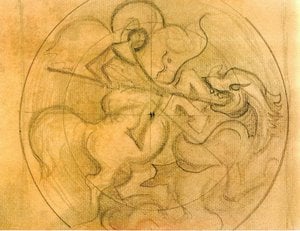
통계 정보Untitled
 45.0 x 53.0 cm
 상세 보기
상세 보기
이 페이지에 표시된 작품은 저작권법의 보호를 받으며, 이에 따라 동일한 복제품을 제작하거나 판매하는 것은 법으로 금지되어 있습니다. 이러한 권리 보호는 다음과 같은 국제 협약에 따라 시행됩니다. 베른 협약 또한 다음에서 명시하는 법률을 포함한 국내법에 의해 보호됩니다. 미국 저작권법 제17조.
저희는 존중을 담은 합법적인 대안으로서, 원작에서 영감을 받은 맞춤형 수제 유화 작품을 제공합니다. 저희의 숙련된 전문 화가들은 원작의 스타일, 분위기, 예술적 정수를 면밀히 연구하여, 그 자체로 독창적인 창작물이면서도 원작과 동일한 감동을 불러일으키는 새로운 작품을 만들어냅니다.
이 방식은 저작권 보호를 받는 예술 작품을 복제하거나 그대로 재현하는 것이 아니기에 저작권 규정을 완벽히 준수합니다. 대신, 이는 창의적인 재해석의 과정을 거칩니다. 즉, 원작에서 영감을 받되 원작과 동일하지 않은 새로운 회화 작품을 의미합니다.
핸드메이드 유화 복제화
작가가 직접 캔버스에 손으로 그린 유화 작품으로, 원하는 크기와 액자로 맞춤 제작해 드립니다. ( 프린트 판매로 전환 디지털 이미지 판매 채널로 전환)




































작품의 원본 비율을 그대로 유지하는 프리셋 사이즈 중에서 선택해 보세요.

액자나 벽면 크기에 맞춰 필요한 가로와 세로 길이를 입력해 주세요. 본 작품은 수작업으로 제작되므로, 요청하신 비율에 따라 작가가 그림의 가장자리를 조금 더 넓게 그리거나 일부를 조정하여 작업할 수 있습니다. 작업 시작 전, 최종 확인을 위해 디지털 목업 이미지를 보내드립니다. 이 페이지에 표시된 이미지는 실제 결과물과 다를 수 있으며, 오직 목업 이미지만이 정확한 결과물을 보여줍니다.
주문 완료 후 ArtsDot.com 팀에서 상세 안내를 위해 고객님께 이메일을 보내드리며, 미리보기 시안을 함께 제공해 드립니다.


 유리 옵션은 110cm 미만 크기에서만 선택 가능합니다.

Untitled
재현 매체
복제본 규격
-


총 결제 금액
₩ 359943
관련 작품들



작가 소개
The Visionary Architect of the Avant-Garde
Jiro Yoshihara stands as a monumental figure in Japanese postwar art, recognized primarily for his leadership within the Gutai Art Group—a movement that irrevocably altered the trajectory of avant-garde painting. Born in Osaka in 1905, Yoshihara’s artistic journey began without formal training, nurtured instead by a profound, self-taught passion for the medium. Growing up in the wealthy and cosmopolitan environment of a family vegetable oil wholesaler, his early years were shaped by an intellectual curiosity that transcended local boundaries. He was deeply moved by the humanist idealism of the Shirakabaha literary movement, which introduced him to the transformative power of Post-Impressionist masters like Cézanne, Van Gogh, and Renoir. This early exposure to Western aesthetics would prove instrumental in shaping his distinctive visual language, allowing him to bridge the gap between Japanese tradition and global modernism.
As his career matured, Yoshihara’s fascination extended far beyond the canvas. He was captivated by the psychological depths of Giorgio de Chirico, the playful abstraction of Joan Miró, and the rhythmic energy of Wassily Kandinsky. These influences acted as catalysts for a stylistic evolution that saw him move through various experimental phases. During the tumultuous 1930s, his paintings embraced surrealist principles, mirroring the profound anxieties and shifting aspirations of a world in flux. He possessed a rare ability to blend diverse influences, demonstrating an intellectual rigor that refused mere imitation. Gradually, he honed his focus on geometric abstraction, recognizing its capacity to convey complex, universal ideas with uncompromising clarity and strength.
The Spirit of Gutai and the Power of Gesture
The founding of the Gutai Art Association in 1954, alongside Shōzō Shimamoto, marked a watershed moment in Yoshihara’s career and cemented his legacy as a visionary innovator. Under his guidance, Gutai became much more than a mere collective; it was a radical laboratory for experimentation. Yoshihara encouraged his followers to "do what has never been done before," pushing the boundaries of what could be considered art. This era was defined by gestural abstract impasto paintings that celebrated the raw, physical act of creation. The movement explored unprecedented territories, including:
- Performance Art: Utilizing the human body as a medium for expression.
- Interactive Works: Breaking the barrier between the spectator and the artwork.
- Outdoor Exhibitions: Moving art out of the gallery and into the public consciousness.
- Materiality: Experimenting with unconventional substances, from mud to industrial chemicals.
Yoshihara’s leadership was characterized by a global ambition. He worked tirelessly as a networker between the arts, commerce, and industry, ensuring that the Gutai movement communicated internationally. By inserting Japanese avant-garde practices into the globalizing art world, he ensured that the voices of his contemporaries were heard far beyond the borders of the Kansai region.
The Zen Circle: A Legacy of Enlightenment
In the later stages of his life, Yoshihara’s work underwent a profound spiritual and stylistic shift. Moving away from the thick, energetic impasto of his earlier years, he began to embrace a more meditative approach known as his Zen-painting inspired hard-edge circles. These iconic works, often featuring singular, bold rings of color, drew heavily from the concept of Satori—the moment of sudden enlightenment. These circles were not merely geometric shapes; they were symbols of wholeness, continuity, and the infinite. Through this minimalist mastery, Yoshihara achieved a synthesis of his Western-influenced abstraction and deeply rooted Japanese philosophical traditions.
His oeuvre remains incredibly diverse, encompassing drawings, murals, sculptures, calligraphy, ink wash paintings, ceramics, and even stage design. This breadth of practice reflects a life dedicated to the total exploration of form and spirit. Jiro Yoshihara passed away in 1972, but his impact remains indelible. He did not just lead a movement; he forged a new way of seeing, leaving behind a legacy where the act of creation is as significant as the finished masterpiece, and where the simple circle can contain the entire universe.

Jiro Yoshihara
1905 - 1972
작가 정보 요약
- Full Name: Jiro Yoshihara 吉原 治良
- Nationality: Japanese
- Date Of Birth: 1905
- Date Of Death: 1972
- Place Of Birth: Osaka, Japan
- Notable Artworks:
- Untitled
- Gutai Group
- Artistic Movement Or Style: Surrealist & Abstract Expressionist
- Artists Who Influenced This Artist:
- Giorgio de Chirico
- Joan Miró
- Wassily Kandinsky
- Artists Or Movements Influenced By This Artist: ['Gutai Group']