
- 홈

- 유화 복제화
- jesús mayagoitia
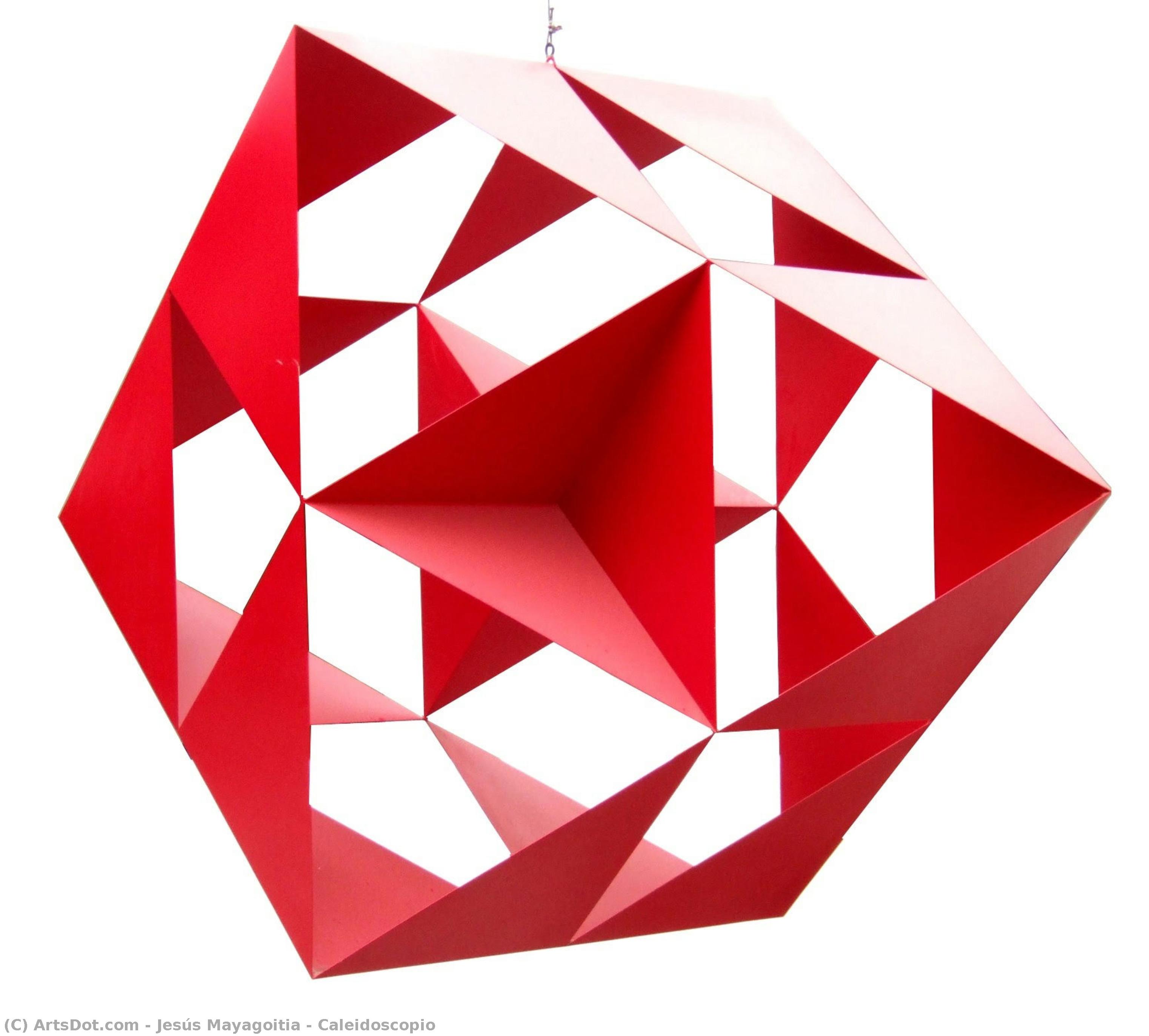
- Caleidoscopio
 Preview
 프린트 구매하기
 공유하기
공유하기 공유하기
공유하기
 상세 정보
상세 정보

 다운로드
다운로드
 유사 작품
유사 작품 X-레이
X-레이 슬라이드 쇼
Caleidoscopio
 1995
1995 100.0 x 100.0 cm
 Fundación Universidad de las Américas Puebla
 더 보기
더 보기




































작품의 원본 비율을 유지하는 미리 설정된 크기 중에서 선택하세요.

특정 프레임이나 공간에 맞도록 직접 크기를 입력할 수 있습니다. 선택하신 크기가 원본 이미지의 비율과 일치하지 않는 경우, 작품을 자르거나 추가적인 손으로 그린 요소를 사용하여 그림을 확장합니다. 제작 시작 전 승인을 위해 디지털 목업을 보내드립니다.
화면 미리 보기는 실제 자르기 또는 확장을 반영하지 않습니다. 최종 구성은 목업을 통해서만 정확하게 확인하실 수 있습니다.
맞춤 크기 제작도 가능하지만, 원본 비율을 유지하기 위해 사전 정의된 목록에서 크기를 선택하시는 것을 권장합니다.
주문 후 ArtsDot.com 팀에서 상세 안내를 위해 고객님께 이메일을 보내드리며, 미리보기 시안을 제공해 드립니다.


 유리 옵션은 110cm 미만 크기에서만 선택 가능합니다.

Caleidoscopio
재현 기법
복제본 크기
-


최종 결제 금액
-


작가 약력
Peter Sculthorpe: A Sculptural Visionary
Born in Ontario, Canada in 1948, Peter Sculthorpe’s artistic journey began with a youthful fascination that quickly blossomed into a deeply considered and uniquely inventive practice. While early signs of talent were evident during his childhood, it was in his final year of high school that he truly embraced the potential within him, embarking on a path that would ultimately redefine how we perceive three-dimensional space through drawing and sculpture. Sculthorpe’s work is characterized by an almost playful exploration of materials – humble objects repurposed and transformed into tools for vision, inviting viewers to engage with their surroundings in new and unexpected ways.
Sculthorpe's artistic development was profoundly shaped by a shift away from traditional painting towards a more process-oriented approach. He began experimenting with drawing instruments—simple tools like wire, string, and cardboard—in the mid-1980s, initially as a means of exploring the possibilities of line and perspective. This experimentation gradually evolved into the creation of sculptural objects that served as extensions of his drawings, blurring the boundaries between two and three dimensions. His work is often described as “drawing instruments,” reflecting his belief that these objects were not merely decorative but rather active participants in the act of seeing.
A key element of Sculthorpe’s practice was his deliberate rejection of conventional sculptural concerns. He wasn't interested in creating finished, polished forms; instead, he sought to disrupt established notions of space and perception. As he himself stated, “This work isn’t at all about sculptural concerns; it comes from a flatter set of traditions. What I am really after is finding a way to make a group of drawings that you can look around. Like a pool player, I want to have all the angles covered.” This philosophy led him to incorporate elements like wire, string, and even discarded household items – “pet stain removal devices” – into his sculptures, imbuing them with an unexpected humor and a commentary on everyday life.
The Influence of Drawing and Perspective
Sculthorpe’s early work was deeply influenced by the traditions of drawing, particularly the techniques of perspective. He meticulously studied the works of Renaissance artists like Brunelleschi and Alberti, who developed mathematical systems for representing three-dimensional space on a two-dimensional surface. However, Sculthorpe didn't simply replicate these systems; he used them as a starting point to create his own unique visual language. His sculptures are often described as “perspectival drawings,” reflecting the way in which they manipulate and distort our perception of space.
The artist’s use of wire, for example, creates a complex network of intersecting lines that generate multiple viewpoints simultaneously. This technique allows viewers to experience the sculpture from various angles at once, challenging their assumptions about how things look and feel in the real world. Sculthorpe's work can be seen as an extension of the principles of linear perspective, but one that is both playful and intellectually stimulating.
Major Works and Exhibitions
Throughout his career, Sculthorpe created a diverse body of work encompassing drawings, prints, and sculptures. Some of his most notable works include “Wire Instruments,” a series of intricate wire constructions that explore the possibilities of line and perspective; “Pet Stain Removal Devices,” a collection of humorous sculptures made from discarded household items; and “Six Panels,” a suite of drawings that utilize a similar perspectival technique to create multiple viewpoints within a single image.
Sculthorpe’s work has been exhibited extensively in galleries and museums around the world, including the High Museum of Art in Atlanta, the Staatliche Graphische Sammlung in Munich, and the Whitney Museum of American Art in New York. A retrospective exhibition at the High Museum of Art in 2017-2018 provided a comprehensive overview of his career, showcasing the breadth and depth of his artistic vision.
Legacy and Historical Significance
Peter Sculthorpe’s work represents a significant contribution to contemporary art. He challenged conventional notions of sculpture by embracing a process-oriented approach and utilizing humble materials in unexpected ways. His “drawing instruments” invite viewers to actively engage with the artwork, disrupting their passive observation and prompting them to reconsider how they perceive space and form.
Sculthorpe’s influence can be seen in the work of many contemporary artists who are exploring new ways of combining drawing and sculpture. He demonstrated that it is possible to create powerful and evocative artworks using simple materials and unconventional techniques, paving the way for a generation of artists who prioritize process and experimentation over traditional aesthetics.
His work remains exhibited in prominent public collections across North America and Europe, including the British Museum, Musée National d’Art Moderne, Centre Georges Pompidou, Glenstone Museum, High Museum of Art, The Morgan Library & Museum, The Museum of Modern Art, New York, National Gallery of Art, Washington, DC, Staatliche Graphische Sammlung, Munich, and the Whitney Museum of American Art, New York.

jesús mayagoitia
1948 - , Mexico
주요 정보
- Artistic Movement Or Style: Abstract Expressionism
- Date Of Birth: 1948
- Full Name: Peter Sculthorpe
- Nationality: Canadian
- Place Of Birth: Ontario, Canada

