

 미리보기
미리보기
 공유하기
공유하기 공유하기
공유하기
 상세 정보
상세 정보 가이드 보기

 다운로드
다운로드
 유사 작품 더 보기
 X-레이
X-레이 슬라이드 쇼 보기
 질의응답
질의응답 통계 정보
통계 정보Untitled (D2X2YA)

- 116.0cm x 53.0cm


 더 보기
더 보기
지클레 / 아트 프린트
빠른 제작과 다양한 마감 옵션을 제공하는 박물관 수준의 지클레이 및 캔버스 프린트. ( 수작업 채색 복제본 주문하기 디지털 이미지로 전환)




P118B ₩10

P118H ₩10

P118W ₩10

P438Z ₩10

P508JH ₩12

P508YH ₩12

P805H ₩10

P805Z ₩10

P919BZ ₩10

P919G ₩10

P919XJ ₩10

P959ZH ₩10

P968JZ ₩12

W106C ₩8

W218G ₩10

W218JH ₩8

W218Y ₩10

W307PJ ₩10

W316G ₩10

W316PJ ₩8

W316Y ₩10

W398PJ ₩8

W4111J ₩10

W500HY ₩15

W500JH ₩15

W692G ₩12

W849H ₩8

W940BG ₩15

W953PJ ₩8




작품의 원본 비율을 그대로 유지하는 프리셋 사이즈 중에서 선택해 보세요.

액자나 벽면 크기에 맞춰 필요한 가로와 세로 길이를 입력해 주세요. 프린트는 원본 이미지보다 크게 제작할 수 없으며 오직 자르는 것만 가능하므로, 비율이 다른 사이즈를 선택할 경우 이미지의 일부가 잘려 나갈 수 있습니다. 인쇄 작업에 들어가기 전, 최종 확인을 위해 디지털 목업을 보내드립니다. 이 페이지에 표시된 이미지는 실제 잘리는 영역을 나타내지 않으며, 오직 목업을 통해서만 정확한 확인이 가능합니다.


 유리 옵션은 110cm 미만 크기에서만 선택 가능합니다.

Untitled (D2X2YA)
지클레 / 아트 프린트
복제본 크기
-


최종 결제 금액
₩ 84526
A Serene Echo of Nature: Jeong Seon’s Untitled Bamboo Scroll
Jeong Seon's "Untitled (D2X2YA)," a meticulously crafted ink wash painting dating back to 601, offers a profound meditation on nature and the enduring spirit of resilience. This vertical scroll, executed in the classic Sumi-e style, transcends mere representation; it’s an invitation into a realm of quiet contemplation, reflecting centuries of Korean artistic tradition. The artwork immediately captivates with its minimalist approach – a cluster of bamboo stalks rendered against a subtly textured, muted brown background. It's a deliberate choice that forces the viewer to focus entirely on the subject, amplifying its inherent beauty and symbolic weight.
The Essence of Sumi-e: Technique and Composition
At the heart of this piece lies the mastery of Sumi-e, a Japanese ink wash painting technique deeply rooted in Korean art. Jeong Seon’s skill is evident in the varied application of ink – thick, bold strokes delineate the main forms of the bamboo, providing structure and grounding, while thinner, more delicate lines suggest branching leaves and intricate details. This dynamic interplay creates a remarkable sense of texture; some areas appear smooth and subtly blended, evoking the fluidity of water, while others possess a rougher quality, achieved through layered ink washes that mimic the natural irregularities of bamboo growth. The flattened perspective, characteristic of Sumi-e, avoids the illusion of depth, instead prioritizing the capturing of the subject’s *spirit* – its essence rather than a photographic likeness. The composition itself is deliberately asymmetrical, leaning slightly to one side, creating a dynamic visual balance that mirrors the natural world's inherent asymmetry.
Bamboo: Symbolism and Cultural Significance
The bamboo depicted in "Untitled (D2X2YA)" carries profound symbolic weight within Korean culture. Traditionally, it represents resilience, flexibility, and a deep connection to nature – qualities highly valued in the Confucian ethos that shaped Joseon Dynasty Korea. Bamboo’s ability to bend without breaking in the face of adversity mirrors the ideal of *jin*—virtue and integrity—a cornerstone of Korean morality. Furthermore, bamboo is associated with longevity and good fortune, making it a favored motif in art and architecture. The calligraphy scrolls at the top of the scroll further enrich this symbolism, adding layers of textual meaning and reinforcing the artwork’s connection to tradition and philosophical thought.
A Pioneer's Legacy: Jeong Seon and the "True-View" Landscape
Jeong Seon (Gyeomjae), born in 1676, stands as a pivotal figure in Korean art history. Denied formal training due to his family’s modest circumstances, he forged his own path, pioneering a revolutionary approach to landscape painting known as “true-view” or “Jingyeong” style. Unlike earlier styles that focused on recording landscapes for practical purposes, Jeong Seon imbued his paintings with his personal artistic vision and emotional response to the natural world. This shift marked a significant departure from convention and established him as a true innovator. His work, exemplified by "Untitled (D2X2YA)," demonstrates an unparalleled ability to capture the spirit of Korea’s landscapes – a skill that continues to resonate deeply with viewers today. As research reveals, Jeong Seon's artistic journey was shaped by his family history and his own dedication to mastering the art form, resulting in a body of work celebrated for its beauty, depth, and profound symbolism.
ArtsDot offers meticulously crafted hand-painted reproductions of Jeong Seon’s “Untitled (D2X2YA),” allowing you to bring this timeless masterpiece into your home or office. Each reproduction is created using traditional Sumi-e techniques and archival quality materials, ensuring that the artwork's beauty and integrity are preserved for generations to come.
질의응답
"Untitled (D2X2YA)"의 Sumi-e에는 어떤 국가적 배경이 담겨 있나요?
"Untitled (D2X2YA)"은 작가의 탄생지를 통해 Sumi-e 사조와 South Korea를 연결합니다.
Jeong Seon의 "Untitled (D2X2YA)"에서 느껴지는 정서는 무엇인가요?
"Untitled (D2X2YA)"은(는) Tranquil한 분위기를 자아냅니다. 이 정서적 톤은 작품이 전달하는 인상을 설명합니다.
Jeong Seon의 "Untitled (D2X2YA)"은 밝은 느낌의 작품인가요, 아니면 어두운 느낌의 작품인가요?
Jeong Seon의 "Untitled (D2X2YA)"의 느껴지는 밝기는 brilliant입니다. 이는 배치할 공간의 조명과 자연스럽게 어우러집니다.
유사한 작품들


작가 정보
A Pioneer of Korean Landscape: The Life and Art of Jeong Seon
Jeong Seon, known to the world by his pen name Gyeomjae, emerged from a Korea undergoing subtle yet significant shifts in intellectual and artistic currents during the late 17th and early 18th centuries. Born in 1676 in the heart of Seoul, Jeong Seon’s beginnings were marked not by privilege but by modest circumstances. Though his family boasted an illustrious lineage, they lacked the financial stability to support a traditional scholarly path for their son. This circumstance, however, proved unexpectedly liberating. Denied access to the formal training reserved for the *yangban* class—the scholar-officials—Jeong Seon was free to forge his own artistic direction, unburdened by convention. He began painting daily, driven by an innate talent and a relentless dedication that would define his prolific career. This early immersion in observation and practice laid the foundation for a revolutionary approach to landscape painting in Korea.Breaking with Tradition: The Birth of “True-View” Painting
Prior to Jeong Seon, Korean landscape painting was heavily influenced by Chinese styles, often adhering to established conventions that prioritized idealized representations over realistic depictions. Jeong Seon boldly departed from this tradition, pioneering what became known as "true-view" landscape painting (*jingyeong sansuhwa*). This wasn’t merely a stylistic shift; it represented a fundamental change in artistic philosophy. Instead of recreating landscapes based on literary allusions or imagined ideals, Jeong Seon ventured into the Korean countryside, directly observing and meticulously recording the natural world before him. He focused intently on Korea's unique geographical features—its majestic mountains, winding rivers, and dramatic coastlines—imbuing his work with a sense of national identity previously unseen in Korean art. His paintings weren’t simply landscapes; they were portraits of Korea itself. This dedication to realism was not about photographic accuracy but rather capturing the *essence* of a place, its atmosphere, and its spirit.Influences and Artistic Style
While Jeong Seon broke from many traditions, he wasn’t entirely without influences. The intellectual ferment of his time, particularly the *Silhak* movement—a school of thought advocating practical learning and empirical observation—undoubtedly shaped his artistic approach. Silhak scholars emphasized the importance of understanding Korea's geography, economy, and culture, a sentiment that resonated deeply with Jeong Seon’s commitment to depicting the Korean landscape accurately. Artistically, he admired the work of the Chinese painter Mi Fei (1052–1107), known for his expressive brushwork and atmospheric effects. However, Jeong Seon adapted these influences to create a distinctly Korean style characterized by bold brushstrokes, layered ink washes, and a masterful interplay of light and shadow. He skillfully intermixed dark and light areas, creating depth and texture that brought his landscapes to life. His technique involved building up layers of ink, allowing the underlying tones to peek through, resulting in a dynamic and visually compelling effect.Mount Geumgang and Lasting Legacy
Perhaps Jeong Seon’s most celebrated subject was Mount Geumgang (also known as Diamond Mountains), located on the border between Korea and North Korea. He painted this iconic mountain range over one hundred times, each rendition revealing a new perspective or capturing a different mood. Works like “General View of Inner Geumgang” and his album *Pungak-docheop* are considered masterpieces of Korean landscape painting. These paintings weren’t just artistic achievements; they were acts of national pride, showcasing the beauty and grandeur of Korea's natural heritage. Jeong Seon’s innovative style profoundly impacted subsequent generations of Korean artists. He is rightfully regarded as one of the most important figures in Korean art history, inspiring countless others to embrace realism and explore their own cultural identity through landscape painting. His legacy continues to resonate today, influencing contemporary artists and shaping our understanding of Korea's artistic heritage. He died in 1759, leaving behind a body of work that stands as a testament to his vision, skill, and unwavering dedication to capturing the soul of Korea on canvas.
Jeong Seon
1676 - 1759 , South Korea
작가 정보 요약
- Full Name: Jeong Seon
- Nationality: Korean
- Date Of Birth: 1676
- Date Of Death: 1759
- Place Of Birth: Jung-gu, South Korea
- Notable Artworks:
- General View of Inner Geumgang
- Album of Mount Geumgang
- General View of Mt. Geumgangsan
- Cheongpung Valley
- Hyeolmang Peak
- Artistic Movement Or Style: True-view landscape
- Artists Who Influenced This Artist: ['Mi Fei']
- Artists Or Movements Influenced By This Artist: ['Korean landscape painters']
관련 콘텐츠

Ukiyo-e: Exploring Japan's Floating World & Enduring Artistic Legacy
Explore the captivating world of Ukiyo-e – Japan's iconic woodblock prints! Discover masters like Hokusai & Hiroshige, learn about Edo period culture, and find expert art collecting guidance at ArtsDot.

가츠시카 호쿠사이 최고 걸작 25선: 우키요에의 정수를 만나다 | ArtsDot
가츠시카 호쿠사이의 최고 걸작 25선을 만나보세요. 우키요에, 대판화 기법과 후지산 풍경의 아름다움을 담은 명작들을 감상하고, ArtsDot에서 고품질 아트 프린트와 인테리어 액자를 찾아보세요. 지금 바로 컬렉션을 탐험하세요!

Yi Eungro: Bridging East & West in the Landscape of Korean Modernism
Explore the captivating world of Yi Eungro (Lee Ungno), a pivotal figure in Korean modernism. Discover his unique fusion of Eastern and Western artistic traditions, abstract masterpieces, and lasting legacy. A must-read for discerning art collectors.
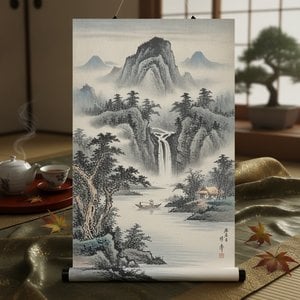
Serenity on Canvas: A Guide to the Timeless Beauty of Japanese Landscape Painting
Discover the serene beauty of Japanese landscape painting. From Hokusai's iconic woodblock prints to meditative sumi-e ink washes, explore a visual journey through the 'floating world' and learn how to bring this timeless Zen aesthetic into your modern home decor.

Ephemeral Expressions: Exploring the Nuances of Ink on Paper Through History & Contemporary Art
Explore the captivating world of ink wash painting – from its ancient origins to contemporary masters. Discover techniques, symbolism & conservation insights with ArtsDot.com.