


 미리보기
미리보기
 공유하기
공유하기 공유하기
공유하기
 상세 정보
상세 정보 가이드 보기

 다운로드
다운로드
 유사 작품
유사 작품 X-레이
X-레이 슬라이드 쇼
 통계 정보
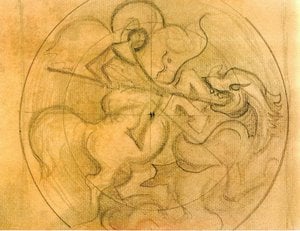
통계 정보Untitled (841)
 더 보기
더 보기
지클레 / 아트 프린트
빠른 제작과 다양한 마감 옵션을 제공하는 박물관 품질의 지클레이 또는 캔버스 프린트. ( 손으로 그린 그림 구매 디지털 이미지로 전환)




































작품의 원본 비율을 유지하는 미리 설정된 크기 중에서 선택하세요.

특정 프레임이나 공간에 맞춰 직접 치수를 입력하실 수 있습니다. 선택하신 사이즈가 원본 이미지의 비율과 일치하지 않을 경우, 작품을 크롭(자르기)하거나 이미지를 대칭 또는 단색 채우기로 확장하여 제작합니다. 제작 시작 전, 최종 확인을 위해 디지털 목업이 전송됩니다.
화면상의 미리보기는 실제 크롭이나 확장 상태를 반영하지 않으므로, 최종 구도는 오직 목업을 통해서만 정확하게 확인하실 수 있습니다.
맞춤 사이즈 제작도 가능하지만, 원본 비율을 유지하기 위해서는 사전 정의된 목록에서 치수를 선택하시는 것을 권장합니다.


 유리 옵션은 110cm 미만 크기에서만 선택 가능합니다.

Untitled (841)
지클레 / 아트 프린트
복제본 크기
-


최종 결제 금액
$ 62
유사한 작품들


작가 약력
Jean Bellegambe: The Maestro of Flemish Color
Jean Bellegambe (ca. 1470 – ca. june 1535–march 1536) stands as a pivotal figure in the artistic landscape of fifteenth and sixteenth-century Flanders, renowned primarily for his luminous religious paintings—particularly triptychs and polyptychs—that now grace institutions across Europe, including Douai Cathedral, Arras Museum, Aix Cathedral, Lille Musée Beaux Arts, Saint Petersburg Hermitage Museum, and Chicago Art Institute. He earned the moniker “master of colours” due to his unparalleled ability to achieve breathtaking transparency and harmonic interplay within his palettes, a stylistic hallmark that distinguishes him from many contemporaries. While biographical details remain scarce—his precise training is unknown—evidence suggests he emerged from Douai, France, as the son of Georges Bellegambe, a cabinetmaker and musician residing in rue Haute-des ferronniers (later rue Fosset-Maugart).- Early Life & Training: Precise information regarding Bellegambe’s formative years is elusive. Records indicate he was registered as a master painter in 1504, hinting at an apprenticeship or self-taught mastery—a common practice during the Renaissance.
- Career Highlights: By 1528, Bellegambe possessed property on rue de la Cloris and rue du Palais, reflecting his growing prosperity and establishing him as a respected artist within Douai’s artistic milieu. His prolific output spanned decades, producing monumental altarpieces and devotional panels that captivated audiences and cemented his legacy as one of the era's foremost painters.
Bellegambe’s Distinctive Style: Color & Technique
What truly elevates Bellegambe’s oeuvre is his masterful manipulation of colour—a characteristic that distinguishes him from other Flemish artists of his time. He eschewed the muted tones favored by some, opting instead for vibrant hues and subtle gradations that conveyed depth and emotion with remarkable precision. This technique, termed “sfumato,” achieved through meticulous layering of translucent glazes, created an ethereal quality reminiscent of Leonardo da Vinci’s work—a testament to Bellegambe's artistic sensitivity and innovation. Examination of surviving paintings reveals a dedication to textural detail, utilizing impasto techniques to imbue surfaces with palpable physicality.- The Cellier Altarpiece: Commissioned by Jeanne de Boubais for the Cistercian convent of Flines, this multipaneled altarpiece exemplifies Bellegambe’s stylistic prowess. Featuring Saint Bernard and his family gathered around Mary's throne, it showcases a masterful blend of realism and symbolic representation—a hallmark of Flemish devotional art.
- Notable Polyptychs: Several polyptychs attributed to Bellegambe bear witness to his artistic ambition and technical skill, demonstrating his ability to execute large-scale commissions with unwavering artistry.
Influences & Artistic Legacy
Bellegambe’s artistic vision was undoubtedly shaped by the prevailing currents of Renaissance art—particularly the influence of Italian masters like Piero della Francesca and Andrea Mantegna—whose compositional principles and use of perspective informed his approach to painting. However, unlike many artists of his era who slavishly imitated Italian models, Bellegambe developed a distinctly Flemish style characterized by psychological depth and expressive nuance. His works continue to inspire admiration for their luminous colour palettes and profound spiritual resonance.- The Last Judgment: The monumental *Last Judgment* at Saint Petersburg’s Hermitage Museum stands as a powerful testament to Bellegambe's artistic ambition and technical mastery, showcasing his ability to convey complex theological concepts with visual eloquence.
Recognitions & Museums Housing His Artworks
Bellegambe’s enduring fame is reflected in the preservation of his masterpieces within prestigious museums worldwide: Douai Cathedral houses *The Cellier Altarpiece*, Arras Museum showcases *The Saint Anne Polyptych*, Aix Cathedral displays *The Sainte Madeleine Polyptych*, Lille Musée Beaux Arts holds *The Virgin Mary with Saints* and Chicago Art Institute proudly presents *Saint Bernard and Saint Eustache*. These artworks serve as invaluable windows into the artistic spirit of fifteenth-century Flanders, ensuring that Jean Bellegambe’s legacy continues to illuminate the history of art.
Jean Bellegambe
1470 - 1534 , France
주요 정보
- Artistic Movement Or Style: Renaissance Painting
- Artists Or Movements Influenced By This Artist: ['Flemish Renaissance']
- Artists Who Influenced This Artist:
- Hieronymus Bosch
- Dieric Bouts
- Date Of Birth: ca. 1470
- Date Of Death: ca. june 1535–march 1536
- Full Name: Jean Bellegambe
- Nationality: Flemish
- Notable Artworks:
- The Cellier Altarpiece
- Annunciation
- Blood of Christ tryptich
- Place Of Birth: Douai, France