


 프린트 구매하기
 공유하기
공유하기 공유하기
공유하기
 Details

 다운로드
다운로드
 유사 작품
유사 작품 X-Ray
X-Ray 슬라이드 쇼
Device circle, 1959






P118B $10

P118H $10

P118W $10

P438Z $10

P508JH $12

P508YH $12

P805H $10

P805Z $10

P919BZ $10

P919G $10

P919XJ $10

P959ZH $10

P968JZ $12

W106C $8

W218G $10

W218JH $8

W218Y $10

W307PJ $10

W316G $10

W316PJ $8

W316Y $10

W398PJ $8

W4111J $10

W500HY $15

W500JH $15

W692G $12

W849H $8

W940BG $15

W953PJ $8




 더 알아보기
작품의 원본 비율을 유지하는 미리 설정된 크기 중에서 선택하세요.

특정 프레임이나 공간에 맞도록 직접 크기를 입력할 수 있습니다. 선택하신 크기가 원본 이미지의 비율과 일치하지 않는 경우, 작품을 자르거나 추가적인 손으로 그린 요소를 사용하여 그림을 확장합니다. 제작 시작 전 승인을 위해 디지털 목업을 보내드립니다.
화면 미리 보기는 실제 자르기 또는 확장을 반영하지 않습니다. 최종 구성은 목업을 통해서만 정확하게 확인하실 수 있습니다.
맞춤 크기 제작도 가능하지만, 원본 비율을 유지하기 위해 사전 정의된 목록에서 크기를 선택하시는 것을 권장합니다.
주문 후 ArtsDot.com 팀에서 상세 안내를 위해 고객님께 이메일을 보내드리며, 미리보기 시안을 제공해 드립니다.


 유리 옵션은 110cm 미만 크기에서만 선택 가능합니다.

Device circle, 1959
재현 기법
복제본 크기
-


최종 결제 금액
-
작품 상세 설명
Device Circle, 1959: A Snapshot of Pop Art’s Bold Experimentation
“Device Circle,” painted by Jasper Johns in 1959, stands as a cornerstone of American Pop Art—a movement that irrevocably altered the trajectory of modern art. More than just a depiction of a clock face encased within concentric circles, this artwork embodies a profound interrogation of artistic conventions and a deliberate embrace of everyday visual language. It’s a piece that whispers secrets about the anxieties and aspirations of its time while simultaneously asserting an enduring fascination with geometric forms and symbolic representation.The Genesis of Bold Color and Geometric Precision
Johns' stylistic approach distinguishes him from the emotionally charged canvases of Abstract Expressionism, prioritizing clarity and precision over subjective feeling. The painting’s palette—primarily crimson red, sapphire blue, and stark white—is deliberately restrained yet powerfully impactful. These colors aren’t merely decorative; they contribute to a visual harmony that underscores the simplicity inherent in Pop Art's aesthetic philosophy. Furthermore, Johns meticulously renders the circles using encaustic paint—a technique combining beeswax, resin, and pigment—resulting in a surface texture that is both luminous and subtly tactile. This careful attention to detail elevates “Device Circle” beyond mere representation, transforming it into an exercise in controlled visual expression.Echoes of Abstract Expressionism and Dada’s Disruptive Spirit
Despite its apparent austerity, "Device Circle" retains connections to earlier artistic movements. Johns' formative years were steeped in the influence of Abstract Expressionists like Willem de Kooning and Jackson Pollock, who championed spontaneous gesture and emotional intensity. However, unlike his predecessors, Johns consciously rejects these expressive impulses, opting instead for a deliberate antithesis—a calculated stillness that reflects the burgeoning disillusionment following World War II. The painting also subtly nods to Dada’s rebellious spirit, evident in its appropriation of familiar objects – specifically, the clock face – as symbols of time and societal anxieties. This juxtaposition underscores Pop Art's ambition to challenge established hierarchies and provoke contemplation about the role of art within a rapidly changing cultural landscape.Decoding the Symbolism Within Geometric Forms
The concentric circles themselves are laden with symbolic significance. Circles represent wholeness, unity, and cyclical patterns—themes that resonate across various cultures and artistic traditions. However, Johns’ use of the clock face introduces an element of temporal awareness, prompting viewers to consider notions of progress, repetition, and perhaps even impending doom. The white center serves as a focal point, drawing attention to the core of the image while simultaneously creating a sense of visual balance. Taken together, these elements contribute to “Device Circle’s” enduring power—a testament to Johns' ability to distill complex ideas into deceptively simple forms.A Legacy Beyond Its Time: Relevance for Contemporary Art Appreciation
“Device Circle,” created in 1959, remains remarkably pertinent to discussions about modern art today. It exemplifies Pop Art’s pioneering exploration of vernacular imagery and its rejection of artistic elitism—a stance that continues to inspire artists grappling with questions of authenticity and cultural engagement. Its meticulous craftsmanship and understated elegance offer a compelling counterpoint to the often flamboyant excesses of later movements, reminding us that beauty can reside in restraint and that profound meaning can emerge from seemingly commonplace subjects. Reproductions of this iconic artwork provide an opportunity to experience firsthand the brilliance of Johns’ vision—a vision that continues to captivate audiences worldwide.유사한 작품들


작가 약력
자스퍼 존스: 상징으로 그려낸 삶
자스퍼 존스는 추상 표현주의의 격렬한 감정적 표현과 곧이어 등장할 팝 아트 운동 사이를 잇는 핵심적인 인물로, 미국 미술계의 지형을 재편했습니다. 1930년 조지아주 오거스타에서 태어난 그는 부모님의 이혼으로 인한 소외감 속에서 어린 시절을 보냈는데, 이는 아마도 그의 후기 작품에 나타나는 정체성과 상징성에 대한 탐구에 미묘한 영향을 미쳤을 것입니다. 사우스캐롤라이나 대학교에서의 짧은 학업 이후 1949년 뉴욕으로 이주하면서 존스는 진정으로 자신의 예술적 길을 개척하기 시작했습니다. 한국 전쟁 중 군 복무는 그를 번잡한 미술계로 돌아오기를 열망하는 세계와 동떨어진 세상에 노출시켰습니다.추상 표현주의에서 벗어나 새로운 시각 언어의 탄생
전후 미국 미술계를 지배했던 것은 즉흥적인 몸짓과 깊은 개인적 감정 표현으로 특징지워지는 추상 표현주의였습니다. 이 운동의 영향을 받았지만 존스는 순수하게 비표현적인 접근 방식을 뛰어넘어야 한다는 강렬한 욕구를 느꼈습니다. 그는 더 깊은 숙고를 위한 도구로서 인식 가능한 이미지를 통합하는 새로운 시각 언어를 모색했습니다. 이는 단순히 세상을 묘사하는 것이 아니라 우리가 상징을 어떻게 인식하고 해석하는지에 대한 질문을 던지는 것이었습니다. 마르셀 뒤샹의 급진적인 레디메이드 작품은 예술 창작에 대한 기존의 개념에 도전했고, 추상 표현주의에서 강조된 물질성은 존스의 초기 기법에 영향을 미쳤습니다. 그러나 미국 문화의 일상적인 사물과 강력한 상징—국기, 표적, 지도, 숫자—이 그의 예술 어휘의 핵심을 이루었습니다. 그는 표현을 피하는 데 관심이 없었지만 그것을 해체하고 의미를 덧씌워 본질적인 모호함을 드러내고 싶었습니다.상징의 언어: 국기, 표적 그리고 그 이상
존스의 돌파구는 1950년대 중반에 찾아왔으며, 즉시 미술계에서 중요한 인물로 자리매김했습니다. 특히 *국기* (1954–55)와 같은 국기에 대한 그의 그림은 애국적인 선언이 아니라 표현의 본질 자체에 대한 조사였습니다. 왁스와 콜라주 기법을 사용하여 혼합된 반추상적 스타일로 그려진 이 국기는 단순한 이미지가 아니라 깊은 상징적 무게를 지닌 질감이 있는 표면이었습니다. 1958년에 시작된 표적 시리즈는 시각과 의미에 대한 질문을 단순한 표적 이미지의 겉보기에는 간단한 것을 통해 더욱 탐구했습니다. *지도* (1961)는 지리, 정체성 및 국가적 표현의 복잡성에 대한 주제를 다루면서 조각되고 계층화된 미국 지도를 보여주었습니다. *가짜 시작* (1959)과 같은 작품은 언어와 시각 코드에 대한 실험을 통해 관객이 그 밑바탕 의미를 해독하도록 도전하는 복잡한 구성을 만들었습니다. 심지어 단순한 단색 캔버스인 *백 플래그* (1955)조차 부재, 항복 및 보는 행위에 대한 깊은 질문을 불러일으켰습니다.팝 아트의 길을 열고 현대 미술에 미치는 지속적인 영향
자스퍼 존스의 영향력은 현대 미술의 흐름에서 부정할 수 없습니다. 그는 추상 표현주의에서 팝 아트로의 전환에서 중요한 역할을 했으며, 기존의 미적 규범에 도전하고 예술적 탐구의 새로운 길을 열었습니다. 인식 가능한 이미지를 포용함으로써 그는 앤디 워홀과 로이 리히텐슈타인과 같은 예술가들이 대중 문화와 고급 미술 사이의 경계를 더욱 모호하게 만들 수 있는 길을 열었습니다. 그의 로버트 라우센버그와의 긴밀한 협력 또한 실험 정신을 고취하고 예술적 실천의 경계를 넓혔습니다. 존스의 작품은 오늘날에도 계속해서 울려 퍼지며, 세대를 이어 예술가들에게 가정에 의문을 제기하고, 관습에 도전하며, 빠르게 변화하는 세상에서 무엇이 예술가가 되기에 적합한지에 대한 힘을 탐구하도록 영감을 불어넣고 있습니다.인정과 지속적인 영향력
자스퍼 존스는 그의 빛나는 경력을 통해 수많은 찬사를 받았으며, 1988년 베네치아 비엔날레에서 황금 사자상을 수상하고, 1990년에 국립 예술 금메달을 수상했으며, 2011년에 대통령 자유의 메달을 받았습니다. 그의 작품은 전 세계 주요 미술관 컬렉션에 소장되어 있으며, 현대 미술의 거장이 된 그의 지위를 확고히 했습니다. 회화 외에도 존스의 기여는 조각과 판화로 확장되어 그의 다재다능함과 예술적 혁신에 대한 변함없는 헌신을 보여줍니다. 그의 지속적인 유산은 그가 창조한 상징적인 이미지뿐만 아니라 표현, 상징성 및 빠르게 변화하는 세상에서 예술가가 되기에 적합한 것의 본질에 대해 제기한 깊은 질문에 있습니다.
재스퍼 존스
1930 - , 미국
주요 정보
- 국적: 미국인
- 영향을 받은 예술가/운동:
- 앤디 워홀
- 로이 리히텐슈타인
- 영향을 준 예술가: ['마르셀 뒤샹']
- 예술 운동 또는 스타일: 팝 아트, 추상 표현주의
- 전체 이름: 재스퍼 존스
- 주요 작품:
- 깃발
- 타겟
- 지도
- 화이트 플래그
- 출생일: 1930년 5월 15일
- 출생지 (도시 및 국가): 오거스타, 미국
관련 기사 더 보기
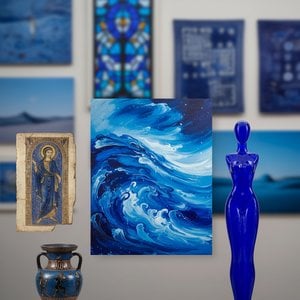
The Allure of Azure: Exploring the Symbolic & Aesthetic Depths of Blue in Art History
Explore the rich history of blue in art! Discover its symbolism, from ancient pigments to modern masterpieces by Kandinsky & Seurat. Uncover the psychological impact and cultural meanings behind this captivating hue.


Azure Visions: Exploring Representations of the Blue Dress in Western Art History
Explore the rich history of the blue dress in Western art! Discover its symbolism, from Renaissance masterpieces to modern interpretations by artists like Martin & Schiele. Uncover cultural meanings and artistic techniques.

Challenging Conventions: Pop Art's Origins, Evolution & Enduring Legacy
Explore the fascinating history of Pop Art, from its rebellious origins to its enduring influence on contemporary artists. Discover key figures like Warhol & Lichtenstein and learn about collecting this iconic movement.

Jim Dine: A Poetic of Everyday Objects – Exploring Autobiographical Narratives & the Evolution of a Pop Art Icon
Explore the captivating world of Jim Dine – Pop Art pioneer & master of autobiographical expression. Discover his iconic tools, robes, and hearts. Expert insights for art collectors.

디지털 시대의 재맥락화와 소비주의: 차세대 팝 아트의 부상
디지털 시대의 변화를 반영한 차세대 팝 아트의 부상과 투자 전략을 심층 분석합니다. 주요 작가, 작품 특징, 컬렉터를 위한 인사이트까지 ArtsDot.com에서 확인하세요.



