

 미리보기
미리보기
 공유하기
공유하기 공유하기
공유하기
 상세 정보
상세 정보 가이드 보기

 다운로드
다운로드
 유사 작품 더 보기
 X-레이
X-레이 슬라이드 쇼 보기
 질의응답
질의응답 통계 정보
통계 정보Pol

- 55.0 x 76.0 cm


 더 보기
더 보기
웹 미리보기 화면을 훨씬 뛰어넘는 인쇄용 파일을 만나보세요. 저희가 판매하는 모든 디지털 이미지는 스톡 데이터베이스 내의 고해상도 마스터 파일(일반적으로 가로 5,000~15,000픽셀)을 기반으로 합니다. 따라서 대형 인쇄나 정밀한 크롭 작업 시에도 세밀한 디테일을 자신 있게 구현할 수 있습니다.
저희 스튜디오를 거치는 모든 파일은 정교한 손길을 거칩니다. 디지털 전문가가 원작과 대조하여 색상을 점검하고 필요 시 보정하며, 전문 리터칭 도구를 사용하여 선명도와 디테일을 높입니다. 이 과정에서 작가의 붓 터치와 화풍을 충실히 유지하는 것을 원칙으로 합니다. 그 결과, 단순한 스캔본에 필터를 입힌 듯한 느낌이 아닌, 마치 실제 회화 작품을 보는 듯한 이미지를 구현해냅니다.
최종 완료 전 확인 단계가 있습니다. 전문가가 검토하실 수 있도록 72시간 이내에 이미지를 이메일로 보내드립니다. 결과물이 만족스럽지 않으신가요? 수정이나 보완을 요청하시거나, 품질이 기대에 미치지 못할 경우 환불을 요청하실 수 있습니다.
출판사, 디자인 스튜디오, 갤러리 및 인쇄소가 신뢰하는 바로 그 품질입니다.
디지털 이미지
개인 소장 및 전시, 인쇄, 창작 프로젝트를 위한 고해상도 파일을 다운로드하세요. ( 프린트 판매로 전환 수작업 채색 복제본 주문하기)
모든 디지털 이미지 주문 시 포함되는 혜택
전문적인 디지털 이미지 전송 보장
ArtsDot.com를 선택하시면 단순히 이미지를 받는 것을 넘어, 정밀한 보정 과정을 거쳐 완성된 전문적인 디지털 예술 작품을 만나보실 수 있습니다. 모든 주문에는 만족 보장 서비스가 포함되어 있으며, 다음과 같은 사항들이 자동으로 제공됩니다:

빠른 이메일 전송
주문 후 72시간 이내에 고해상도 디지털 이미지 파일이 이메일로 발송되며, 즉시 사용하실 수 있습니다.

AI 기술로 최적화된 디지털 파일
귀하의 작품은 첨단 AI 기술과 정교한 수동 편집 과정을 거쳐 전문적으로 최적화되며, 이를 통해 디테일과 선명도, 색상의 정확도를 극대화합니다.

평생 무료 재전송 서비스
파일을 실수로 삭제하거나 분실하셨나요? 걱정 마세요. 언제든 무료로 다시 보내드립니다.

추가 수입 비용 없음 - 언제나
관세, 부가세, 배송비 부담 없이 작품을 즉시 소장하세요 - 디지털 다운로드는 언제나 면세 혜택이 적용됩니다.

정확한 색상 보장
전문적인 도구와 색상 관리 시스템을 통해 디지털 이미지가 원본의 색상을 최대한 정확하게 구현하도록 보장합니다.

100일 만족 보장제
구매하신 디지털 이미지에 만족하지 못하실 경우, 100일 이내에 별도의 조건 없이 수정 또는 100% 환불을 진행해 드립니다.

100% 환불 보장
만족스럽지 않으신가요? 디지털 파일을 받으신 후 100일 이내라면 어떤 이유로든 조건 없이 전액 환불해 드립니다.

대량 주문 할인
이미지 3매 구매 시 10% 할인 - 5매 구매 시 15% 할인 - 10매 이상 구매 시 20% 할인. 크리에이티브 프로젝트, 갤러리, 에이전시에 매우 유용합니다.
A Dance of Form and Fluidity
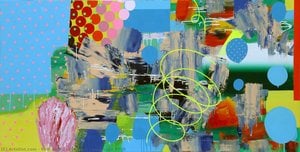
In the mesmerizing realm of Janaina Tschäpe’s "Pol," viewers are invited into a dreamscape where the boundaries between the organic and the abstract dissolve into a rhythmic dance of color. Created in 2012, this piece serves as a profound exploration of movement and metamorphosis, characteristic of Tschäpe’s unique ability to blend aquatic imagery with botanical whispers. The composition is anchored by a striking blue and yellow color scheme, a duality that evokes both the deep, tranquil mysteries of an underwater world and the vibrant, sun-drenched energy of life in bloom. At its heart lies a central, commanding circle, surrounded by a constellation of smaller celestial or cellular forms that seem to drift across the canvas like organisms suspended in a liquid medium.
The painting’s visual language is one of delightful surprise and whimsical complexity. Amidst the swirling geometric shapes and circular motifs, the unexpected presence of two bananas—one nestled near the top left and another drifting toward the bottom right—injects a playful, surrealist element into the work. These organic fragments act as anchors of reality within an otherwise ethereal abstraction, challenging the viewer to find meaning in the intersection of the mundane and the magnificent. This juxtaposition is a hallmark of Tschä-pe’s practice, where she utilizes gestural movement to replicate the mutation and flux found in nature's most hidden corners.
Technique and the Essence of Nature
Tschäpe’s technique in "Pol" reflects her deep-seated fascination with the relationship between the human body and the material world. The application of color suggests a liquid appearance, where edges are not rigid but rather fluid, mimicking the contours of minerals, plants, or even the undulating movement of sea creatures. This sense of "shaping fluid" allows the artwork to breathe, creating an atmosphere that feels less like a static image and more like a captured moment of biological transformation. The interplay between the bold yellows and the deep, immersive blues creates a visual tension that is both soothing and stimulating, making it a centerpiece capable of commanding attention in any sophisticated interior.
For the discerning collector or interior designer, this piece offers much more than mere decoration; it provides an emotional gateway. The artwork resonates with themes of harmony, growth, and the cyclical nature of life. Whether placed in a contemporary gallery setting or used to add a layer of intellectual depth to a residential living space, "Pol" acts as a window into a world of endless possibility. It is a work that rewards prolonged contemplation, inviting one to lose themselves in its circular rhythms and discover the quiet beauty of the abstract metamorphosis occurring right before their eyes.
유사한 작품들




작가 소개
A Universe of Metamorphosis
Janaina Tschäpe exists within a realm where the boundaries between the organic and the abstract dissolve into a rhythmic dance of color and form. Born in Munich, Germany, and raised in São Paulo, Brazil, her identity as a Brazilian/German artist informs a practice that is profoundly interdisciplinary. Her work does not merely sit upon a surface; it breathes, shifting between representation, fantasy, and abstraction to create what can be described as a holistic cosmology. Through painting, drawing, photography, video, and sculpture, Tschäpe invites viewers into dreamscapes where the distinction between the human body, botanical whispers, and aquatic mysteries becomes beautifully blurred.
Her artistic journey is marked by a deep fascination with the concept of metamorphosis. In her early photographic and video works, such as One Hundred Little Deaths, she explored themes of mortality and transformation, often staging herself or models as nebulous, mysterious beings. These creatures, adorned with appendages made from fabric, water-filled latex, or inflatables, inhabit landscapes that serve as narrative sources where the whimsical and the actual coexist. This exploration of the body—often reflecting a feminist resistance to the policing of the female form—allows her to excavate the nature of landscape and the complex interactions between humanity and the natural world.
Technique and the Fluidity of Nature
The visual language of Tschäpe is one of delightful surprise and whimsical complexity. In her paintings, particularly her vibrant watercolors, she captures the transformative properties of water through a meticulous application of media including watercolor, casein, colored pencil, and pastel. Her canvases often possess a liquid appearance, where edges are not rigid but fluid, mimicking the undulating movement of sea creatures or the contours of minerals. This sense of shaping fluid allows her work to evoke both the deep, tranquil mysteries of an underwater world and the sun-drenched energy of life in bloom.
There is a dynamic tension inherent in her compositions: a struggle between loose, luscious forms that pervade the canvas and precise systems of markings that overlay and unify the piece. This technique creates a sensation of movement, where biomorphic shapes function as emotive signifiers of her interior thoughts. Whether she is utilizing saturated colors to suggest growth or incorporating unexpected elements—like the surrealist presence of fruit within an abstract field—her work remains anchored in the exploration of how life transitions and mutates.
Legacy and Global Presence
Since moving to New York in 1997, Tschäpe has established a significant presence in the international art world. Her multidisciplinary oeuvre is not merely a collection of individual pieces but a gesamtkunstwerk—a total work of art—where each creation plays a supporting role in a grand evolutionary opera. Her ability to collapse scale, making the grand cosmos feel as intimate as the infinitesimal cellular level, has earned her recognition in some of the most prestigious institutions globally.
Her profound contributions to contemporary art are reflected in the permanent collections of numerous world-renowned museums, including:
- Centre Pompidou, Paris, France
- Solomon R. Guggenheim Museum, New York
- National Gallery of Art, Washington, D.C.
- Museo Nacional Centro de Arte Reina Sofía, Madrid, Spain
- Harvard Art Museum, Cambridge, Massachusetts
- Moderna Museet, Stockholm, Sweden
- Thyssen-Bornemisza Art Contemporary, Vienna, Austria

야나이나 츠셰페
1973 - , 독일