


 실제 크기로 보기
 보내기
보내기 공유하기
공유하기
 상세 보기
상세 보기 가이드 보기

 이미지 다운로드
 유사 작품 더 보기
 X-레이
X-레이 슬라이드 쇼 보기
 통계 정보
통계 정보음악 연주회
 캔버스에 아크릴 물감
- 월아트
- Baroque Art
 1629
1629 40.0 x 69.0 cm
 Academy of Fine Arts Vienna
 상세 보기
상세 보기
지클레 / 아트 프린트
빠른 제작과 다양한 마감 옵션을 선택할 수 있는 박물관 수준의 지클레이 및 캔버스 프린트. ( 수작업 채색 복제본 주문하기 디지털 이미지 판매 채널로 전환)




P118B ₩10

P118H ₩10

P118W ₩10

P438Z ₩10

P508JH ₩12

P508YH ₩12

P805H ₩10

P805Z ₩10

P919BZ ₩10

P919G ₩10

P919XJ ₩10

P959ZH ₩10

P968JZ ₩12

W106C ₩8

W218G ₩10

W218JH ₩8

W218Y ₩10

W307PJ ₩10

W316G ₩10

W316PJ ₩8

W316Y ₩10

W398PJ ₩8

W4111J ₩10

W500HY ₩15

W500JH ₩15

W692G ₩12

W849H ₩8

W940BG ₩15

W953PJ ₩8




작품의 원본 비율을 그대로 유지하는 프리셋 사이즈 중에서 선택해 보세요.

액자나 벽면 크기에 맞춰 필요한 가로와 세로 길이를 입력해 주세요. 프린트는 원본 이미지보다 크게 제작할 수 없으며 오직 자르는 것만 가능하므로, 비율이 다른 사이즈를 선택할 경우 이미지의 일부가 잘려 나갈 수 있습니다. 인쇄 작업에 들어가기 전, 최종 확인을 위해 디지털 목업을 보내드립니다. 이 페이지에 표시된 이미지는 실제 잘리는 영역을 나타내지 않으며, 오직 목업을 통해서만 정확한 확인이 가능합니다.


 유리 옵션은 110cm 미만 크기에서만 선택 가능합니다.

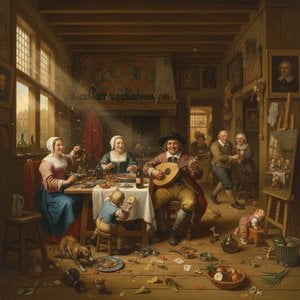
음악 연주회
지클레 / 아트 프린트
복제본 규격
-


총 결제 금액
₩ 84165
Jan van Bijlert의 음악 연주회
프라하 카라바조주의 영향 아래 네덜란드 황금 시대 예술가로 빛나는 요한 반 비엘트의 작품 “음악 연주회”는 바로크 미술의 정수를 담고 있는 걸작입니다. 1629년에 제작된 이 오일 페인팅은 크기 40 x 69 cm이며 빈 베네치아 아카데미에 소장되어 있습니다. 이 그림은 음악 연주하는 사람들의 활기찬 장면을 생생하게 표현했습니다. 오렌지색 드레스를 입고 흰 목깃 칼라를 착용한 여성은 테이블에 앉아 리우트를 연주하며 이 그룹의 중심 역할을 담당하고 있습니다. 주변 인물들도 음악이나 대화에 몰두하며 전체적으로 따뜻함과 우정적인 분위기를 자아냅니다. 그림 속 색채 사용과 부드러운 조명은 바로크 미술 특유의 서정적인 느낌을 전달합니다. 작품 구성은 균형 잡혀 있으며 인물들이 천사 위에 고르게 배치되어 있습니다. 요한 반 비엘트의 다른 작품에 대한 자세한 정보는 /art/list/?Filter=8Y3TLL-Jan-Van-Bijlert-A-Shepherdess 에서 확인하실 수 있습니다. 다른 주목할 만한 바로크 시대 예술가인 레메브랑트 반 라이프와 야코브 요르덴 역시 그들의 시대 문화적 및 사회적 규범을 반영하는 작품들을 제작했습니다. 레메브랑트의 “앉은 여인 초상화”는 예술가의 뛰어난 기량을 보여주는 명작으로 주제와 감정을 완벽하게 포착했습니다. 자세한 정보는 /art/list/?Filter=8YDPKQ-Rembrandt-Van-Rijn-Portrait-of-a-Seated-Woman 에서 확인하실 수 있습니다. 또한 서양 미술에서 밤 풍경을 그린 작품들은 바로크 미술의 흔한 주제입니다. 위키백과의 자료에 따르면 노트르네는 꿈결 같은 고요함과 사색적인 분위기를 담은 그림으로 표현됩니다. 자세한 정보는 /ko/art/show/art-8y3tln-ko/ 를 방문하여 요한 반 비엘트의 작품 “음악 연주회”를 감상해 보세요. 이 그림은 카라바조 스타일의 강렬한 빛과 색채 사용으로 인해 바로크 미술의 특징을 잘 보여줍니다. 특히 여성 리우트 연주자의 중심 위치와 주변 인물들의 활기찬 모습은 음악 연주하는 사람들의 사회적 관계를 효과적으로 표현합니다. 테이블 위에 놓인 책이나 악보는 음악 연주회 분위기를 더하며 따뜻하고 편안한 느낌을 선사합니다. 배경 벽과 창문은 그림 전체에 드라마틱한 대비를 이루며 작품의 감동적인 효과를 높입니다. 요한 반 비엘트는 카라바조주의 영향을 받아 리우트를 비롯한 다양한 악기 연주 장면을 표현하며 네덜란드 황금 시대 예술가들의 뛰어난 기량을 보여줍니다. 이 그림은 음악과 인간 관계에 대한 깊은 성찰을 담고 있으며 바로크 미술의 아름다움을 느낄 수 있는 작품입니다.질의응답
"음악 연주회"의 제작 기법은 무엇인가요?
Jan van Bijlert의 "음악 연주회"의 재료는 캔버스에 아크릴 물감입니다. 복제화는 이 기법의 질감을 그대로 구현하는 것을 목표로 합니다.
Jan van Bijlert의 "음악 연주회"에서 주를 이루는 색상은 무엇인가요?
Jan van Bijlert의 "음악 연주회"은(는) 대지의 색조 색조의 팔레트를 사용하며, 에스프레소 (#3e241e)이(가) 주된 색상을 이룹니다.
구매하기 전에 Jan van Bijlert의 "음악 연주회"을(를) 제 벽에 미리 배치해 볼 수 있나요?
"음악 연주회"은(는) 증강 현실 미리보기를 제공합니다. 작품의 AR 미리보기 페이지를 통해 호환 가능한 기기에서 여러분의 공간에 배치된 작품을 확인해 보세요.
관련 작품들


작가 소개
Jan van Bijlert: A Utrecht Caravaggist’s Dramatic Vision
Jan Hermansz van Bijlert, born in Utrecht around 1598 and passing away in the same city in 1671, stands as a pivotal figure within the vibrant artistic landscape of the Dutch Golden Age. Initially influenced by the intense realism and dramatic lighting of Caravaggio, van Bijlert evolved into one of the most prominent practitioners of what became known as Utrecht Caravaggism – a distinctly regional style that combined Italian Baroque principles with a uniquely Dutch sensibility. His prolific output, numbering approximately 200 paintings, offers a compelling glimpse into a period of artistic experimentation and the burgeoning influence of Italian masters on Northern European art. Van Bijlert’s early life remains somewhat shrouded in mystery, though it's believed he received some initial training from his father, Herman Beernts van Bijlert, a skilled stained-glass worker. This foundational experience likely instilled within him an appreciation for detail and craftsmanship – qualities that would later manifest powerfully in his paintings. He subsequently studied under Abraham Bloemaert, a respected Utrecht painter known for his meticulous depictions of mythological scenes and portraits. Crucially, van Bijlert’s artistic journey extended beyond the borders of the Netherlands, with significant periods spent in France and Italy. These experiences proved transformative, exposing him to the revolutionary techniques and dramatic intensity championed by Caravaggio, whose influence would irrevocably shape his style.The Bentvueghel Circle and Early Roman Years
Van Bijlert’s arrival in Rome in 1621 marked a significant turning point. He quickly became integrated into the *Bentvueghels*, a notoriously convivial circle of artists – Dutch, Flemish, and Italian – who established a shared identity through adopted nicknames. Van Bijlert chose “Aeneas,” a reference to the Roman hero known for his strength and resilience. The Bentvueghels were not merely artistic collaborators; they were also avid socialites, exchanging witty verses, satirical prints, and, of course, paintings. This environment fostered an atmosphere of intense exchange and experimentation, allowing artists to push boundaries and develop their individual styles. During this period in Rome, van Bijlert honed his skills, mastering Caravaggio’s signature techniques: the stark contrast between light and shadow (chiaroscuro), the dramatic cropping of compositions to create a sense of immediacy, and an unwavering commitment to realistic representation. His early works from this era are characterized by these elements, depicting scenes of intense emotion and often featuring figures caught in moments of action or contemplation.A Shift Towards Classicism and Genre Scenes
Around 1630, van Bijlert’s artistic trajectory shifted noticeably. While retaining the core principles of Caravaggism – particularly the dramatic use of light – he began to incorporate elements of classicizing style, possibly influenced by fellow Utrecht artist Cornelis van Poelenburch. This evolution manifested in a lightening of his palette and a move towards more elevated subject matter, including religious scenes and allegorical compositions. Interestingly, this period also saw the emergence of van Bijlert’s fascination with genre scenes. He produced a series of paintings depicting intimate moments from everyday life – brothels, musical gatherings, and tavern scenes – often populated by small figures rendered with remarkable detail and psychological insight. These works, reminiscent of those created by Jacob Duck, offered a glimpse into the social fabric of Utrecht society and demonstrated van Bijlert’s ability to capture human emotion and interaction with subtle grace.Guild Life, Patronage, and Legacy
Van Bijlert's life was deeply intertwined with the civic and religious institutions of Utrecht. He joined the schutterij (a citizen militia) in 1625 and became a member of the Utrecht Guild of St. Luke in 1630, serving as deacon from 1632 to 1637 and later appointed regent of the Sint-Jobsgasthuis in 1634. His involvement extended beyond artistic pursuits; he played a role in establishing the “Schilders-College” (painter’s school) in 1639, serving as its regent and mentoring a new generation of artists, including Bartram de Fouchier and Ludolf Leendertsz de Jongh. This dedication to both art and community underscores his position as a respected figure within Utrecht's cultural elite. Jan van Bijlert’s legacy is firmly rooted in the Utrecht Caravaggisti movement. His paintings, characterized by their dramatic lighting, realistic depictions of human figures, and exploration of emotional intensity, continue to captivate viewers today. His work stands as a testament to the dynamic exchange of artistic ideas that flourished during the Dutch Golden Age – a period when Italian Baroque principles were embraced, adapted, and ultimately transformed into a uniquely Northern European style. His approximately 200 paintings provide a rich and detailed record of this fascinating artistic evolution.
Jan van Bijlert
1598 - 1671 , Netherlands
작가 정보 요약
- Full Name: Jan Hermansz van Bijlert
- Nationality: Dutch
- Date Of Birth: 1598
- Date Of Death: 1671
- Place Of Birth: Utrecht, Netherlands
- Notable Artworks:
- Virgin and Child
- Portrait of a Woman
- Artistic Movement Or Style: Utrecht Caravaggisti
- Artists Who Influenced This Artist: ['Caravaggio']
- Artists Or Movements Influenced By This Artist: ['Utrecht Caravaggisti']
관련 기사

렘브란트 반 레인 명작 25선: 빛과 그림자의 거장, 예술의 정수를 만나다
렘브란트 반 레인 명작 25선을 만나보세요. 빛과 그림자의 거장이 그린 역사화, 초상화 속 예술의 정수를 감상하고, 네덜란드 황금시대 바로크 미술의 깊이를 느껴보세요. ArtsDot.com에서 고품질 복제화를 컬렉션하세요.
Jan Steen: A Master of Dutch Genre Painting & the Golden Age
Explore the life & art of Jan Steen, a leading Dutch Golden Age painter renowned for his humorous genre scenes & insightful social commentary. Discover his techniques, legacy, and collecting tips.

Golden Age Reflections: Dutch Baroque Painting & Cultural Innovation
Explore the Dutch Golden Age of painting! Discover key artists like Vermeer & ter Borch, their innovative techniques, and the rich cultural context behind these Baroque masterpieces. Learn about collecting & appreciating this iconic art period.

네덜란드 황금 시대 예술의 정수를 담은 10대 걸작 탐구
렘브란트, 베르메르의 걸작부터 할스의 인물화까지! 네덜란드 황금시대 미술의 10대 명품을 만나보세요. 예술적 깊이와 아름다움을 담은 작품들을 ArtsDot에서 감상하고, 고품질 아트 프린트로 당신의 공간에 특별함을 더하세요. 지금 바로 ArtsDot.com에서 모든 걸작을 발견하세요!

Dutch Baroque Masters: 10 Paintings That Shaped an Era | ArtsDot
Journey through the Golden Age with our guide to the Top 10 Dutch Baroque masterpieces! Explore iconic paintings by Rembrandt, Vermeer & Frans Hals. Find museum-quality art reproductions and elevate your home decor at ArtsDot.com.
