


 프린트 구매하기
 공유하기
공유하기 공유하기
공유하기
 Details

 다운로드
다운로드
 유사 작품
유사 작품 X-Ray
X-Ray 슬라이드 쇼
Vue de Nimegue






































 더 알아보기
작품의 원본 비율을 유지하는 미리 설정된 크기 중에서 선택하세요.

특정 프레임이나 공간에 맞도록 직접 크기를 입력할 수 있습니다. 선택하신 크기가 원본 이미지의 비율과 일치하지 않는 경우, 작품을 자르거나 추가적인 손으로 그린 요소를 사용하여 그림을 확장합니다. 제작 시작 전 승인을 위해 디지털 목업을 보내드립니다.
화면 미리 보기는 실제 자르기 또는 확장을 반영하지 않습니다. 최종 구성은 목업을 통해서만 정확하게 확인하실 수 있습니다.
맞춤 크기 제작도 가능하지만, 원본 비율을 유지하기 위해 사전 정의된 목록에서 크기를 선택하시는 것을 권장합니다.
주문 후 ArtsDot.com 팀에서 상세 안내를 위해 고객님께 이메일을 보내드리며, 미리보기 시안을 제공해 드립니다.


 유리 옵션은 110cm 미만 크기에서만 선택 가능합니다.

Vue de Nimegue
재현 기법
복제본 크기
-


최종 결제 금액
-
작품 상세 설명
A Tranquil Reflection of Nijmegen: Exploring Jan van Goyen’s Landscape Vision
The Dutch Golden Age witnessed an unparalleled flourishing of artistic creativity, and among its luminaries stood Jan Josephszoon van Goyen (1596-1656), a painter whose dedication to capturing the serene beauty of the Dutch countryside cemented his place in art history. This essay delves into the essence of Van Goyen’s oeuvre, examining his distinctive style, masterful technique, and enduring legacy as an artist who profoundly influenced subsequent generations.Early Influences and Artistic Training
Van Goyen's artistic journey began with formative apprenticeships under Esaias van de Velde in Haarlem, where he honed his skills in capturing the subtleties of light and color—skills that would later define his groundbreaking approach to landscape painting. Velde’s influence instilled a commitment to realism combined with an acute awareness of atmospheric conditions, shaping Van Goyen's artistic sensibilities from the outset.The Distinctive Style: Simplicity and Atmospheric Depth
What immediately distinguishes Van Goyen’s paintings is their remarkable simplicity—a deliberate rejection of the opulent ornamentation favored by many contemporaries. He eschewed elaborate compositions and vibrant hues, opting instead for a restrained palette dominated by muted grays, browns, and greens. This austerity wasn't merely stylistic; it served as a conduit for conveying profound emotional depth. Van Goyen’s genius lay in his ability to distill the essence of a landscape into its fundamental tonal qualities, creating images that resonate with tranquility and contemplation.Technique: Thin Layers and Rapid Execution
Van Goyen’s technique was characterized by meticulous attention to detail achieved through rapid execution—a hallmark of the Dutch Golden Age tradition. He employed thin layers of oil paint applied in quick succession, allowing for subtle gradations in tone and capturing fleeting atmospheric effects with remarkable precision. This method ensured that every brushstroke conveyed a sense of immediacy and authenticity, mirroring the dynamism of the natural world he sought to depict.Historical Context: Reflecting Dutch Identity
Painted during the height of Dutch maritime power and cultural prestige, Van Goyen’s landscapes served as more than just visual representations; they embodied the spirit of the era—a celebration of Dutch identity rooted in its connection to the land. The depiction of Nijmegen, a strategically important city situated along the Waal River, reflects this preoccupation with topographical accuracy and reinforces the broader narrative of Dutch resilience and prosperity during the seventeenth century.Symbolism: Tranquility and Contemplation
Beyond mere visual beauty, Van Goyen’s paintings carry symbolic weight—inviting viewers to pause and contemplate the profound stillness of nature. The overcast sky, rendered with delicate brushstrokes and diffused light, symbolizes not despair but rather a contemplative acceptance of life's rhythms. Similarly, the meandering river embodies fluidity and continuity, mirroring the passage of time and encouraging introspection.Emotional Impact: A Legacy of Serenity
Ultimately, Van Goyen’s landscapes evoke an enduring emotional response—a feeling of serene contemplation that transcends stylistic conventions. His paintings capture a moment in time—a fleeting glimpse of Nijmegen bathed in soft light—that speaks to the human desire for beauty and tranquility. They stand as testament to his ability to transform observation into art, leaving behind a legacy of artistic excellence that continues to inspire artists and collectors alike.유사한 작품들


작가 약력
Jan Josephszoon van Goyen: 풍경 속에 새겨진 삶
초기 생애와 예술적 훈련
- 1596년 1월 13일 네덜란드 레이던에서 태어난 Jan Josephs_zoon van Goyen은 네덜란드 황금기 회화의 중추적인 인물로 등장했습니다.
- 그는 처음에는 레이던에서 도제로 수행하며 기초를 다졌고, 이후 하를렘에서 Esaias van de Velde의 지도 아래 학업을 이어갔습니다. 이러한 초기의 예술적 훈련은 그의 예술적 발전에 있어 결정적인 토대가 되었습니다.
예술적 양식과 발전
- 반 고이엔의 화풍은 단순함, 미묘한 색조의 변화, 그리고 회색, 갈색, 녹색을 위주로 한 절제된 팔레트 사용 덕분에 한눈에 알아볼 수 있는 독창성을 지닙니다.
- 그는 당시에 유행하던 화려하고 세밀한 풍경화에서 벗어나, 더욱 사실적이고 대기감이 느껴지는 접근 방식을 개척했습니다.
- 초기 작품에는 반 데 벨데의 영향이 남아있으나, 그는 곧 네덜란드 풍경의 본질을 포착하는 데 집중하며 자신만의 독특한 양식을 구축해 나갔습니다.
방대한 작품 활동과 주요 걸작
- 반 고이엔은 경이로울 정도로 다작을 했던 예술가로, 평생에 걸쳐 약 1,200점의 유화와 1,000점이 넘는 드로잉을 남겼습니다.
- 그의 대표작으로는 그의 토널(tonal) 풍경화의 정수를 보여주는 풍차가 있는 강 풍경과, 고요한 수변 경관을 묘듬하게 묘사한 호숫가의 어부들 등이 있습니다.
- 그는 강, 호수, 모래 언덕, 그리고 끝없이 펼쳐진 하늘을 자주 그려내며 네덜란드 전원 풍경만이 가진 고유한 정취를 화폭에 담아냈습니다.
영향력과 예술적 유산
- 반 데 벨데로부터 영향을 받았음에도 불구하고, 반 고이엔의 작품 자체는 후대 예술가들에게 매우 깊은 영감을 주었습니다.
- 그는 자신의 제자 중 한 명인 Jan Steen과 같은 화가들에게 직접적인 영향을 미쳤습니다.
- 사실주의와 대기 효과에 대한 그의 강조는 이후 등장할 풍경화가들이 나아갈 길을 마련해 주었습니다.
경제적 시련과 말년의 삶
- 예술적인 성공에도 불구하고, 반 고이엔은 평생 동안 상당한 경제적 어려움을 겪어야 했습니다.
- 그는 '튤립 광풍' 당시의 튤립 투기와 부동산 투자 등 다양한 사업에 뛰어들었으나, 종종 깊은 채무에 시달리곤 했습니다.
- 1656년 4월 27일 헤이그에서 사망할 당시, 그는 약 18,000 길더의 빚을 지고 있었던 것으로 알려져 있습니다.
역사적 의의
- 반 고이엔의 작품은 네덜란드 황금기 회화의 초석이자 풍경 예술 발전에 기여한 중대한 업적으로 평가받습니다.
- 그는 17세기 네덜란드의 번영과 땅에 대한 애착을 반영하며, 당시 네덜란드의 정신을 포착해 냈습니다.
- 그의 혁신적인 기법과 사실적인 묘사는 오늘날에도 여전히 예술가들에게 영감을 주고 관객들을 매료시키고 있습니다.

얀 판 고옌
1596 - 1656 , 네덜란드
주요 정보
- Birth Date: 1596년 1월 13일
- Birth Place: 네덜란드 레이던
- Death Date: 1656년 4월 27일
- Influenced: 얀 스테인
- Influenced By: 에사이아스 판 데 벨데
- Movement: 네덜란드 황금기 회화
- Name: 얀 요셉스존 판 호이엔
- Nationality: 네덜란드
- Notable Works:
- 풍차가 있는 강 풍경
- 호숫가의 어부들
관련 기사 더 보기

Jan Hendrik Weissenbruch: A Master of Dutch Realism & Atmospheric Light
Explore the captivating world of Jan Hendrik Weissenbruch, a master of Dutch Realism. Discover his atmospheric landscapes, influences, and legacy within the Hague School. Learn about this 19th-century artist's unique style & enduring impact.


Johan Hendrik Weissenbruch: Capturing Dutch Light & Atmosphere – A Master of Realism
Discover Johan Hendrik Weissenbruch (1824-1903), a leading Dutch Hague School painter renowned for his atmospheric watercolours & oil landscapes. Explore his beautiful depictions of the Dutch countryside and skies – a master of light & detail.
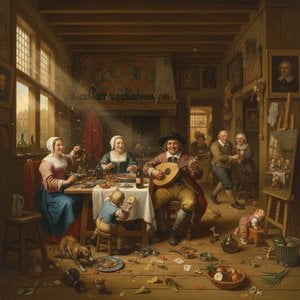
Jan Steen: A Master of Dutch Genre Painting & the Golden Age
Explore the life & art of Jan Steen, a leading Dutch Golden Age painter renowned for his humorous genre scenes & insightful social commentary. Discover his techniques, legacy, and collecting tips.

Miner Kilbourne Kellogg: A Study in American Tonalism & Atmospheric Landscape
Explore the captivating world of Miner Kilbourne Kellogg, a pivotal figure in American Tonalism. Discover his atmospheric landscapes, Orientalist influences, and legacy as an art historian & collector. Learn more at ArtsDot.

William Stanley Haseltine: Evoking Atmosphere & Light in American Tonalism
Explore the captivating landscapes of William Stanley Haseltine, a master of American Luminism & Tonalism. Discover his serene coastal scenes and Italian vistas – available as museum-quality reproductions at ArtsDot.

