

선택하신 옵션에 따른 작품 정보입니다: , .
수집품 상세 설명
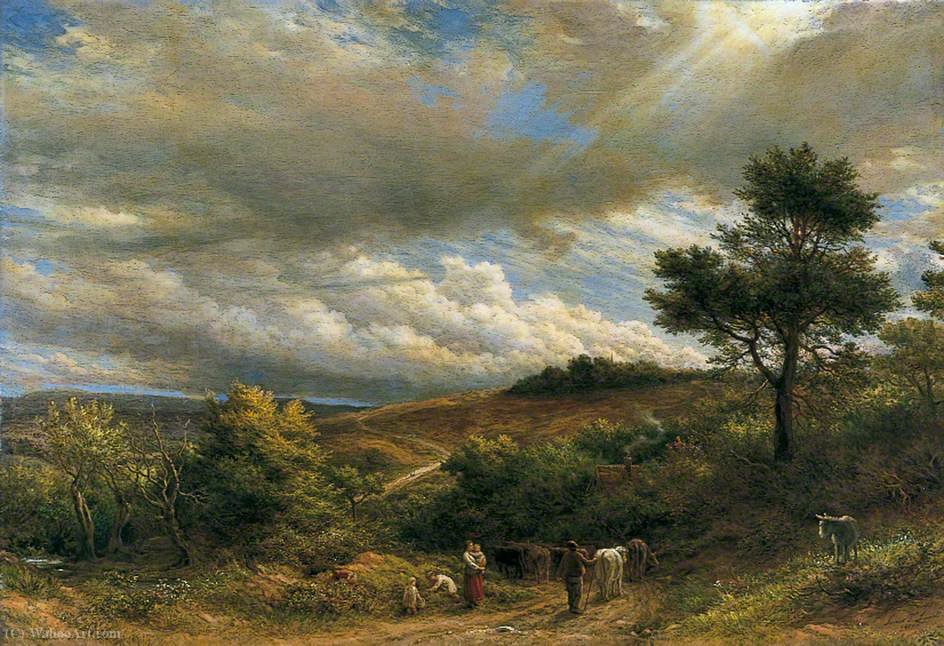
James Thomas Linnell’s "Passing Gleams" captures a romantic Welsh landscape. Oil on canvas showcases atmospheric perspective & rural life. Explore this idyllic pastoral scene.
작가 프로필
James Thomas Linnell (1820-1905) was a British artist renowned for his idyllic landscapes of Wales & England. Explore pastoral scenes, sheepfolds, & evocative light in his paintings.
 더 보기
더 보기
핸드메이드 유화 복제화
작가가 직접 캔버스에 손으로 그린 유화 작품으로, 원하는 크기와 액자로 맞춤 제작해 드립니다. ( 프린트 판매로 전환 디지털 이미지로 전환)
이 작품에 대해 더 알아보기
 미리보기
미리보기
 공유하기
공유하기 공유하기
공유하기
 상세 정보
상세 정보 가이드 보기

 다운로드
다운로드
 유사 작품 더 보기
 X-레이
X-레이 슬라이드 쇼 보기
 질의응답
질의응답 통계 정보
통계 정보단 네 단계로 완성되는 간편한 작품 주문 방법
천천히 진행하셔도 좋습니다. 답변은 언제든 변경할 수 있으며, 선택 사항에 따라 주문 카드 내의 가격이 실시간으로 반영됩니다.
1 4단계 중 1단계
원하시는 사이즈를 선택해 주세요.
이 사이즈들은 원작의 비율을 그대로 유지합니다. 그림 속 예시는 2미터 길이의 소파 위 벽면에 선택하신 작품을 배치했을 때의 모습입니다.
또는 직접 치수 입력하기
작품의 원본 비율을 그대로 유지하는 프리셋 사이즈 중에서 선택해 보세요.

액자나 벽면 크기에 맞춰 필요한 가로와 세로 길이를 입력해 주세요. 본 작품은 수작업으로 제작되므로, 요청하신 비율에 따라 작가가 그림의 가장자리를 조금 더 넓게 그리거나 일부를 조정하여 작업할 수 있습니다. 작업 시작 전, 최종 확인을 위해 디지털 목업 이미지를 보내드립니다. 이 페이지에 표시된 이미지는 실제 결과물과 다를 수 있으며, 오직 목업 이미지만이 정확한 결과물을 보여줍니다.
2 4단계 중 2단계
어떤 방식으로 준비해 드릴까요: 롤 형태로, 캔버스에 씌워서, 또는 액자에 넣어?
아래 가격은 첫 번째 단계에서 선택하신 크기를 기준으로 합니다.
캔버스 옆면 스타일 선택
프레임을 선택하세요

화이트 테두리 ₩1

블러사이드 ₩1

옆면 확장형 ₩1

P118B ₩10

P118H ₩10

P118W ₩10

P438Z ₩10

P508JH ₩12

P508YH ₩12

P805H ₩10

P805Z ₩10

P919BZ ₩10

P919G ₩10

P919XJ ₩10

P959ZH ₩10

P968JZ ₩12

W106C ₩8

W218G ₩10

W218JH ₩8

W218Y ₩10

W307PJ ₩10

W316G ₩10

W316PJ ₩8

W316Y ₩10

W398PJ ₩8

W4111J ₩10

W500HY ₩15

W500JH ₩15

W692G ₩12

W849H ₩8

W940BG ₩15

W953PJ ₩8

H24-GOLD ₩30

H24-SILVER ₩30

H36-GOLD ₩45

H36-SILVER ₩45
액자형
몰딩: . 액자 포함 전체 크기: .
3 4단계 중 3단계
그림에서 변경하고 싶은 부분이 있으신가요?
대부분의 사람들은 아니라고 답합니다. 모든 작품은 수작업으로 제작되기에, 저희 작가는 고객님의 요청에 맞춰 작품을 변경해 드릴 수도 있습니다.
주문 완료 후, ArtsDot.com 팀에서 상세 안내를 위해 고객님께 이메일을 보내드리며, 시안 미리보기를 제공해 드립니다.
4 4단계 중 4단계
몇 가지 마감 옵션
모두 선택 사항입니다. 이미 선택된 답변에 대해서는 추가 비용이 발생하지 않습니다.
작가는 누구인가요?
박물관에 있는 것과 같은 명판을 원하시나요?
동판 각인 상세 정보
This elegant plaque features the artist's name and the title of the artwork, finely engraved for a timeless presentation.
It is made from bronze with a refined, elegant finish. The text is precisely laser-engraved for a sharp and permanent result. Measuring 9x2 cm, the plaque is compact yet easy to read. It's built to be durable and scratch-resistant, offering a professional, museum-quality look. Mounting is simple thanks to the included adhesive backing.
투명 아크릴 명판 상세 정보
The plaque includes essential engraved details such as the artist's name, the title of the artwork, the date it was created, the type of media used-like oil on canvas or watercolor-a brief description of the piece, and a QR code that links to the complete artwork information.
It is crafted from clear acrylic, offering a sleek, modern appearance. The text is UV-engraved in black to ensure strong visual contrast. With a size of 10x15 cm, it ensures optimal readability. It comes equipped with two metal hooks for secure wall mounting. The plaque is designed to be weather-resistant, making it suitable for various environments, and it includes interactive features that work seamlessly with smartphone scanning.
블랙 아크릴 명판 상세 정보
This elegant plaque includes engraved information such as the artist's name, the title of the artwork, the date it was created, the type of media used (like oil on canvas or watercolor), a short description of the artwork, and a QR code for quick access to more information.
The plaque itself is made from refined black acrylic with a premium finish. The text is laser-engraved in white for high contrast and readability. Its size is 10x15 cm, designed to be easy to read. It comes with two metal hooks for professional mounting. The design is sleek and fits any interior style. It is also weather-resistant and durable, with built-in digital integration for mobile compatibility.
보호용 바니시를 선택하시겠습니까?
언제 받기를 원하시나요?
✓ 확인 및 주문하기
주문하신 그대로의 작품

Passing gleams
재현 기법
복제본 크기
-

엄선된 시니어 아티스트
더욱 세밀한 묘사와 정교함, 그리고 충분한 제작 시간
-

복제화 액자 구성
-
-
가로 또는 세로 중 어느 한 면이라도 105cm(약 41인치)를 초과하는 작품이나 복제화의 경우, 프레임은 분해된 키트 형태로 배송됩니다. 이는 안전한 배송을 보장하고 운송 중 발생할 수 있는 손상을 방지하기 위함입니다.
전문가 조립 권장 - 본 제품은 DIY용이 아닙니다.
해당 키트는 숙련된 전문 프레임 제작자가 목공용 풀(별도 구매), 캔버스 스트레칭 플라이어 및 풀이 마르는 동안 나무 틀의 수평을 유지할 클램프를 사용하여 캔버스를 팽팽하게 고정하고 조립해야 합니다. 잘못된 조립이나 불균형한 캔버스 장력은 작품에 영구적인 손상을 입힐 수 있으며, 이로 인한 손상은 보증 범위에 포함되지 않습니다.
 가로 또는 세로 중 어느 한 면이라도 105cm(약 41인치)를 초과하는 작품이나 복제화의 경우, 프레임은 분해된 키트 형태로 배송됩니다. 이는 안전한 배송을 보장하고 운송 중 발생할 수 있는 손상을 방지하기 위함입니다.
모든 원목 부재가 포함되어 있으며, 조립에 딱 맞게 정밀하게 재단되었습니다.
제공된 나사와 함께, 별도로 준비해야 하는 모서리 접합부용 목공용 풀을 사용하여 조립합니다. (목공용 풀은 포함되어 있지 않으므로 제작자께서 직접 준비해 주셔야 합니다.)
전문가용 도구가 필요하며 키트에 포함되어 있지 않습니다: 캔버스 스트레칭 플라이어(텐셔너)와 접착제가 마르는 동안 나무 틀의 수평을 유지하기 위한 클램프가 필요합니다.
주의사항:
모서리 접합부에는 목공용 풀이 필요하며, 풀이 완전히 마를 때까지 클램프로 바(bar)를 고정해야 합니다. 또한 조립된 프레임에 캔버스를 팽팽하게 당기려면 캔버스 스트레칭 플라이어가 필요합니다. 이 제품들 중 어느 것도 키트에 포함되어 있지 않습니다. 이 사이즈를 주문하시기 전에 숙련된 전문 액자 제작업체를 미리 섭외하시기 바랍니다.

작품 설명문
-
-

보호용 바니시
유광 바니시(색감을 선명하게 하며 빛과 습기로부터 보호함)
-

내 작품 맞춤 설정
변경 가능한 예시: 얼굴을 고객의 사진으로 교체, 반려동물 추가(예: 고양이를 강아지로 변경), 배경에 숨겨진 메시지 삽입, 배경 풍경 또는 요소 변경.
-

빠른 배송
전 세계 배송()은 기존 5주의 표준 기간 대신 3~4주 내에 완료됩니다. (4 11월). 품질에는 어떠한 타협도 하지 않습니다.
-
특급 배송
전 세계 배송(): 약 5주 소요 (11 11월).
포함됨
최종 결제 금액
₩ 420326
유리 옵션은 110cm 미만 크기에서만 선택 가능합니다.
모든 주문에 포함되는 혜택
- 전 세계 무료 특급 배송
- 프리미엄 린넨 캔버스
- 배송 전 과정 보험 적용
- 관세 및 수입세 환급 보장 서비스
- 원본과 동일한 색상 구현 보장
- 100일 이내 반품 정책 (결함 발생 시)
- 100% 환불 보장
- 다량 구매 할인 혜택


유사한 작품들


James Thomas Linnell
1820 - 1905, United Kingdom
작가 정보
James Thomas Linnell: A Victorian Painter of Rural Life and Luminous Landscapes
James Thomas Linnell (1820–1905) stands as a quietly significant figure within the vibrant tapestry of 19th-century British art. Often overshadowed by his more flamboyant contemporaries, he carved out a distinctive niche for himself through his evocative depictions of English rural life – scenes brimming with gentle observation, luminous light, and an underlying sense of poetic tranquility. His work, deeply rooted in the legacy of his father, John Linnell, yet possessing a unique sensibility, offers a poignant glimpse into the Victorian appreciation for both naturalism and sentimentality.
Born in London amidst a family already steeped in artistic tradition, James Thomas’s early life was profoundly shaped by his father's career. John Linnell, a versatile artist known for his portraits, religious subjects, and increasingly, his powerful landscapes, provided an unparalleled environment for the young James. The Linnell household at Redstone Wood, near Redhill, Surrey, was a hub of creative activity, fostering a deep immersion in art from the earliest years. His father’s influence was paramount; John Linnell's meticulous attention to detail, his skill in rendering atmospheric effects, and his engagement with the English landscape served as an enduring model. However, James Thomas wasn’t merely a mimic. He absorbed these foundational elements while simultaneously cultivating a style uniquely his own – one characterized by brighter palettes, softer light, and a gentle, almost ethereal quality.
The formative years were further enriched by exposure to the work of William Blake, John Linnell's patron and a figure whose visionary spirit profoundly impacted the artistic landscape. Furthermore, James Thomas’s association with Samuel Palmer, his father-in-law, proved particularly influential. Palmer’s Shoreham period paintings – intensely spiritual and poetic visions of the Kent countryside – instilled in James Thomas a sensitivity to light, color, and atmosphere that would become hallmarks of his own work. The influence of these artistic giants, combined with the rigorous training received at the Royal Academy Schools, laid the groundwork for Linnell's distinctive approach.
Linnell’s subject matter frequently focused on idyllic rural scenes – children playing in sun-dappled woodlands, harvesters resting at noon, and tranquil pastoral vistas. He eschewed the dramatic intensity often associated with his father’s work, instead finding his expressive power in the quiet poetry of everyday life. His paintings are not overtly narrative; rather, they capture fleeting moments of beauty and serenity, inviting the viewer to contemplate the simple pleasures of rural existence. His compositions are carefully constructed, utilizing a restrained palette and subtle tonal shifts to create a sense of depth and atmosphere. The use of light is particularly noteworthy – Linnell masterfully employs diffused sunlight and soft shadows to evoke a feeling of warmth and tranquility.
Despite his relative obscurity during his lifetime, James Thomas Linnell’s work has gained increasing recognition in recent decades. His paintings offer a valuable insight into the Victorian sensibility—a desire for beauty, a reverence for nature, and a longing for simpler times. His legacy rests not on grand pronouncements or revolutionary techniques, but rather on the quiet elegance of his landscapes – luminous depictions of rural England that continue to resonate with viewers today. The Forbes Magazine Collection at Princeton University Art Museum holds a significant body of his work, providing a crucial resource for scholars and art enthusiasts alike.
The Linnell Family Legacy and Artistic Environment
James Thomas Linnell’s artistic journey was inextricably linked to the broader context of the Linnell family—a lineage deeply rooted in both artistic talent and religious conviction. John Linnell (1792–1882), his father, was not only a successful painter but also a significant patron, most famously supporting the visionary artist William Blake during Blake’s final years. This familial commitment to art extended beyond mere financial support; it fostered an environment of intellectual and creative exchange within the household.
The Linnell family resided at Redstone Wood, near Redhill, Surrey, a location that profoundly influenced their artistic sensibilities. The surrounding countryside—rolling hills, verdant pastures, and picturesque villages—provided a constant source of inspiration. Furthermore, the family’s religious background – John Linnell Senior was a non-conformist – instilled in them a deep appreciation for nature's beauty as a reflection of God's creation. This spiritual dimension is subtly woven into many of Linnell’s paintings, imbuing them with a sense of peace and reverence.
The household at Redstone Wood was a vibrant hub of artistic activity, populated by a cohort of talented siblings—John Linnell Jr., William Linnell, and Mary Elizabeth Linnell. Each sibling received art instruction from their father, absorbing his techniques and stylistic preferences. The family’s close-knit environment fostered a spirit of collaboration and mutual support, encouraging each member to pursue their artistic passions. The presence of other influential artists—such as Samuel Palmer, John Linnell's son-in-law—further enriched the artistic milieu, exposing the young Linnells to diverse perspectives and techniques.
The family’s relocation to Redhill in the 1850s marked a significant shift in their lives. They built two residences nearby – Redstone Wood South (later demolished) and Hillsbrow (also demolished) – providing them with dedicated spaces for artistic practice and studio work. This move allowed James Thomas to establish his own independent career, while remaining connected to the family’s established artistic network.
Technique and Artistic Style
James Thomas Linnell's distinctive style is characterized by a harmonious blend of observation, sensitivity, and technical skill. He inherited from his father a meticulous attention to detail and a mastery of rendering atmospheric effects—qualities that are evident in many of his landscapes.
However, Linnell’s work transcends mere imitation; he developed a unique palette and approach that set him apart from his father and other contemporary artists. His colors are notably brighter and more luminous than those typically employed by John Linnell, creating a sense of warmth and vitality. He skillfully utilizes light—often employing diffused sunlight and soft shadows—to evoke a feeling of tranquility and serenity.
Linnell’s compositions are carefully constructed, utilizing subtle tonal shifts and atmospheric perspective to create depth and realism. His brushwork is generally smooth and understated, allowing the colors and light to speak for themselves. He avoided dramatic contrasts or overtly expressive gestures, instead focusing on capturing fleeting moments of beauty and quiet contemplation.
A key element of Linnell’s style is his ability to imbue his landscapes with a sense of poetry—a suggestion of something beyond the purely visual. His paintings invite the viewer to engage in a dialogue with nature, prompting reflection on themes of beauty, simplicity, and the passage of time. His work demonstrates a remarkable sensitivity to the nuances of light and color, as well as an intuitive understanding of how to capture the essence of rural England.
Historical Significance and Legacy
James Thomas Linnell’s contribution to 19th-century British art is often understated, overshadowed by more prominent figures. However, his work holds significant historical value, offering a valuable insight into the artistic sensibilities of the Victorian era.
Linnell's paintings reflect the broader trends of the time—a growing interest in nature, a desire for beauty and tranquility, and a yearning for simpler times. His landscapes capture the essence of rural England—its rolling hills, verdant pastures, and picturesque villages—providing a nostalgic vision of a bygone era.
His association with influential artists such as William Blake and Samuel Palmer highlights his place within a vibrant artistic network. Linnell’s work demonstrates the influence of these figures on his own style and approach, while also showcasing his unique contribution to the Norwich School of painters.
Despite his relative obscurity during his lifetime, Linnell's paintings have gained increasing recognition in recent decades. The Forbes Magazine Collection at Princeton University Art Museum holds a significant body of his work, providing scholars and art enthusiasts with access to his oeuvre. His legacy rests not on grand pronouncements or revolutionary techniques, but rather on the quiet elegance of his landscapes—luminous depictions of rural England that continue to resonate with viewers today.
관련 콘텐츠

Cultivating Visions: A Historical Journey Through Rural Landscapes in Art
Explore the rich history of rural landscape painting with ArtsDot. Discover Impressionist masterpieces, key artists & movements. Find your perfect serene artwork and bring nature's beauty home.

낭만 풍경화의 황홀! 예술사에 빛난 10대 걸작 탐구 | 와후아트
낭만주의 시대, 예술혼을 불태운 10대 풍경화 걸작! 터너부터 프리드리히까지, 시대를 초월하는 아름다움을 와후아트에서 만나보세요. 고흐의 색채와 코로의 섬세함이 당신의 공간에 영감을 더합니다. 지금 바로 와후아트에서 명품 미술 작품을 감상하고 구매하세요!

Masterpieces of the English Countryside: Top 25 Sir Alfred James Munnings Artworks
Explore 25 iconic Sir Alfred James Munnings masterpieces. Discover timeless equine art on ArtsDot.com.