


 미리보기
미리보기
 공유하기
공유하기 공유하기
공유하기
 상세 정보
상세 정보 가이드 보기

 다운로드
다운로드
 유사 작품
유사 작품 X-레이
X-레이 슬라이드 쇼
 통계 정보
통계 정보Vesper chimes
 Oil On Canvas
- WallArt
- Realism
 1892
1892 87.0 x 108.0 cm
 트레티야코프 미술관
 더 보기
더 보기
수제 유화 복제품
원하는 크기와 액자로 주문 제작되는, 작가들이 직접 캔버스에 손으로 그린 유화 작품입니다. ( 프린트 판매로 전환 디지털 이미지로 전환)




P118B $10

P118H $10

P118W $10

P438Z $10

P508JH $12

P508YH $12

P805H $10

P805Z $10

P919BZ $10

P919G $10

P919XJ $10

P959ZH $10

P968JZ $12

W106C $8

W218G $10

W218JH $8

W218Y $10

W307PJ $10

W316G $10

W316PJ $8

W316Y $10

W398PJ $8

W4111J $10

W500HY $15

W500JH $15

W692G $12

W849H $8

W940BG $15

W953PJ $8




작품의 원본 비율을 유지하는 미리 설정된 크기 중에서 선택하세요.

특정 프레임이나 공간에 맞도록 직접 크기를 입력할 수 있습니다. 선택하신 크기가 원본 이미지의 비율과 일치하지 않는 경우, 작품을 자르거나 추가적인 손으로 그린 요소를 사용하여 그림을 확장합니다. 제작 시작 전 승인을 위해 디지털 목업을 보내드립니다.
화면 미리 보기는 실제 자르기 또는 확장을 반영하지 않습니다. 최종 구성은 목업을 통해서만 정확하게 확인하실 수 있습니다.
맞춤 크기 제작도 가능하지만, 원본 비율을 유지하기 위해 사전 정의된 목록에서 크기를 선택하시는 것을 권장합니다.
주문 후 ArtsDot.com 팀에서 상세 안내를 위해 고객님께 이메일을 보내드리며, 미리보기 시안을 제공해 드립니다.


 유리 옵션은 110cm 미만 크기에서만 선택 가능합니다.

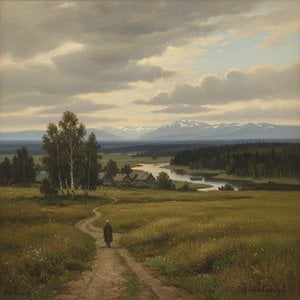
Vesper chimes
재현 기법
복제본 크기
-


최종 결제 금액
$ 263
Vesper Chimes: A Russian Soul Captured in Light
Isaac Levitan’s “Vesper Chimes,” painted in 1892, isn't merely a landscape; it’s a distillation of the Russian soul—a poignant meditation on solitude, spirituality, and the ephemeral beauty of twilight. This oil-on-canvas masterpiece, currently residing within the hallowed halls of the Tretyakov Gallery in Moscow, invites viewers into a serene world where nature whispers secrets and time seems to slow to a contemplative pace. Levitan, a master of the “mood landscape,” expertly captures not just what he saw but also the profound emotions evoked by the Russian countryside – a longing for peace, a connection to something larger than oneself, and an appreciation for the quiet grandeur of the natural world.
The scene unfolds along the banks of a gently flowing river, bathed in the golden hues of a setting sun. A small boat rests peacefully on the water’s surface, its presence suggesting a moment of respite, perhaps a solitary fisherman or a traveler seeking solace. In the background, a cluster of trees frames a distant church spire, rising like a beacon against the fading light. The composition is deliberately understated, prioritizing atmosphere and mood over dramatic detail. Levitan eschews sharp outlines and bold colors in favor of subtle gradations of tone and delicate brushwork, creating an illusion of depth and tranquility that draws the eye into the heart of the scene.
The Painter’s Technique: A Symphony of Light and Shadow
Levitan's skill as a landscape painter is particularly evident in his masterful manipulation of light. He doesn’t simply depict the sun setting; he embodies its warmth, its melancholy, and its transformative power. Notice how the golden light spills across the water, reflecting in shimmering patterns that dance with the ripples. The trees are rendered with a delicate touch, their branches silhouetted against the vibrant sky, while the distant church is softened by the haze of twilight. Levitan’s brushstrokes are loose and expressive, conveying a sense of movement and spontaneity—as if he were capturing a fleeting moment in time. He employed an impasto technique, building up layers of paint to create texture and depth, particularly noticeable in the foliage and the reflections on the water.
The painting’s color palette is restrained yet remarkably evocative. Dominated by warm yellows, oranges, and browns—the colors of a dying sun—it's subtly punctuated by cool blues and greens that hint at the approaching night. This careful balance creates a sense of harmony and tranquility, reflecting the stillness of the scene. The use of atmospheric perspective – where distant objects appear paler and less distinct – further enhances the painting’s depth and realism.
Symbolism and Context: Echoes of Russian Spirituality
“Vesper Chimes” is more than just a pretty picture; it's imbued with symbolic meaning. The church spire, rising above the landscape, represents faith, hope, and spiritual connection—a common theme in Russian art. The solitary boat suggests introspection and contemplation, inviting the viewer to pause and reflect on their own place within the vastness of nature. The title itself, “Vesper Chimes,” evokes a sense of evening prayer and quiet reverence – a time for reflection and communion with the divine.
Painted in 1892, during a period of significant social and political change in Russia, the painting reflects a growing interest in traditional values and spirituality. Levitan’s work resonated deeply with his contemporaries, who sought solace and meaning in the beauty of the Russian countryside. His paintings often explored themes of rural life, nature, and the human condition—themes that continue to resonate with viewers today.
A Timeless Masterpiece: Reproduction and Beyond
“Vesper Chimes” remains one of Isaac Levitan’s most beloved works, celebrated for its exquisite beauty and profound emotional impact. Reproductions offer a wonderful opportunity to bring this timeless masterpiece into your home or office—a source of inspiration and tranquility. When selecting a reproduction, consider the quality of materials used and the attention to detail paid in recreating Levitan's delicate brushwork and atmospheric effects. A high-quality print will capture the essence of the original painting, allowing you to experience its beauty and serenity firsthand.
For those seeking to delve deeper into the life and work of Isaac Levitan, we encourage you to visit the Tretyakov Gallery in Moscow or explore online resources such as Wikipedia and WikiArt.org. “Vesper Chimes” is a testament to the power of art to transport us to another time and place—a reminder of the beauty and wonder that can be found in the simplest of moments.


작가 약력
A Symphony of the Russian Soul: The Life and Art of Isaak Ilyich Levitan
Isaak Ilyich Levitan, a name synonymous with the evocative power of Russian landscape painting, was more than just a chronicler of nature; he was a poet of the land, a translator of its moods into visual form. Born in 1860 in Kibarty (present-day Lithuania) to a Jewish family who later settled in Moscow, Levitan’s life was marked by both profound hardship and an unwavering dedication to his art. The early loss of his mother and father instilled within him a sensitivity that would permeate his canvases with a melancholic beauty. This sense of longing, coupled with the restrictions imposed upon Jewish communities in Tsarist Russia, fueled a desire to find solace and expression in the natural world. He entered the Moscow School of Painting, Sculpture and Architecture in 1873, where he came under the tutelage of Alexei Savrasov, whose influence would prove pivotal in shaping Levitan’s artistic vision. It was Savrasov who nurtured his student's innate ability to capture not merely the appearance of nature, but its very essence—its atmosphere, its emotional resonance.The Birth of a ‘Mood Landscape’
Levitan quickly distinguished himself as an artist capable of conveying profound emotion through landscape. He wasn’t interested in topographical accuracy for its own sake; rather, he sought to imbue his paintings with a sense of *mood*, a feeling that resonated deep within the viewer's soul. This approach earned him the title of pioneer of the “mood landscape,” a genre that moved beyond simple representation to explore the spiritual connection between humanity and nature. His palette was often subdued, favoring naturalistic colors and poetic elements over vibrant displays. He masterfully employed light and shadow, creating atmospheric effects that evoked feelings of tranquility, solitude, or even quiet despair. Works like *Autumn Day. Sokolniki* (1879), painted when he was just nineteen years old, already demonstrated this remarkable ability to capture the subtle nuances of the Russian countryside. The painting’s muted tones and delicate rendering of light create a sense of wistful nostalgia, hinting at the transience of beauty and the inevitability of change. Later masterpieces such as *The Vladimirka Road* (1892) and *Eternal Rest* (1894), prominently displayed in the Tretyakov Gallery, further solidified his reputation as a master of emotional landscape painting.Influences and Artistic Kinships
While deeply indebted to Savrasov’s influence, Levitan was also receptive to other artistic currents. He collaborated with fellow artists like Konstantin Korovin, Mikhail Nesterov, and Nikolai Chekhov—the brother of the renowned playwright Anton Chekhov, who became a lifelong friend. This circle fostered an environment of creative exchange and mutual support. Though he briefly experimented with Impressionistic techniques, Levitan never fully embraced the movement, maintaining a uniquely Russian sensibility in his work. He found inspiration not only in the visual world but also in music and literature, seeking to translate their emotional power into his paintings. His designs for scenery for Savva Mamontov’s private Russian Opera demonstrate his versatility and willingness to explore different artistic mediums. The influence of these collaborations and experiences can be seen in works like *Spring Flood*, *Stormy Day*, *Vesper Chimes* and *Silent Cloister*, each a testament to his evolving style and deepening understanding of the emotional landscape.Major Achievements and Recognition
Levitan’s ascension to prominence within the Russian art world was marked by several significant milestones. Elected to the Imperial Academy of Arts in 1897, he achieved international acclaim for his artistic talent and unwavering commitment to his craft. This honor underscored the profound respect accorded to him by his peers and critics alike. Furthermore, Levitan’s role as head instructor at Moscow School of Painting, Sculpture and Architecture ensured that his stylistic innovations would continue to inspire generations of aspiring artists. His dedication to nurturing young talent solidified his legacy as a champion of Russian landscape painting and contributed substantially to its enduring artistic significance.Legacy and Enduring Resonance
Isaak Ilyich Levitan’s paintings remain a testament to the enduring power of art to evoke emotion, inspire contemplation, and connect us to the beauty and mystery of the natural world. His untimely death in 1900 at the age of forty left a void in the art world, but his legacy endures as a master of atmospheric landscape painting and a profound interpreter of the Russian soul. In 1941, a poignant tribute was paid to his memory when his remains were moved to the Novodevichy Cemetery in Moscow, where he rests beside Anton Chekhov—a symbolic union of two artistic kindred spirits who captured the essence of their time and place with unparalleled sensitivity and grace.
이삭 이리히 레비탄
1860 - 1900 , 리투아니아
주요 정보
- Artistic Movement Or Style: 분위기 풍경화
- Artists Who Influenced This Artist:
- 알렉세이 사브라스오프
- 바실리 페로프
- 바실리 폴레노프
- Date Of Birth: August 30, 1860
- Date Of Death: July 22, 1900
- Full Name: Isaak Ilyich Levitan
- Nationality: 러시아
- Notable Artworks:
- 가을 날. 소콜니키
- 블라디미르카 로드
- 영원한 안식
- 봄 홍수
- 폭풍 날
- 저녁 종소리
- Place Of Birth: Kibarty, Lithuania
관련 기사 더 보기

낭만 풍경화의 황홀! 예술사에 빛난 10대 걸작 탐구 | 와후아트
낭만주의 시대, 예술혼을 불태운 10대 풍경화 걸작! 터너부터 프리드리히까지, 시대를 초월하는 아름다움을 와후아트에서 만나보세요. 고흐의 색채와 코로의 섬세함이 당신의 공간에 영감을 더합니다. 지금 바로 와후아트에서 명품 미술 작품을 감상하고 구매하세요!

Evocations of Place: A Historical Journey Through Landscape Art
Explore the rich history of landscape art with ArtsDot. Discover renowned artists, movements like Impressionism & Romanticism, and expert guidance for collecting timeless pieces. Find your perfect serene escape today!

Aleksey Savrasov: The Poetic Realism That Defined Russian Landscape Painting
Explore the poetic realism of Aleksey Savrasov, founder of Russian lyrical landscape painting. Discover his masterpieces like 'The Rooks Have Returned' and learn about his lasting influence on 19th-century art. ArtsDot offers high-quality reproductions.
Fyodor Vasilyev: A Poetic Vision of Russian Landscape – Life, Legacy, and the Transience of Nature
Explore the captivating world of Fyodor Vasilyev, a pioneering Russian landscape painter. Discover his lyrical style, influential works like 'Clouds' & lasting legacy. Learn about his life, artistic journey & impact on Russian art history.

존 컨스터블 대표작 25선: 영국 풍경화의 거장, 자연과 감성을 담은 명화 컬렉션 | ArtsDot
존 컨스터블 대표작 25선을 만나보세요. 영국 풍경화 거장의 자연주의 회화, 데담 밸리의 아름다움과 헤이 웨인의 정취를 담은 명화를 감상하세요. ArtsDot에서 고품질 예술 작품 복제본을 소장하고 특별한 인테리어를 완성해보세요. 지금 바로 컬렉션을 탐험하세요!
