

 미리보기
미리보기
 공유하기
공유하기 공유하기
공유하기
 상세 정보
상세 정보 가이드 보기

 다운로드
다운로드
 유사 작품 더 보기
 X-레이
X-레이 슬라이드 쇼 보기
 질의응답
질의응답 통계 정보
통계 정보Installation View


 더 보기
더 보기
이 페이지에 표시된 작품은 저작권법의 보호를 받으며, 이에 따라 동일한 복제품을 제작하거나 판매하는 것은 법으로 금지되어 있습니다. 이러한 권리 보호는 다음과 같은 국제 협약에 따라 시행됩니다. 베른 협약 또한 다음에서 명시하는 법률을 포함한 국내법에 의해 보호됩니다. 미국 저작권법 제17조.
이 방식은 저작권 보호를 받는 예술 작품을 복제하거나 그대로 재현하는 것이 아니기에 저작권 규정을 완벽히 준수합니다. 대신, 이는 창의적인 재해석의 과정을 거칩니다. 즉, 원작에서 영감을 받되 원작과 동일하지 않은 새로운 회화 작품을 의미합니다.
지클레 / 아트 프린트
빠른 제작과 다양한 마감 옵션을 제공하는 박물관 수준의 지클레이 및 캔버스 프린트. ( 수작업 채색 복제본 주문하기 디지털 이미지로 전환)




P118B ₩10

P118H ₩10

P118W ₩10

P438Z ₩10

P508JH ₩12

P508YH ₩12

P805H ₩10

P805Z ₩10

P919BZ ₩10

P919G ₩10

P919XJ ₩10

P959ZH ₩10

P968JZ ₩12

W106C ₩8

W218G ₩10

W218JH ₩8

W218Y ₩10

W307PJ ₩10

W316G ₩10

W316PJ ₩8

W316Y ₩10

W398PJ ₩8

W4111J ₩10

W500HY ₩15

W500JH ₩15

W692G ₩12

W849H ₩8

W940BG ₩15

W953PJ ₩8




작품의 원본 비율을 그대로 유지하는 프리셋 사이즈 중에서 선택해 보세요.

액자나 벽면 크기에 맞춰 필요한 가로와 세로 길이를 입력해 주세요. 프린트는 원본 이미지보다 크게 제작할 수 없으며 오직 자르는 것만 가능하므로, 비율이 다른 사이즈를 선택할 경우 이미지의 일부가 잘려 나갈 수 있습니다. 인쇄 작업에 들어가기 전, 최종 확인을 위해 디지털 목업을 보내드립니다. 이 페이지에 표시된 이미지는 실제 잘리는 영역을 나타내지 않으며, 오직 목업을 통해서만 정확한 확인이 가능합니다.


 유리 옵션은 110cm 미만 크기에서만 선택 가능합니다.

Installation View
지클레 / 아트 프린트
복제본 크기
-


최종 결제 금액
₩ 84341
A Window into Revolution: Examining Inji Efflatoun’s Installation View
The installation view of Inji Efflatoun's artwork at la Biennale di Venezia presents a striking tableau—a carefully curated selection of her paintings displayed against a backdrop of white walls and illuminated by directional lighting. More than just an aesthetic arrangement, this presentation serves as a conduit to understanding Efflatoun’s artistic vision and its profound connection to the socio-political landscape of Egypt during her lifetime.
- Subject Matter: Efflatoun's canvases depict scenes from everyday Egyptian life—laborers in Nubia, bustling marketplaces, serene landscapes like Sinai—capturing moments of resilience and resistance against oppression. These images aren’t merely representations; they are imbued with a palpable spirit of defiance, mirroring the fervor of Egypt’s revolutionary movements.
- Style & Technique: Dominating the installation is Efflatoun's distinctive expressionist style. Informed by her mentorship under Kamel El Telmissany and the Surrealist-infused Art and Liberty Group, her paintings utilize bold colors and textured surfaces—primarily achieved through colored pencil on paper—to convey raw emotion and immediacy. The layering of pigment creates depth and shading, mirroring the complexities of human experience.
The meticulous lighting enhances the artwork’s impact, casting shadows that accentuate its textural qualities and guiding the viewer's gaze across the composition. From a horizontal expanse dominated by the glass table to the vertical alignment of the wall-mounted paintings, the installation emphasizes visual harmony while simultaneously inviting contemplation on Efflatoun’s artistic legacy.
Historical Context: Egypt Under Nasser
Efflatoun's artistic output flourished during Gamal Abdel Nasser’s presidency (1954–1970), a period marked by significant political upheaval and social reform. Her involvement in feminist and communist circles, culminating in imprisonment for her activism—a testament to her unwavering commitment to ideals—deepened the resonance of her art. These experiences fueled her desire to document Egyptian culture and history with unflinching honesty, resulting in depictions that transcend mere visual beauty.
Symbolism & Emotional Resonance
The recurring motifs of Sinai and Nubia – landscapes reflecting Egypt’s ancient heritage and enduring traditions – serve as symbolic anchors within Efflatoun's oeuvre. These images aren’t simply picturesque; they embody the spirit of perseverance and connection to one's roots—themes central to Efflatoun’s artistic ethos. The artist sought to capture not just what she saw but also how it felt, conveying a profound empathy for the human condition.
A Legacy of Bold Vision
Ultimately, Inji Efflatoun’s installation view at la Biennale di Venezia offers more than just an aesthetic experience; it presents a window into the heart of Egyptian art history and the enduring power of artistic expression as a vehicle for social commentary. Her paintings stand as a testament to her unwavering belief in the transformative potential of art—a conviction that continues to inspire collectors and designers alike.
질의응답
"Installation View"의 작가인 Inji Efflatoun는 다른 이름으로도 알려져 있나요?
Inji Efflatoun은(는) Inji Aflatoun(으)로도 알려져 있습니다.
"Installation View"의 Landscape 형식은 어디에 전시하는 것이 가장 좋을까요?
Inji Efflatoun의 "Installation View"의 Landscape 형식은 Living Room에 추천합니다. 작품의 형식과 공간의 조화는 복제화 배치에 중요한 가이드가 됩니다.
"Installation View"은(는) 어떤 내용을 담고 있나요?
Inji Efflatoun의 "Installation View"에 나타난 주제로는 egyptian art, social justice, revolutionary spirit, desert landscape, labor movement, political resistance, color pencil drawing 등이 있습니다. 이들은 모여 작품의 소재를 요약해 보여줍니다.
유사한 작품들


작가 정보
A Vision of Resilience: The Life and Art of Inji Efflatoun
In the vibrant and often turbulent landscape of twentieth-century Egyptian art, few figures command as much respect and profound emotional resonance as Inji Efflatoun. A pioneer of modern Egyptian art, her life was a seamless tapestry woven from the threads of creative brilliance and fierce political activism. Born in Cairo, Egypt, into a family with deep intellectual roots, Efflatoun emerged not merely as a painter, but as a leading spokeswoman for the Marxist-progressive-nationalist-feminist movement during the transformative decades of the 1940s and 1950s. Her work serves as a visceral testament to the struggles of her era, capturing the very soul of a nation in flux.
Her artistic journey was deeply informed by her early exposure to diverse social realities. Growing up in Cairo, she navigated environments ranging from the traditional and bourgeois to the radical intellectual circles of the Art and Freedom Group. Under the mentorship of figures like Kamel El Telmissany, she developed a foundation that allowed her to bridge the gap between aesthetic innovation and social commentary. Her canvases often act as windows into everyday Egyptian life, utilizing earthy tones and intricate patterns to evoke a sense of heritage and connection to the land.
The Canvas as Witness: Themes and Technique
Efflatoun’s oeuvre is characterized by its ability to transcend mere depiction, moving into the realm of the symbolic and the haunting. Her technique often merged the raw, energetic spirit of expressionism with a stark, skeletal minimalism. This approach is perhaps most powerfully realized in her later works, where she stripped away the unnecessary to focus on the essential agony of human existence. In masterpieces such as Workers, one encounters a harrowing scene of figures suspended against bare trees—a tableau that captures the heavy cost of political and social upheaval with a rhythmic yet unsettling movement.
Her subject matter frequently turned toward the dignity of labor and the resilience of the common person. In works like The Worker, she employed an impressionistic style and warm tones to capture the essence of rural labor. Yet, this warmth was often juxtaposed against the darker realities of her lived experience. The following elements define much of her visual language:
- Social Realism: A profound commitment to depicting the struggles of the working class and the impact of political shifts on the populace.
- Symbolic Landscapes: The use of skeletal trees, desolate landscapes, and stark silhouettes to mirror internal and national desolation.
- Textural Depth: An exploration of historical textures and the use of negative space to create a sense of profound depth and emotional gravity.
Artistry Amidst Adversity
The most defining period of Efflatoun’s life, and perhaps the most poignant for her artistic development, was her time in prison. Imprisoned by the Nasserite regime between 1959 and 1963 due to her communist ties, she found herself in a position where her art became a tool for documenting the unrenewable. This period of incarceration produced works that are often considered the highlight of her oeuvre, serving as both a documentary record of the oppression faced by political opponents and a secret window into the reality of women’s prisons.
These paintings from her imprisonment possess an extraordinary intensity, shedding light on a hidden reality through a lens of raw honesty. Her ability to transform the trauma of confinement into profound visual testimony solidified her historical significance. She did not merely paint the world she saw; she painted the weight of existence itself, ensuring that the sacrifices and the resilience of the Egyptian people would be etched into the annals of modern art history.

Inji Efflatoun
1924 - 1989 , Egypt
작가 정보 요약
- Artistic Movement Or Style: Modern Egyptian art; Expressionism
- Artists Who Influenced This Artist: ['Kamel El Telmissany']
- Full Name: Inji Efflatoun
- Nationality: Egyptian
- Notable Artworks:
- The Worker
- Workers
- Installation View
- Place Of Birth: Cairo, Egypt
- Date Of Birth: 1924
- Date Of Death: 1989
관련 콘텐츠

베니스 비엔날레 최고 명작 25선: 예술과 역사의 걸작을 만나다 | ArtsDot
베니스 비엔날레 최고 명작 25선을 만나보세요. 유명 화가들의 숨겨진 이야기와 추상화, 모던 아트 등 예술 작품의 깊이를 탐구합니다. ArtsDot에서 고품질 미술 컬렉션을 감상하고 특별한 인테리어를 완성하세요! 지금 바로 온라인으로 둘러보기.

The Alchemy of Graphite: An Expert Guide to Mastering Detail and Depth in Pencil Sketching
Unlock the secrets of graphite sketching with our expert guide for art students. Learn to master pencil grades, create realistic depth, and capture intricate textures through professional techniques designed to elevate your observational drawing skills.

Unlocking Emotion: A Beginner's Guide to the Raw Power of Symbolic Expressionism Art
Discover the raw emotion of Symbolic Expressionism. Our expert guide explores how masters like Munch use color and form to convey inner feelings, offering inspiration for collectors looking to bring powerful, soulful art into their modern homes.
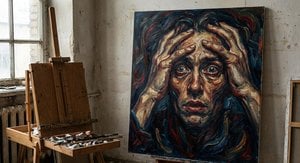
Figurative Expressionism: Emotional Intensity & Subjective Reality in 20th-Century Art
Explore the powerful world of Figurative Expressionism with ArtsDot. Discover key artists like Kirchner & Beckmann, understand its emotional depth, and learn how to collect this influential 20th-century art movement.

The Raw Emotion of Expressionism: A Deep Dive into its History, Characteristics & Enduring Influence
Explore the raw emotion of Expressionism with ArtsDot. Discover its history, key artists like Kirchner & Munch, and lasting influence on modern art. Expert insights for collectors & enthusiasts.