

 미리보기
미리보기
 공유하기
공유하기 공유하기
공유하기
 상세 정보
상세 정보 가이드 보기

 다운로드
다운로드
 유사 작품 더 보기
 X-레이
X-레이 슬라이드 쇼 보기
 질의응답
질의응답 통계 정보
통계 정보Classical Landscape

- 49.0 x 73.0 cm


 더 보기
더 보기
지클레 / 아트 프린트
빠른 제작과 다양한 마감 옵션을 제공하는 박물관 수준의 지클레이 및 캔버스 프린트. ( 수작업 채색 복제본 주문하기 디지털 이미지로 전환)




P118B ₩10

P118H ₩10

P118W ₩10

P438Z ₩10

P508JH ₩12

P508YH ₩12

P805H ₩10

P805Z ₩10

P919BZ ₩10

P919G ₩10

P919XJ ₩10

P959ZH ₩10

P968JZ ₩12

W106C ₩8

W218G ₩10

W218JH ₩8

W218Y ₩10

W307PJ ₩10

W316G ₩10

W316PJ ₩8

W316Y ₩10

W398PJ ₩8

W4111J ₩10

W500HY ₩15

W500JH ₩15

W692G ₩12

W849H ₩8

W940BG ₩15

W953PJ ₩8




작품의 원본 비율을 그대로 유지하는 프리셋 사이즈 중에서 선택해 보세요.

액자나 벽면 크기에 맞춰 필요한 가로와 세로 길이를 입력해 주세요. 프린트는 원본 이미지보다 크게 제작할 수 없으며 오직 자르는 것만 가능하므로, 비율이 다른 사이즈를 선택할 경우 이미지의 일부가 잘려 나갈 수 있습니다. 인쇄 작업에 들어가기 전, 최종 확인을 위해 디지털 목업을 보내드립니다. 이 페이지에 표시된 이미지는 실제 잘리는 영역을 나타내지 않으며, 오직 목업을 통해서만 정확한 확인이 가능합니다.


 유리 옵션은 110cm 미만 크기에서만 선택 가능합니다.

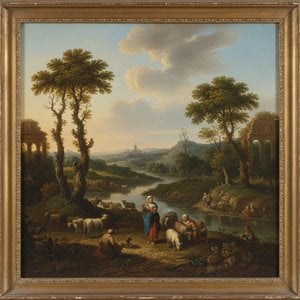
Classical Landscape
지클레 / 아트 프린트
복제본 크기
-


최종 결제 금액
₩ 84098
유사한 작품들


작가 정보
The Master of the Roman Light: The Life and Art of Hendrik Frans van Lint
In the golden age of the Grand Tour, when travelers from across Europe flocked to the sun-drenched ruins and majestic piazzas of Italy, few artists captured the ephemeral magic of the landscape as poignantly as Hendrik Frans van Lint. Born in Antwerp in 1684, Van Lint carried the meticulous traditions of his Flemish heritage into the heart of Rome, where he would spend the most transformative years of his life. While his roots lay in the industrious artistic circles of Belgium, his soul became inextricably linked to the luminous atmosphere of the Roman Campagna. His journey was not merely a geographical migration but an artistic evolution, moving from the structured training of his youth toward a profound mastery of veduta—the art of the detailed, panoramic view.
Van Lint’s early years were steeped in the rigorous discipline of the Flemish Baroque. As the son of the painter Peter van Lint and a pupil to masters such as Peter van Bredael, he inherited a foundational respect for compositional clarity and technical precision. However, it was his move to Rome that truly ignited his creative spirit. Upon arriving in the eternal city, he joined the Schildersbent, a celebrated society of Netherlandish painters. It was within this vibrant community of expatriate artists that he earned the affectionate nickname "Studio"—a testament to his incredibly meticulous technique and his ability to render architectural details with such fidelity that they seemed almost etched by hand.
A Symphony of Architecture and Atmosphere
The work of Van Lint is characterized by a breathtaking duality: the rigid, structural permanence of classical architecture set against the soft, fleeting qualities of light and air. He was deeply influenced by the pioneering vedutismo of Caspar van Wittel, whose topographical accuracy provided a blueprint for capturing the essence of Italian urbanity. Yet, Van Lint refused to be bound by mere documentation. He drew immense inspiration from the classical ideal landscapes of Claude Lorrain, often imbuing his scenes with a nostalgic, Arcadian beauty that transcended simple topography.
His canvases frequently present a spectrum of views, ranging from the strictly accurate to the beautifully imagined. In his depictions of places like Caprarola or the Roman outskirts, one can observe a masterful use of light—a warm, golden glow that seems to breathe life into stone and foliage alike. His landscapes often feature:
- Architectural Grandeur: The precise rendering of villas, palaces, and ancient ruins that anchor the composition.
- Atmospheric Depth: A sophisticated use of perspective and haze to create a sense of vast, receding space.
- Genre Elements: Small, delicate figures—often peasants or travelers—that provide scale and a sense of lived reality to the sweeping vistas.
This ability to blend the topographical with the poetic made his work the ultimate souvenir for the 18th-century aristocrat. To own a Van Lint was to possess a window into the Roman ideal, a piece of the sun-soaked Italian dream captured with unparalleled grace.
Legacy and Historical Significance
The historical significance of Hendrik Frans van Lint lies in his role as a bridge between the meticulous Northern tradition and the emotive, light-driven sensibilities of the Southern Baroque. He did not merely record what he saw; he interpreted the atmosphere of an era. His paintings found homes in some of the most prestigious collections in Europe, including the Doria Pamphilj in Rome and the Palazzo Bianco in Genoa, ensuring that his vision of Italy would endure long after the era of the Grand Tour had faded.
Today, Van Lint is remembered as a virtuoso of the veduta style, an artist whose work remains a vital record of the aesthetic aspirations of the 18th century. His legacy persists in every brushstroke that captures the way light dances upon a Roman piazza or settles softly over a distant hill, reminding us of a time when art was the primary vessel for exploring the wonders of the wider world.

Hendrik Frans Van Lint
1684 - 1763 , Belgium
작가 정보 요약
- Full Name: Hendrik Frans van Lint
- Nationality: Belgian
- Date Of Birth: 1684
- Date Of Death: 1763
- Place Of Birth: Antwerp, Belgium
- Notable Artworks:
- Giacomo van Lint
- An extensive Italianate wooded landscape
- A classical river landscape with figures on a path and a palace in the distance
- Artistic Movement Or Style: Veduta Painting
- Artists Who Influenced This Artist: Caspar van Wittel
- Artists Or Movements Influenced By This Artist: Italian Baroque
관련 콘텐츠

Dutch Baroque Masters: 10 Paintings That Shaped an Era | ArtsDot
Journey through the Golden Age with our guide to the Top 10 Dutch Baroque masterpieces! Explore iconic paintings by Rembrandt, Vermeer & Frans Hals. Find museum-quality art reproductions and elevate your home decor at ArtsDot.com.

Evoking Tranquility: A Study of Serene Beauty in Visual Art Across Historical Movements
Explore the history of serene art & discover how landscape paintings evoke tranquility across movements. Find inspiration for calming home decor & museum-quality reproductions at ArtsDot.

Scenes of Daily Life: A Comprehensive Exploration of Genre Painting Through History
Explore the rich history of genre painting! Discover Dutch Masters & European artists who captured everyday life with stunning realism. Learn about symbolism, techniques & lasting influence.

암스테르담 국립미술관 최고 걸작 25선: 예술의 정수를 만나다 | ArtsDot
암스테르담 국립미술관 최고 걸작 25선을 만나보세요. 렘브란트, 베르메르 등 거장들의 숨겨진 이야기와 바로크 회화의 정수를 감상하세요. ArtsDot에서 명화 복제본으로 예술을 경험하고 홈 데코를 완성해보세요! 지금 컬렉션 둘러보기.
Nicolaes Berchem: Dutch Golden Age Pastoralism & the Evolution of Landscape Painting
Explore the captivating world of Nicolaes Berchem, a leading Dutch Golden Age painter. Discover his idyllic landscapes, masterful technique & lasting influence on art history. Learn more at ArtsDot.