


 미리보기
미리보기
 프린트 구매
 공유하기
공유하기 공유하기
공유하기
 상세 정보
상세 정보

 다운로드
다운로드
 유사 작품
유사 작품 X-레이
X-레이 슬라이드 쇼
erasmus


 더 보기
더 보기




P118B $10

P118H $10

P118W $10

P438Z $10

P508JH $12

P508YH $12

P805H $10

P805Z $10

P919BZ $10

P919G $10

P919XJ $10

P959ZH $10

P968JZ $12

W106C $8

W218G $10

W218JH $8

W218Y $10

W307PJ $10

W316G $10

W316PJ $8

W316Y $10

W398PJ $8

W4111J $10

W500HY $15

W500JH $15

W692G $12

W849H $8

W940BG $15

W953PJ $8




작품의 원본 비율을 유지하는 미리 설정된 크기 중에서 선택하세요.

특정 프레임이나 공간에 맞도록 직접 크기를 입력할 수 있습니다. 선택하신 크기가 원본 이미지의 비율과 일치하지 않는 경우, 작품을 자르거나 추가적인 손으로 그린 요소를 사용하여 그림을 확장합니다. 제작 시작 전 승인을 위해 디지털 목업을 보내드립니다.
화면 미리 보기는 실제 자르기 또는 확장을 반영하지 않습니다. 최종 구성은 목업을 통해서만 정확하게 확인하실 수 있습니다.
맞춤 크기 제작도 가능하지만, 원본 비율을 유지하기 위해 사전 정의된 목록에서 크기를 선택하시는 것을 권장합니다.
주문 후 ArtsDot.com 팀에서 상세 안내를 위해 고객님께 이메일을 보내드리며, 미리보기 시안을 제공해 드립니다.


 유리 옵션은 110cm 미만 크기에서만 선택 가능합니다.

erasmus
재현 기법
복제본 크기
-


최종 결제 금액
$ 263
작품 상세 설명
A Window into the Mind: Hans Holbein’s Portrait of Erasmus
Hans Holbein the Younger's “Portrait of Erasmus of Rotterdam,” painted around 1523, isn’t merely a likeness; it’s an intimate glimpse into the soul of one of the most influential humanists of his time. This remarkable work transcends simple portraiture, offering a profound meditation on scholarship, contemplation, and the very act of creation. The painting immediately draws the viewer in with its remarkably realistic depiction of Erasmus, a man whose intellectual pursuits shaped the course of European thought. Holbein’s skill isn't just evident in the meticulous rendering of wrinkles and textures – the slightly furrowed brow, the subtle sag beneath the chin – but also in his ability to convey a sense of profound concentration.
The scene unfolds within an interior setting, subtly suggesting Erasmus’s scholarly world. A tapestry depicting fantastical flora and beasts hints at the vastness of classical knowledge he sought to master. The wooden paneling, a hallmark of Renaissance interiors, anchors the composition while simultaneously drawing attention to the central figure. Crucially, Holbein doesn't present Erasmus as an aloof sage; instead, he captures him actively engaged in his work – poised over a writing desk, quill in hand, immersed in the process of intellectual labor. This dynamic pose is revolutionary for its time, moving away from static depictions of learned men and offering a more relatable image of the scholar at work.
The Humanist Ideal: Symbolism and Context
Erasmus himself was a pivotal figure in the burgeoning humanist movement, advocating for a return to classical learning and a critical examination of religious dogma. His “Annotations on the New Testament,” groundbreaking works that championed textual accuracy and ethical reasoning, profoundly impacted the Reformation. Holbein’s portrait perfectly embodies this humanist ideal – Erasmus is presented as an individual driven by reason, intellect, and a deep engagement with the world of ideas. The open book on the desk, likely containing excerpts from his own writings, further reinforces this connection to scholarship.
The inclusion of the Latin couplet, “I am Johannes (i.e. Hans) Holbein, whom it is easier to denigrate than to emulate,” inscribed on the back of the panel, adds a layer of self-awareness and playful irony. It’s a subtle acknowledgment of Holbein's own artistic prowess and a testament to the enduring challenge of capturing true likeness. This inscription also highlights the reciprocal relationship between artist and subject – Erasmus recognized Holbein’s skill while simultaneously acknowledging the difficulty in replicating his essence.
Technique and Craftsmanship: A Master at Work
Holbein's mastery is immediately apparent in the painting’s technical execution. The use of oil paint on wood allows for incredible detail, depth, and luminosity. Notice the subtle gradations of light and shadow that model Erasmus’s face, creating a sense of volume and realism. The artist employs *sfumato*, a technique borrowed from Leonardo da Vinci, to soften edges and create an atmospheric effect, lending the portrait a sense of immediacy and intimacy.
Furthermore, Holbein demonstrates remarkable attention to texture – the rough weave of the fur collar, the sheen of the leather-bound book, the delicate brushstrokes that capture the quill’s point. These details elevate the painting beyond mere representation, transforming it into a tangible embodiment of Erasmus's world and his intellectual pursuits. The presence of *pentimenti*—evidence of alterations made during the painting process—further underscores Holbein’s meticulous approach and his willingness to refine his work until it perfectly captured the subject’s essence.
A Legacy of Insight: The Portrait Today
“Portrait of Erasmus of Rotterdam” remains a powerful testament to the enduring legacy of Renaissance humanism. It's more than just a beautiful painting; it’s a window into the mind of a brilliant scholar and a celebration of the pursuit of knowledge. The portrait’s continued appeal lies in its ability to evoke a sense of intellectual curiosity, quiet contemplation, and the profound connection between art and ideas. Reproductions of this iconic work offer a chance to bring this timeless image into any space, serving as a constant reminder of the power of human intellect and the beauty of artistic expression.
유사한 작품들


작가 약력
홀bein 더 영거: 세부로 새겨진 삶, 시대의 초상
1497년 겨울, 독일 아우구스부르크에서 태어난 한스 홀bein 더 영거는 북부 르네상스를 대표하는 거장으로, 그의 작품은 놀라운 사실주의와 심리적 깊이로 오늘날까지도 감동을 자아냅니다. 아버지 한스 홀bein 더 엘더 역시 존경받는 화가이자 판화가였던 그는 젊은 한스에게 세심한 관찰과 기술에 대한 꼼꼼함을 일깨워주었습니다. 이러한 초기 교육은 단순히 붓놀림이나 색 혼합을 넘어, 피사체의 본질까지 포착하는 ‘보는’ 능력을 키우는 것이었습니다. 아버지의 작업실에서 예술적 탐구를 시작하며 실력을 연마한 홀bein은 스위스를 거쳐 결국 영국 궁정의 심장부로 향하는 여정을 떠났습니다.바젤에서 튜더 궁정으로: 떠오르는 별
수업을 마치고 홀bein은 광범위하게 여행하며 성장하는 명성을 얻는 독립적인 예술가로 자리매김했습니다. 그는 몇 년간 바젤에 머물면서 인상적인 초상화뿐만 아니라 종교 작품, 정교한 목판화를 제작했는데, 특히 죽음의 춤을 묘사한 시리즈가 유명합니다. 이러한 초기 작품들은 뛰어난 구도 능력과 인간 감정의 복잡성을 포착하려는 끊임없는 관심을 보여줍니다. 그리고 1526년 운명처럼 영국으로 향하게 되었습니다. 그는 저명한 인문학자 에라스무스의 추천서를 소지하고 있었고, 이는 곧바로 영국의 영향력 있는 사회 계층의 문을 열어주었습니다. 그의 재능은 토머스 모어와 같은 주요 인물들을 사로잡았고, 그들은 홀bein의 후원자가 되어 여러 매혹적인 초상화의 모델이 되었습니다. 이러한 연결 고리는 1536년 홀bein이 헨리 8세 왕의 궁정 화가가 되는 결정적인 계기가 되었으며, 그의 불행한 죽음인 1543년까지 지속되었습니다.지각의 예술: 스타일과 걸작
홀bein의 예술적 스타일은 질감, 직물, 피사체의 미묘한 특징을 묘사하는 데 있어 놀라운 헌신적인 사실주의로 특징지어집니다. 그는 단순히 그림을 그치는 것이 아니라, 층층이 쌓아 올려 물리적 외모뿐만 아니라 피사의 성격과 내면의 삶까지 포착했습니다. 그의 혁신적인 구도는 작품의 영향을 더욱 높였으며, 종종 더 깊은 의미를 전달하기 위해 상징적인 물체나 배경을 사용했습니다. 대사들(1533)은 이러한 접근 방식에 대한 증거입니다. 이 복잡하고 상징적으로 풍부한 이중 초상화는 홀bein의 기술적 탁월함과 지적 깊이를 동시에 보여줍니다. 그림 속에 미묘하게 숨겨진 해골은 죽음의 불가피성을 상기시키는 *Memento mori* 역할을 합니다. 그의 수많은 헨리 8세 왕의 초상은 튜더 권력의 지속적인 이미지를 확립했으며, 에라스무스 로테르담의 초상화는 학자의 깊은 지적 중압감을 포착했습니다. 니콜라우스 크라처의 놀라운 초상화(1528) 역시 사실주의와 과학적 세부 묘사의 걸작입니다.유산과 영향력: 지속적인 인상
홀bein의 예술적 여정은 독일 예술 전통의 정밀함과 르네상스 이탈리아의 구도 원칙이 결합된 다양한 요인의 영향을 받았습니다. 그는 알브레히트 뒤러를 비롯한 독일 거장들의 작품을 존경하면서, 여행 중 이탈리아 미술을 연구하며 그들의 기술을 흡수하고 자신의 독특한 스타일에 통합했습니다. 그의 유산은 심오합니다. 홀bein의 초상화는 사실주의와 심리적 통찰력에 대한 새로운 기준을 제시하여 후대 예술가들에게 영향을 미쳤습니다.- 그의 초상화는 튜더 시대의 주요 인물들의 삶과 성격에 대한 귀중한 통찰력을 제공합니다.
- 그의 혁신적인 상징 사용은 작품에 의미의 층위를 더하여 관객에게 더 깊은 주제를 숙고하도록 초대합니다.
마지막 붓놀림: 역사적 중요성
한스 홀bein 더 영거는 1543년 런던에서 세상을 떠났지만, 수세기 후에도 관객들을 사로잡는 작품을 남겼습니다. 그의 초상화는 단순한 아름다운 이미지가 아니라 역사적 문서로서 튜더 시대의 정치적 음모, 종교적 격변, 문화적 변화에 대한 통찰력을 제공합니다. 그의 헨리 8세 왕의 묘사는 왕권의 상징적인 표현이 되었고, 에라스무스와 모어와 같은 저명한 인문주의자들의 삶을 엿볼 수 있게 해줍니다. 그의 혁신적인 상징 사용은 작품에 의미의 층위를 더하여 관객에게 더 깊은 주제를 숙고하도록 초대합니다. 홀bein의 예술성은 단순한 기술적 능력 이상입니다. 그는 지적 호기심, 예술적 혁신, 인간 조건에 대한 깊은 이해가 담긴 표현입니다. 그는 여전히 르네상스 시대에서 가장 존경받고 연구되는 화가 중 한 명으로, 그의 유산은 계속해서 영감을 주고 매혹합니다.
한스 홀바인
1497 - 1543 , 이탈리아
주요 정보
- 국적: 독일-스위스
- 대표 작품:
- 대사들
- 헨리 8세 초상화
- 에라스무스 초상화
- 니콜라우스 크라처 초상화
- 사망일: 1543년
- 영향을 받은 예술가: ['후대 초상화가']
- 영향을 준 예술가: ['알브레히트 뒤러']
- 예술 사조: 북부 르네상스
- 전체 이름: 한스 홀바인 하위누더
- 출생일: 1497년경
- 출생지: 아우구스부르크, 독일
관련 기사 더 보기

Hans Holbein the Younger: A Renaissance Portraitist's Mastery of Realism & Psychological Insight
Explore the life & art of Hans Holbein the Younger, a Renaissance master renowned for his strikingly realistic portraits and psychological insight. Discover iconic works like 'The Ambassadors' and delve into his lasting legacy.

Hans Baldung Grien: A Renaissance Master of Allegory, Innovation & the Grotesque
Explore the captivating world of Hans Baldung Grien, a Renaissance master renowned for his allegorical paintings, striking woodcuts & unique depictions of mythology and the grotesque. Discover his life, works & legacy with ArtsDot.

The Intimate Gaze: Study & Intellectual Pursuit in Western Art
Explore the fascinating history of study and intellectual pursuit in Western art! Discover Renaissance scholars, iconic portraits like Holbein's Erasmus, and Leonardo’s studies – a journey through humanist ideals & artistic mastery. Learn more at ArtsDot.
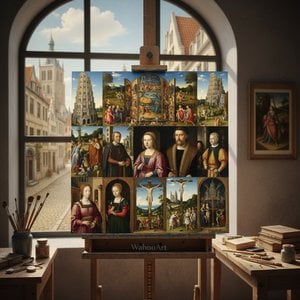
북부 르네상스 미술의 거장 10선: 예술과 품격으로 당신의 공간을 채우다
북부 르네상스 미술의 정수를 담은 10가지 대작! 뒤러, 반호이켄 등 거장의 작품으로 예술적 영감을 얻고, ArtsDot.com에서 고품격 아트 프린트와 인테리어 아이디어를 만나보세요. 지금 바로 온라인 컬렉션을 탐험하세요.

Etching Masters: 10 Legendary Prints That Revolutionized Art | ArtsDot
Journey through 10 legendary etching masterpieces by Rembrandt, Dürer & Goya. Explore the history of printmaking and discover timeless art for your home. Find museum-quality reproductions at ArtsDot.com.


![장 드 댕트빌과 조르주 드 셀브의 이중 초상화 (일명 ‘대사들’) [세부 상세]](/media/artworks/images/thumbnails/23/11/2311efb8202f4a2ea763c4d4a9227550.jpg)



