
- 홈

- 캔버스 프린트
- gerard thomas
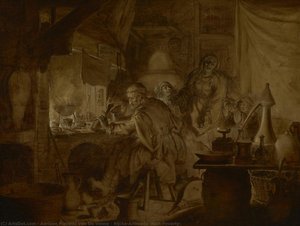
- The Alchemist’s Studio

 Preview
 작품 구매하기
 공유하기
공유하기 공유하기
공유하기
 상세 정보
상세 정보

 다운로드
다운로드
 유사 작품
유사 작품 X-레이
X-레이 슬라이드 쇼
The Alchemist’s Studio


 더 보기
더 보기




































작품의 원본 비율을 유지하는 미리 설정된 크기 중에서 선택하세요.

특정 프레임이나 공간에 맞춰 직접 치수를 입력하실 수 있습니다. 선택하신 사이즈가 원본 이미지의 비율과 일치하지 않을 경우, 작품을 크롭(자르기)하거나 이미지를 대칭 또는 단색 채우기로 확장하여 제작합니다. 제작 시작 전, 최종 확인을 위해 디지털 목업이 전송됩니다.
화면상의 미리보기는 실제 크롭이나 확장 상태를 반영하지 않으므로, 최종 구도는 오직 목업을 통해서만 정확하게 확인하실 수 있습니다.
맞춤 사이즈 제작도 가능하지만, 원본 비율을 유지하기 위해서는 사전 정의된 목록에서 치수를 선택하시는 것을 권장합니다.


 유리 옵션은 110cm 미만 크기에서만 선택 가능합니다.

The Alchemist’s Studio
지클레 / 아트 프린트
복제본 크기
-


최종 결제 금액
-
작품 상세 설명
유사한 작품들



작가 약력
The Curious World of Gerard Thomas: A Physician’s Artistic Vision
Gerard Thomas, a name perhaps unfamiliar to many outside the circles of medical history and art connoisseurship, represents a fascinating intersection of scientific observation and artistic expression. While biographical details remain somewhat elusive – he is a living artist represented by ArtsDot – his body of work speaks volumes about Victorian sensibilities, the evolving understanding of medicine, and a unique dedication to documenting the profession through paint. Thomas’s paintings aren't simply depictions of doctors or hospitals; they are windows into a world where clinical practice was interwoven with social status, artistic patronage, and a burgeoning fascination with the human body. He stands as a testament to the idea that art can be both aesthetically pleasing and profoundly informative, serving as a historical record alongside its inherent beauty.A Legacy Rooted in Observation: Themes and Techniques
Thomas’s oeuvre is dominated by scenes of medical life, particularly those centered around St Thomas' Hospital in London. He masterfully captures the atmosphere of 19th-century hospitals – not as sterile environments but as bustling centers of activity filled with dedicated physicians, anxious patients, and a complex social hierarchy. His paintings often feature portraits of prominent doctors, rendered with meticulous detail that conveys both their professional authority and individual character. Beyond portraiture, Thomas delves into the specifics of medical procedures and diagnostic tools. Perhaps most strikingly, he is known for his depictions of urine flasks – seemingly mundane objects elevated to symbolic importance through his artistic treatment. These aren’t merely clinical specimens; they represent a crucial element in Victorian diagnosis, reflecting the era's reliance on visual observation and humoral theory. His technique leans towards realism, with a focus on accurate representation of anatomy, clothing, and hospital interiors. The lighting in his works often creates dramatic effects, highlighting key figures or objects and drawing the viewer’s eye to the core narrative. He employs a rich palette, favoring earth tones and muted colors that evoke a sense of historical authenticity.Influences and Context: Victorian Medicine & Artistic Patronage
To understand Thomas's work fully, one must consider the context of Victorian medicine. The 19th century witnessed significant advancements in medical knowledge, driven by discoveries in anatomy, physiology, and bacteriology. However, it was also a period marked by social inequalities and limited access to healthcare for many. St Thomas’ Hospital, where much of Thomas's work is set, played a pivotal role in this era, serving as both a teaching institution and a public hospital. The hospital benefited from the patronage of wealthy benefactors, including members of the aristocracy, who often commissioned portraits of themselves or prominent doctors. This system of patronage likely influenced Thomas’s career, providing him with opportunities to document the lives of those associated with the hospital. Artistically, Thomas's work reflects the influence of Realism and academic painting traditions prevalent in Victorian England. He shares similarities with artists like William Powell Frith and John Everett Millais in his attention to detail and narrative focus, though Thomas’s subject matter remains uniquely centered on the world of medicine. The Baron Gerard Museum, while not directly linked as a patron, represents the aristocratic context within which such art flourished.Major Achievements & Historical Significance
While pinpointing specific “major achievements” is difficult given the limited biographical information available, Thomas’s lasting contribution lies in his comprehensive documentation of Victorian medical life. His paintings offer invaluable insights into the practices, social dynamics, and visual culture of 19th-century hospitals. The focus on seemingly overlooked objects like urine flasks elevates them to symbolic status, prompting viewers to consider the importance of diagnostic tools and the role of observation in medical practice. His work serves as a bridge between art history and medical history, providing scholars with visual evidence of past clinical environments and patient care. Furthermore, his portraits offer glimpses into the lives of prominent physicians, capturing their personalities and professional standing within society. The enduring appeal of Thomas’s paintings lies in their ability to evoke a sense of empathy for both doctors and patients, reminding us that medicine has always been a human endeavor. His legacy is one of meticulous observation, artistic skill, and a unique dedication to documenting the evolving world of healthcare.Continuing Relevance: Thomas’s Art in the 21st Century
In an age dominated by digital imaging and advanced medical technology, Gerard Thomas's paintings offer a poignant reminder of the origins of modern medicine. His work encourages us to reflect on the historical context of clinical practice and the challenges faced by physicians in past eras.- The detailed depictions of hospital interiors provide valuable insights into the evolution of healthcare environments.
- His portraits offer a humanizing perspective on the lives of doctors, challenging stereotypical representations of medical professionals.
- The symbolic importance he assigns to everyday objects like urine flasks prompts viewers to consider the role of observation and diagnostic tools in medical practice.

주요 정보
- Artistic Movement Or Style: Medical Art
- Date Of Death: Living
- Full Name: Gerard Thomas
- Nationality: British
- Notable Artworks:
- Physician Portraits
- Hospital Scenes
- Anatomical Drawings
- Urine Flask Artwork
- Place Of Birth: London, UK
관련 기사 더 보기

네덜란드 황금 시대 예술의 정수를 담은 10대 걸작 탐구
렘브란트, 베르메르의 걸작부터 할스의 인물화까지! 네덜란드 황금시대 미술의 10대 명품을 만나보세요. 예술적 깊이와 아름다움을 담은 작품들을 ArtsDot에서 감상하고, 고품질 아트 프린트로 당신의 공간에 특별함을 더하세요. 지금 바로 ArtsDot.com에서 모든 걸작을 발견하세요!

뉴욕 메트로폴리탄 미술관 최고 걸작 25선: 예술의 정수를 만나다 | ArtsDot
뉴욕 메트로폴리탄 미술관 최고 걸작 25선을 만나보세요. 반 고흐, 모네 등 거장들의 숨겨진 이야기와 예술의 정수를 감상하세요. 홈 데코를 위한 명화 복제 작품은 ArtsDot에서! 지금 바로 컬렉션을 탐험하세요.

제임스 애벗 맥닐 휘슬러 최고 걸작 25선: 예술의 정수, 공간에 스며드는 아름다움
제임스 애벗 맥닐 휘슬러의 최고 걸작 25선을 만나보세요. 야간 풍경부터 아랑미술관 소장품까지, 예술가의 삶과 작품 세계를 탐험합니다. 색채와 분위기가 완벽한 조화를 이루는 그림들을 ArtsDot.com에서 감상하고 특별한 공간을 완성하세요.
워싱턴 내셔널 갤러리 명작 25선: 예술의 정수를 담은 컬렉션 | ArtsDot
워싱턴 내셔널 갤러리의 숨겨진 명작 25점을 만나보세요. 모네, 세잔, 피카소 등 거장들의 예술 세계와 감동적인 스토리를 ArtsDot에서 경험하세요. 고품질 아트 프린트 & 인테리어 디자인 영감을 얻고, 당신의 공간에 예술을 더하세요! 지금 바로 ArtsDot.com에서 컬렉션을 탐험하세요.

Golden Age Reflections: Dutch Baroque Painting & Cultural Innovation
Explore the Dutch Golden Age of painting! Discover key artists like Vermeer & ter Borch, their innovative techniques, and the rich cultural context behind these Baroque masterpieces. Learn about collecting & appreciating this iconic art period.

